Track the evolution of major financial and economic events
On June 29, BlackRock integrated with Ethena, allowing clients of the Aladdin platform access to Ethena's yield-generating tokens and liquidity facilities for BlackRock's tokenized products. On July 1, the U.S. Treasury announced that two BlackRock iShares ETFs would be offered as investment options under Trump Accounts, aimed at helping American children build wealth from birth. On the same day, Larry Fink expressed BlackRock's pride in supporting Trump Accounts. On July 8, BlackRock launched the iShares Nasdaq 100 ETF to provide cost-efficient access to innovation-driven companies.
Levi Strauss & Co. will release its Q2 fiscal 2026 earnings on July 8, with consensus estimates of $1.52 billion in revenue and $0.24 EPS. Telsey Advisory raised its price target for the stock to $30 while maintaining an Outperform rating, and UBS increased its price target to $34 with a Buy rating. Analysts expect earnings per share to grow by 9.1% for the upcoming quarter.
On June 29, Comcast Corporation (CMCSA) announced plans to separate its media and technology businesses through a tax-free spin-off of NBCUniversal and Sky into an independent public company. Comcast shareholders will own shares in both Comcast and NBCUniversal upon completion of the transaction. This announcement caused declines in telecom stocks such as VZ, TMUS, and T.
On June 26, President Trump threatened 100% tariffs on European imports over digital taxes, overriding a recently finalized trade deal with the EU. On June 27, he reiterated the threat to impose an immediate 100% tariff on European countries that impose a digital tax, superseding existing trade deals. On July 1, the EU announced the removal of tariffs on US industrial goods, and Ursula von der Leyen hailed transatlantic ties as 'most valuable'.
On June 26, RTX secured a $1.11 billion contract modification for the production and delivery of AIM-9X missiles. On July 2, RTX shares rose 3.4% after its Raytheon business secured a $1.1 billion contract from the U.S. Navy. The contract involves AIM-9X Block II missiles with production capacity increased to 2,500 missiles annually. On July 7, Raytheon is collaborating with Diehl Defence and Dutch suppliers to double global Stinger missile production.
On June 25, US Bancorp passed the Federal Reserve's 2026 stress test, maintaining strong capital levels and planning to raise its quarterly dividend. On July 1, US Bancorp announced a 3.8% increase in its quarterly common stock dividend to $0.54 per share, effective Q3 2026. On July 4, the 3.8% increase in the quarterly dividend to $0.54 per share was confirmed, and DCF models suggested the stock could be 40.3% undervalued with a fair value estimate of $103.45.
On June 25, Iraq urged OPEC to allow increased oil production after its exports were severely reduced due to the closure of the Strait of Hormuz from the US-Iran war. On June 26, Iraq's Oil Ministry announced that OPEC had begun gradually restoring Iraq's pre-war production allocations. By June 29, revenue pressures from the economic crisis caused by the Iran war and new oil major investments were driving Iraq's aggressive push for a larger OPEC production quota.
BlackBerry reported Q1 fiscal 2027 revenue of $153 million, exceeding analyst estimates. The company's shares rose 8% in premarket trading after raising its annual revenue forecast. BlackBerry achieved a 144% year-over-year growth in adjusted EBITDA and a GAAP operating income of about $15 million. On June 26, BlackBerry reported revenue of $157.33 million, up 26% year-over-year, prompting RBC Capital to raise its price target to $9.00. On July 1, BlackBerry reported better-than-expected Q1 results, driving a 22% surge in its stock.
On June 25, Apple announced price increases of $100 to $300 on MacBooks and iPads due to higher memory and storage costs driven by AI demand. On June 26, Apple confirmed price hikes on iPad, MacBook Air, MacBook Pro, HomePod, and Apple TV, citing rising memory and storage chip costs due to AI industry demand. On June 29, Apple announced it would release software updates earlier than usual in response to AI-driven security concerns.
On June 25, Volkswagen shares rose 2.4% after announcing the sale of a majority stake in its engine unit Everllence for €7.4 billion ($8.41 billion). On June 26, Volkswagen announced plans to cut 100,000 jobs and end production at four German plants over the coming years, marking the most radical overhaul in the company's 89-year history. On June 28, Bild newspaper reported that Volkswagen plans to end its automated driving partnership with Bosch as part of cost-cutting and competitiveness efforts.
On June 24, Anthropic accused Chinese tech giant Alibaba of carrying out the largest known distillation attack on its AI models to date. Anthropic sent a letter to U.S. officials claiming Alibaba attempted to illicitly extract capabilities from its Claude AI model. On July 1, the United States lifted export restrictions on Anthropic's Claude Fable 5 and Mythos 5 models.
MicroStrategy repurchased $1.5 billion in convertible notes in May to reduce its debt load. This move drained cash reserves that investors viewed as a backstop for preferred-stock dividends. The company holds 847,363 BTC, representing over 4% of the total bitcoin supply, worth approximately $51 billion. Additionally, its USD reserve has surpassed $2.5 billion. The company launched a Digital Credit Capital Framework to manage its balance sheet and financing risks, providing $3.8 billion in liquidity.
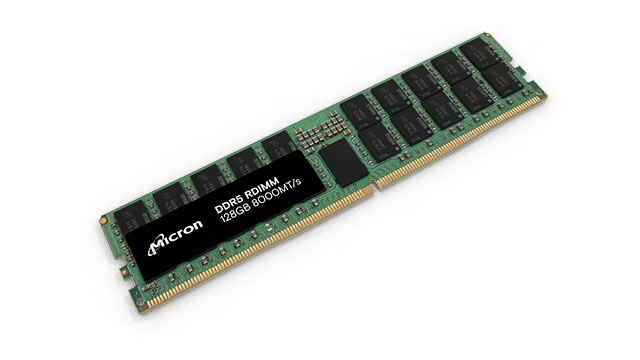
On June 24, Micron reported a significant beat on EPS, revenue, margins, and guidance. Following this, MU shares rallied after hours as AI memory demand showed no signs of slowing down.
Truist Financial raised its price target for American Express from $360 to $375 while maintaining a Buy rating. On July 1, Piper Sandler initiated coverage of the payments and consumer finance sector, positioning American Express as a key holding. A Discounted Cash Flow (DCF) model suggests AXP's fair value could be $403.04, indicating it is 16% undervalued. On July 7, TD Cowen raised its price target for American Express from $330 to $338 while maintaining a hold rating.
The Apple-Intel chip manufacturing deal is facing timeline challenges, with analysts expecting production to take two to three years. On June 25, Apple raised prices on Macs by 15-20% and iPads by 15-25% due to soaring memory and storage costs. On the same day, Apple stock fell nearly 4.89% following the price hike. Apple stated that unprecedented demand for memory from AI data centers caused the increase. On July 2, American Express expanded its partnership with Apple to allow cardholders to redeem rewards points at checkout via Apple Pay.
Bitcoin's price plunged to $62,000 amid warnings that on-chain demand remains weak. Analysts suggest that Bitcoin's realized price is currently near $53,000, which serves as a historical value zone. This decline coincides with a period where ETF inflows have stalled.
US futures for the S&P 500 and Nasdaq 100 rose by 0.3% and 0.5% respectively as semiconductor stocks began to recover. Markets are closely watching Micron's third-quarter earnings to assess the sustainability of the AI-driven trade. Additionally, Alphabet shares increased by 0.5% following the news that it will replace Verizon in the Dow Jones Industrial Average.
On June 24, Tesla, Sunrun, and Renew Home announced an agreement to deliver over 16 gigawatts of flexible energy capacity to hyperscalers and utilities. On June 25, Tesla announced plans to increase production at its Berlin plant by 20% to 7,500 vehicles per week starting in October, requiring the recruitment of an additional 1,000 employees.
NYSE-listed Prologis has publicly announced a potential takeover bid for FTSE 100 logistics property group Segro after its initial offer was rejected. On June 30, Prologis intensified its bid to acquire Segro following the rejection of its $16.6 billion all-stock offer. On July 2, the FTSE 100 jumped 175 points to reach 10,654, marking a two-month high for the index.
KB Home reported Q2 revenue of $1.11 billion, a decrease from $1.53 billion a year earlier due to pressures in the U.S. housing market. Following these results, the company narrowed its full-year financial outlook. Despite the drop in revenue, shares of the company rose following the announcement of the financial results in June 2023.
FedEx reported its fiscal 2026 fourth-quarter financial results after the market close on June 23. FedEx shares declined as the company's earnings guidance for fiscal year 2027 came in below expectations. The fourth quarter was the last to include the freight business before its spin-off into a separate company on June 1. On July 1, the Financial Times reported that CMA CGM is nearing a $1.4 billion deal to acquire FedEx's logistics unit.
The Ethereum Foundation has announced a reorganization aimed at cutting its budget by 40% and reducing its workforce by approximately 20%. This move concludes a planned transition toward a leaner, endowment-style model with a narrower set of strategic priorities. The shift is designed to ensure long-term sustainability through a more focused organizational structure.
Carnival shares fell nearly 6% after issuing a third-quarter profit outlook that missed analyst expectations. Although the company reported adjusted earnings of $0.41 per share for the quarter ended May 31, beating the $0.33 estimate, the weak outlook overshadowed this achievement. JPMorgan maintained an Overweight rating on Carnival following a Q2 earnings beat. The company's cost-saving measures helped offset yield pressure and weakness in the European market. However, Carnival faces risks from debt, fuel, currency, and costs.
The US Flash Composite PMI Output Index rose to 52.2 in June, reaching a five-month high. The Manufacturing PMI increased to 55.7, marking a 49-month high for the sector. However, the S&P Global US Manufacturing PMI fell to 53.9 in June, a three-month low, yet it still signals expansion for the eleventh consecutive month.