Track the evolution of major financial and economic events
Investors anticipate an end to the era of shrinking US stock supply as major companies like SpaceX and OpenAI prepare for massive IPOs. SpaceX is expected to raise up to $75 billion at a $1.75 trillion valuation, while OpenAI and Anthropic have already filed confidential registration statements. The combined capital raise from these tech giants is projected to exceed $160 billion, occurring alongside a slowdown in corporate share buyback programs.
VinFast reported a Q1 loss of $0.48 per share, wider than the estimated $0.31, as revenue of $920.69 million missed the $1.09 billion target. Despite the wider losses, the company saw a 42% year-over-year increase in global revenue and a 61% rise in vehicle deliveries to 58,577 units. To shift toward an asset-light model, VinFast announced plans to sell its Vietnam manufacturing business for $530 million.
Broadcom reported a 48% year-over-year revenue growth, driven by a 143% surge in AI semiconductor revenue. Despite securing long-term agreements with Google, Meta, and OpenAI and forecasting $16 billion in Q3 AI revenue, the stock experienced sharp volatility. Shares plunged 12.59% on June 4, just one day after the company delivered its quarterly earnings report.
Campbell reported a rise in fiscal third-quarter profits despite a sales slump, with adjusted EPS of $0.50 beating analyst estimates. Revenue fell 4.4% to $2.37 billion, missing expectations as organic sales dropped 4% due to inflation and weakness in the snacks segment. The CEO noted a growing trend toward at-home cooking, warning of continued pressure on the restaurant industry.
Applied Materials opened its new $500 million Tampines Campus in Singapore to double production capacity, followed by the launch of advanced manufacturing systems for AI chips. The company also entered a long-term partnership with EssilorLuxottica to develop augmented reality displays and AI glasses. Consequently, Barclays raised its price target for Applied Materials while maintaining an Overweight rating.
On June 10 and 11, several tech and biotech firms, including Real Messenger, Tango Therapeutics, Almonty, and Shattuck Labs, closed or priced significant offerings to boost liquidity. Meanwhile, SpaceX finalized its IPO price at $135 per share, with retail investor orders remarkably exceeding $100 billion. Despite this demand, there are formal calls for the SEC to delay the SpaceX IPO to ensure market integrity and investor protection.
Uranium Energy Corp held its fiscal Q3 earnings call to discuss operational performance, reporting a wider loss per share for the quarter. Following the report, the company's shares traded lower on the AMEX exchange. Strategically, the company has decided to preserve its uranium inventory rather than selling at current market prices.
General Motors announced a strategic investment in the startup Peak Energy to develop sodium-ion battery cells for grid-scale energy storage. The partnership aims to commercialize these energy storage systems after 2029, marking the first significant entry by a non-Chinese automaker into the sodium battery sector. This move has prompted Korean firms to accelerate their own technology adoption to remain competitive in the evolving market.
Tims China (TH International) is pivoting its strategy toward franchising after reporting a 14.6% decline in Q1 revenues to RMB256.7 million. Management aims to prioritize profitability by shifting resources to franchise models and reducing discount-driven promotions while continuing to close underperforming stores. Additionally, J. M. Smucker reported strong Q4 results, while Domo and Brixmor Property Group provided updates on their respective upcoming earnings release schedules.
Cracker Barrel reported a Q3 EPS beat primarily driven by a one-time litigation gain, despite a 2.6% drop in comparable restaurant sales and a 55% decline in operating income. The company subsequently raised its FY26 sales and adjusted EBITDA guidance to a range of $120 million–$125 million. Additionally, Academy Sports posted positive Q1 results with $1.442 billion in net sales and increased its full-year outlook.
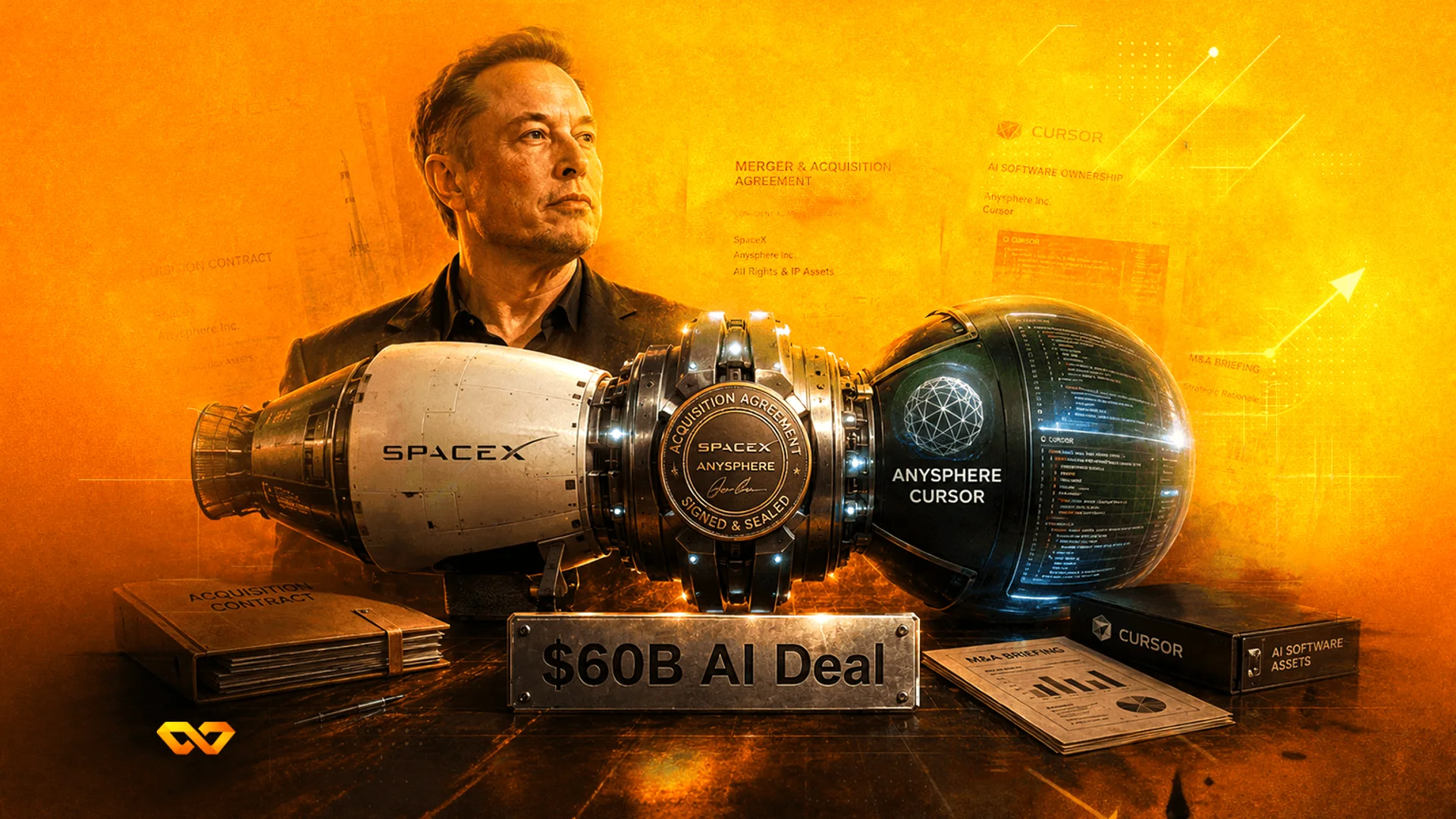
SpaceX has accelerated its timeline for deploying space-based AI computing infrastructure, aiming for initial demonstrations by late 2027 instead of the previously planned 2028. These plans were disclosed during investor presentations held ahead of the company's record-breaking IPO. Following the IPO, SpaceX made its first major strategic move by acquiring Anysphere, the creator of the AI coding platform Cursor, for $60 billion.
Invesco Ltd. reported preliminary assets under management (AUM) of $2,453.9 billion for May 2026, marking a 4.9% increase from the previous month. While the Invesco Income Fund achieved positive returns in Q1 2026, it underperformed its benchmark due to rising Treasury yields, leading the fund to increase allocations to Agency MBS and non-Agency RMBS. Meanwhile, Cohen & Steers reported a decline in AUM to $99.5 billion, driven by market depreciation and distributions despite seeing net inflows.
SailPoint reported strong Q1 2027 financial results, beating Wall Street estimates with a 22% year-over-year revenue jump and Annual Recurring Revenue (ARR) reaching $1.163B due to robust SaaS demand. Following the earnings beat, management raised its full-year 2027 targets for ARR, revenue, and margins, while guiding for 17-18% growth in Q2. The company also highlighted its new Agentic Fabric technology for governing AI agents, amid broader reports of AI-driven growth and product improvements.
Gilead and Merck announced mixed clinical trial results, discontinuing a Phase 3 study for non-small cell lung cancer due to disappointing outcomes. Conversely, the companies reported that Phase 3 trials for a once-weekly oral HIV treatment regimen met their primary efficacy endpoints with a safety profile comparable to existing treatments. Plans are underway to submit this data to global regulatory authorities and present detailed findings at an upcoming scientific congress.
Verizon is expanding its fiber network to reach 40-50 million locations to support 5G, edge computing, and AI demand, while maintaining its status as a defensive compounder with a 5.5% dividend yield. The company recently reported its strongest margin and EPS growth in years, alongside a 4% year-over-year increase in Q1 free cash flow despite restructuring costs. Management has reaffirmed its 2026 free cash flow guidance of over $21.5 billion and continues to execute a $25 billion share buyback program.
JPMorgan Chase announced plans to deploy autonomous AI agents later this year to enhance operational efficiency and manage complex digital workflows. Alongside these tech advancements, the firm launched new digital tools for small business credit monitoring and customer analytics. Additionally, the bank expanded its $1.5 trillion Security and Resiliency Initiative to Canada, where it will help establish the Defence, Security and Resilience Bank (DSRB) to support critical industrial sectors.
Wells Fargo CFO Mike Santomassimo signaled an expected increase in net interest income (NII) for the second quarter of 2026. The bank reaffirmed its full-year 2026 NII target of $50 billion. Additionally, the CFO confirmed that the company remains on track to meet these financial objectives as previously projected.
SpaceX is preparing for a historic IPO scheduled for June 12, 2026, with an estimated valuation of approximately $1.8 trillion. Secondary market shares have already reached $160 as reports indicate Elon Musk has secured $26 billion in annual revenue for the company. Meanwhile, Starbase, Texas, is seeing a massive influx of staff as markets anticipate what could be the largest initial public offering in history.
The J.M. Smucker Co. reported Q4 2026 adjusted EPS of $2.77, exceeding analyst estimates, alongside its fiscal 2027 outlook. While the company expects net sales to decline by 3% to 4% next year, it anticipates growth driven by coffee cost relief and Hostess profit gains. This announcement came amid a series of quarterly financial reports from other firms including SailPoint, Lands' End, and Titan Machinery.
The recent US stock market rally is primarily driven by robust corporate earnings rather than market valuations. However, the AI-led momentum in the S&P 500 is facing headwinds from tightening liquidity and a strong jobs report that reinforced 'higher for longer' interest rate expectations. Furthermore, Wall Street consensus indicates decelerating earnings growth for major indices, while tech giants like Google and Meta are shifting capital allocation through massive equity and debt issuances.
FICO, EHang, and Caris Life Sciences announced major share repurchase programs to enhance shareholder value. FICO (Fair Isaac Corporation) increased its authorization to $2 billion, securing a $1.5 billion term loan to fund an accelerated stock repurchase agreement. Meanwhile, EHang launched a $30 million program, and Caris Life Sciences authorized the buyback of up to $100 million of its common stock.
Applied Digital signed a 15-year, 210 MW lease agreement with a major U.S. hyperscaler at its Delta Forge 2 site, marking its fifth AI Factory campus. The deal is projected to generate approximately $5.2 billion in revenue, causing company shares to rise 8.7% following the announcement. Additionally, the company priced a $1.59 billion offering of senior secured notes to fund the construction of a new building at its Polaris Forge 1 facility.
Corning shares surged 8% following a multibillion-dollar, multi-decade agreement with Amazon to supply optical fiber and connectivity solutions for AI infrastructure and U.S. data centers. The partnership aims to expand fiber-optic production and strengthen the domestic supply chain. This long-term deal is expected to create approximately 1,000 new jobs at Corning's manufacturing facilities in North Carolina.
Mission Produce reported second-quarter earnings that missed analyst expectations, leading to a decline in its share price during pre-market sessions. The company faced significant margin pressures due to high avocado supply from Mexico and delayed California harvests, despite recent efforts to diversify through the acquisition of Calavo Growers. While Mission Produce struggled, other market players like Gloo and Mama's Creations reported strong results, and Nasdaq futures gained ground despite the downturn in specific individual stocks.