Track the evolution of major financial and economic events
Analysts maintained bullish ratings and raised price targets for United Airlines despite weather-related flight cancellations and the announcement of new international routes. However, the airline warned of significant financial headwinds due to energy market volatility and geopolitical tensions in the Strait of Hormuz. Surging oil prices are expected to impact fuel costs by nearly $6 billion, directly affecting the company's forward-looking outlook ahead of its earnings report.
On July 6, Insulet Corporation launched its Omnipod 5 Automated Insulin Delivery System and Omnipod Discover platform in Spain. On July 7, Insulet launched its Omnipod 5 automated insulin delivery system for Type 1 diabetes patients. On July 8, Insulet announced the commercial launch of its Omnipod 5 system in Spain, marking the 20th country in its global expansion.
Vera Therapeutics shares saw a notable increase ahead of an anticipated decision from the U.S. FDA. Meanwhile, Steel Partners made a proposal to acquire InMode for $16.75 per share. Additionally, Greenwich LifeSciences shares rose following approval from the European Medicines Agency regarding its experimental drug GP2.
Several financial institutions raised their price targets for KLA Corporation and Citigroup throughout July. Morgan Stanley, Stifel, and UBS increased their targets for KLA to a range between $255 and $274, with Stifel maintaining a 'Buy' rating and UBS a 'Neutral' rating. Additionally, Evercore ISI adjusted its price target for Citigroup upward from $139 to $143.
Johnson & Johnson is scheduled to release its Q2 earnings results on July 15, 2026, with analysts forecasting earnings of $2.85 per share and $25.05 billion in revenue. The company's stock rose 3.6% ahead of the announcement. Additionally, Zacks reports indicate that JNJ is among the companies poised to beat earnings estimates in their upcoming quarterly reports.
Unum Group entered into a $3.8 billion reinsurance agreement with Fortitude Re to manage risks associated with its individual long-term care insurance policies. Following the announcement, Wolfe Research lowered its price target for the company, and Unum shares fell 3.86% to close at $88.78. By July 12, the group agreed to reinsure an additional portion of its long-term care liabilities under the same multibillion-dollar deal.
On July 6, Goldman Sachs raised its price target for Citigroup (C) shares to $162 from $149, and increased its price target for PNC Financial Services to $267 from $244. On July 7, UBS raised its price target for Citigroup shares to $150 from $134 and adjusted the price target for PNC Financial Services Group to $288 from $263.
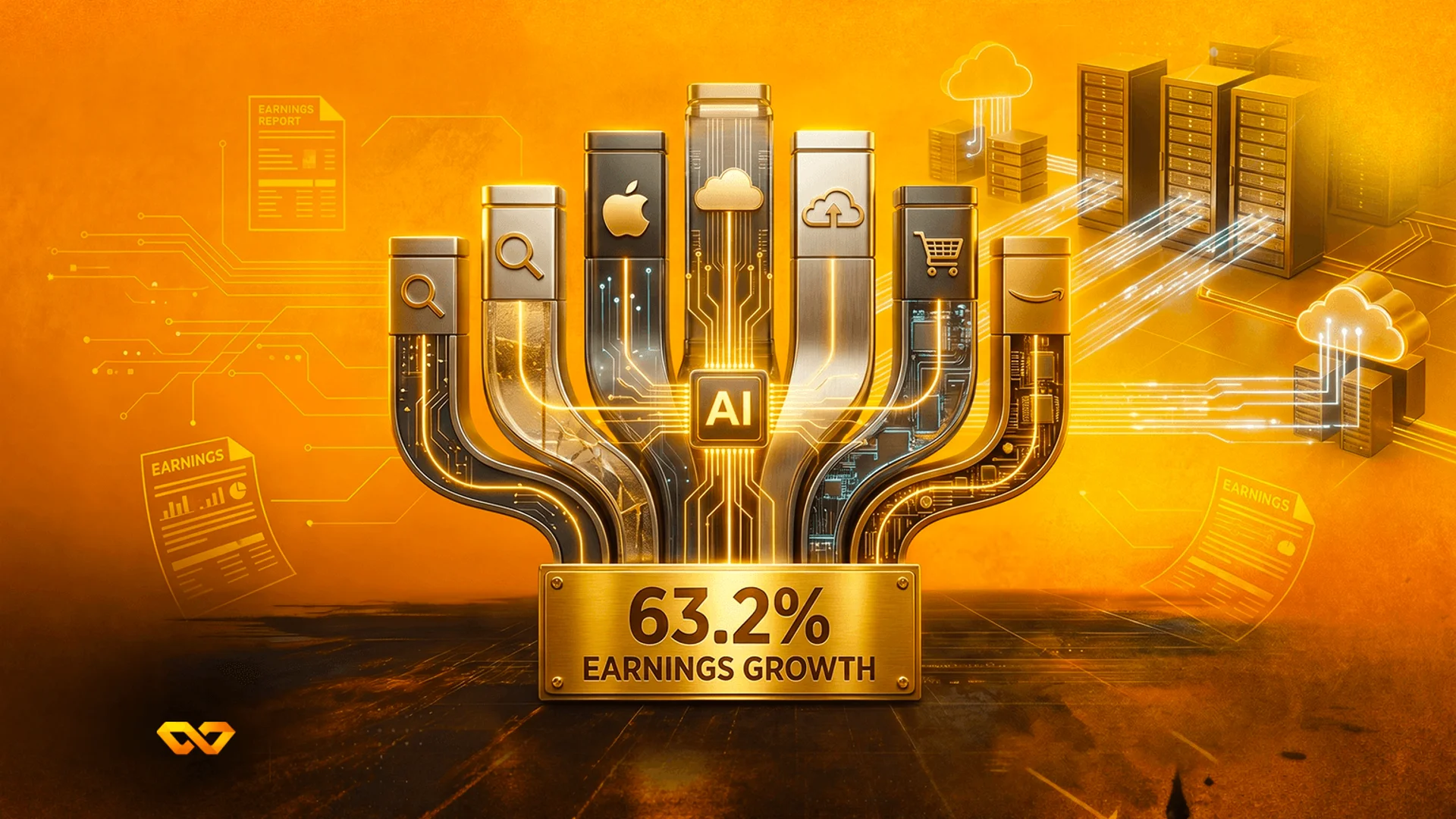
A SemiAnalysis report revealed that Nvidia's next-generation Kyber NVL144 rack-scale architecture has been delayed by more than 12 months. Despite the delay, Morgan Stanley maintained an Overweight rating and a $288.00 price target for NVDA, noting that revenue surged 71% to $253.5 billion over the last year. Furthermore, Nvidia has been identified as a top earnings growth pick for the second half of 2026 based on rising profit estimates.
Silver prices (XAGUSD) experienced fluctuations in July driven by shifting interest rate expectations. On July 6, the outlook improved as a weak jobs report lowered the odds of a rate hike. However, by July 14, silver prices declined as surging oil prices increased the probability of further interest rate hikes by the Federal Reserve.
On July 6, Ripple secured preliminary authorization as a Crypto-Asset Service Provider (CASP) from Luxembourg's financial regulator (CSSF). This authorization marks an important step for Ripple in strengthening its presence in the European market.
On July 6, Vitalik Buterin unveiled a multi-year transformation initiative called 'Lean Ethereum' targeting 10,000 transactions per second. This overhaul is positioned as the third fundamental evolution of the network, comparable in scope to the 2022 Merge. On July 8, Ethereum mainnet gas fees dropped to 1 gwei, providing a rare window for low-cost transactions. On July 9, Ethereum gas fees fell to as low as 1 gwei, significantly slowing the network's ETH burn rate.
Bitcoin sustained its position above the $63,000 threshold entering the new week, recovering from late June setbacks. Digital asset markets registered consistent weekly advances as cryptocurrencies demonstrated stability despite tech equity vulnerabilities. On July 9, Bitcoin was trading near $62,000 with technical indicators suggesting an attempt to recover from its recent decline.
Sovereign wealth funds have shown a clear preference for accessing Bitcoin and digital assets through regulated investment channels. On July 7, Switzerland-based Bitcoin Suisse secured double licensing wins for digital asset services in the Middle East and Europe. The Middle Eastern operations are expanding through the subsidiary BTCS (Middle East) Ltd., which secured full regulatory authorization to operate in Abu Dhabi on July 8.
Bitcoin reclaimed the $63,000 level in early July, driven by whale accumulation that offset record outflows from spot ETFs. By mid-month, crypto regulation surpassed geopolitics as the primary market catalyst, leading to steady prices as traders awaited policy decisions. Despite this recovery, the first half of 2026 saw a 59-percentage-point performance gap, with public crypto companies gaining 23% while crypto assets fell 36%.
Speculation regarding a potential merger between Tesla and SpaceX has intensified following SpaceX's record-breaking IPO, which JPMorgan valued at $1.77 trillion. Analysts suggest the IPO has simplified the valuation and structuring of a deal, providing Elon Musk with significant acquisition currency. Furthermore, reports indicate an increasing exchange of engineers and resources between the two companies as a potential precursor to a formal combination.
On July 6, OPEC+ agreed to further increase its oil output targets starting from August. On the same day, exports via the Strait of Hormuz began to recover, potentially contributing to global supplies. On July 7, the extension of production increases was confirmed as Gulf oil flows recovered and prices cooled.
Circle Internet Group shares plummeted 17.5% to a four-month low of $62.63 on July 5. The company is currently facing a criminal complaint in Wisconsin for allegedly failing to comply with a court order to recover stolen USDC funds linked to an investment fraud probe. While the stock rose 5% to $66.14 on July 13 following US regulatory approval for its national trust bank, it remains down approximately 20% year-to-date with technical indicators suggesting potential further declines.
Traders are watching the Federal Reserve minutes on July 5 to see if gold can break above its 52-week moving average. Gold prices experienced noisy trading on July 9 as market participants monitored interest rate markets and the US dollar. Technical analysis indicates a looming 'Death Cross' formation, signaling potential downside risks for gold.
Wood Mackenzie analysts predict the end of cheap U.S. natural gas by 2035, driven by AI data center demand and LNG export expansion. Despite this long-term outlook, futures prices declined in mid-July due to larger-than-expected inventory builds and cooler weather forecasts. Additionally, planned maintenance at the Freeport LNG facility is expected to reduce both demand and export volumes.
Falling crude oil prices have been identified as a key catalyst for US market movements this week. Investors are awaiting key corporate earnings and the release of FOMC meeting minutes. On July 6, the S&P 500 triggered a rare bullish technical signal seen only a handful of times since 1950. However, Polymarket traders expect the S&P 500 to open lower despite another record close for the Dow Jones Industrial Average.
Federal Reserve working papers found that unauthorized immigration during the Biden administration increased U.S. home prices by 2.2% and rents by 1.4%. Research from the Dallas Fed further estimated that illegal immigrant flows accounted for 30% of home price growth and 20% of rent increases. Consequently, federal authorities issued new guidance to financial institutions regarding credit risks associated with borrowers lacking U.S. work authorization.
On July 5, Michael Saylor stated that Bitcoin's traditional four-year cycle is fading due to institutional capital flows and credit. On July 6, Saylor asserted that Bitcoin's four-year halving cycle is obsolete and is no longer the primary market driver.
Bitcoin and Ethereum saw gains in early July as liquidity shifted toward large-cap crypto assets amid cooling broader risk appetite. While the market capitalization of altcoins excluding the top two assets fell 23% in H1 2026 to $666B, recent data shows a shift in momentum. As of July 13, the Altcoin Season Index rose to 58 points, signaling a potential rotation of capital from Bitcoin into the broader altcoin market.
RTX was recently removed from the Russell 1000 Dynamic Index, potentially impacting index-linked funds despite maintaining a robust backlog and a fair value estimate of $215.73 per share. In July, its subsidiary Raytheon invested $100 million to expand its Rhode Island facility. Additionally, RTX secured a 15-year, $2.68 billion contract to provide training services for the British Army.