Track the evolution of major financial and economic events
Law firm Johnson Fistel initiated an investigation into potential securities law violations by Simulations Plus. The probe focuses on a significant revenue guidance cut, a $77.2 million impairment charge, and a dispute with the company's auditor. The investigation continued through mid-June to address these financial and regulatory concerns.
Eli Lilly's stock price surged following impressive late-stage trial results for its next-generation weight-loss drug. The company also reported that its drug Jaypirca significantly reduced the risk of disease progression in CLL/SLL patients. Furthermore, Eli Lilly expanded its portfolio by acquiring 4E Therapeutics, a developer of non-addictive painkillers.
Citigroup raised its year-end 2026 target for the S&P 500 to 8,100 from 7,700, while increasing its earnings-per-share forecast to $350. Despite this upward revision, Citi strategists reported an aggressive build-up of short-selling positions in U.S. stocks. The bank also noted that bullish wagers in the tech sector remain stretched, leaving the market vulnerable to potential volatility despite recent selloffs.
AstroNova reported a 4.4% sales growth for the first quarter of fiscal 2027, achieving positive earnings per share driven by a surge in Aerospace unit sales and margin expansion. Following these results, the company agreed on June 17 to be acquired by Arcline. The all-cash transaction is valued at $29.00 per share.
Small-cap results showed a mixed performance on June 8. Gamehaus reported a 9.1% year-over-year decrease in Q3 revenue to $26.2 million. Meanwhile, Duluth Holdings beat analyst estimates with an EPS loss of $0.20 and revenues of $98.59 million, driven by a gross margin expansion to 57.4% due to cost-cutting measures and reduced promotions.
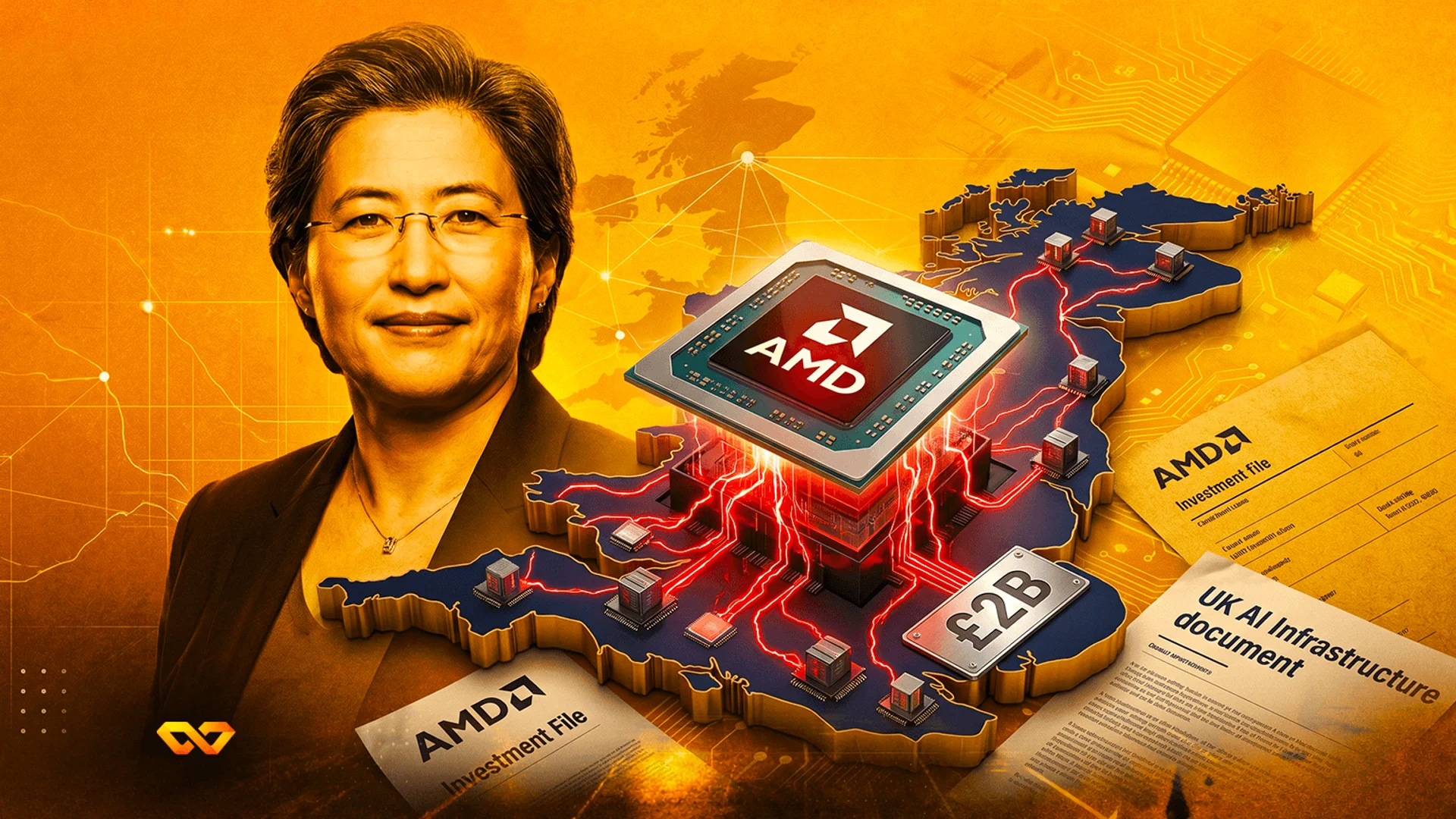
AMD has announced a £2 billion investment commitment over five years to bolster advanced computing and scientific research in the UK. This investment includes funding for the Zenith and Sunrise supercomputing projects at the University of Cambridge. Furthermore, AMD entered into a definitive agreement with Rackspace Technology for the phased deployment of 30 MW of AMD-based compute capacity.
Nebius announced a £1.7 billion investment to expand AI infrastructure in the UK through three new deployments of NVIDIA technology. The collaboration includes the launch of a 'Physical AI Living Lab' project in partnership with Nvidia. Following the announcement on June 12, Nebius stock rose more than 4% in pre-market trading.
Bill Ackman's Pershing Square restructured its $13.71 billion portfolio by initiating a new stake of 5.65 million Microsoft shares worth $2.09 billion while substantially reducing its Alphabet holdings. Conversely, David Tepper's Appaloosa Management slashed its Microsoft position by 82% during the same period. Amidst these shifts, Microsoft's Xbox division reported a slim 3% profit margin with internal reports indicating significant job cuts are expected next month.
NVIDIA and SK hynix have launched a multiyear technology partnership to advance next-generation memory for AI infrastructure. NVIDIA also secured deals with leading South Korean firms to build large-scale AI infrastructure across Asia. As part of these developments, South Korea's Naver plans to establish gigawatt-scale AI factories utilizing NVIDIA's technology.
MicroStrategy's stock price fell below the $100 level, breaking a strategic threshold tied to its Bitcoin holdings. Despite the drop, the company reported a year-to-date BTC yield of 12.8% and currently holds 845,256 BTC. Analysts at Benchmark noted that 'death spiral' fears regarding forced Bitcoin sales overlook several critical financial steps.
SpaceX has earmarked a higher percentage of shares for direct retail investment through Robinhood and SoFi platforms as it prepares for a record-breaking IPO valued at $1.75 trillion. The company currently accounts for 82% of US space launches and owns 50% of all satellites in orbit. Bloomberg analysts and Wall Street institutions are closely monitoring preparations for what could be the largest market debut of all time.
S&P Dow Jones decided against fast-tracking SpaceX into the S&P 500 by maintaining existing eligibility rules, a move that could impact upcoming mega AI IPOs like Anthropic and OpenAI. Conversely, Nasdaq updated its rules to allow large companies to join the Nasdaq 100 index after only 15 trading days. Following its IPO, SpaceX saw the Schwab US Large-Cap Value ETF acquire a small position in the company, utilizing a policy that permits holding up to 10% of assets outside its core value methodology.
Investors are preparing for SpaceX's historic market debut this Friday amid warnings from experts regarding high valuations and Elon Musk's total control, especially as the company is not yet profitable. Prominent investors like Steve Eisman and Brad Gerstner expressed caution over potential risks for retail traders. Meanwhile, stocks tied to SpaceX have seen surging options volumes, while reports revealed Musk’s selective tactics in choosing investors leading up to the IPO.
President Donald Trump stated he has held discussions with AI companies to ensure the American people benefit from the industry's success. Simultaneously, OpenAI is planning its largest redesign of ChatGPT to transition the service from a chatbot into a broad productivity platform. The overhaul will integrate coding tools, AI agents, image tools, and third-party applications into a single unified interface.
Johnson & Johnson presented significant clinical data at ASCO 2026, featuring promising results for nipocalimab and practice-changing Phase 3 outcomes in prostate cancer and myeloma. The company also announced a $1 billion acquisition of Firefly Bio to access its specialized platform for targeting KRAS-driven tumors. Furthermore, new data showed that the Talvey and Darzalex Faspro combination reduced disease progression risk by 72% in earlier-stage multiple myeloma.
DoubleDragon aims to reach P500 billion in annual revenue by 2035, driven by expanding Hotel101 to 100 countries and targeting 1 million rooms globally by 2050. Meanwhile, Air New Zealand anticipates high fuel costs persisting through 2027, having only partially offset the impact via hedging and fare adjustments. Additionally, Endeavour Mining reported record free cash flow in 2025, supported by the Assafou project's long-term potential for higher production at lower costs.
MicroStrategy sold 32 Bitcoin for approximately $2.5 million in late May at an average price of $77,135 per coin. This marks the company's first Bitcoin sale since December 2022 and was executed to fund dividend distributions on its preferred stock. Despite the sale, the firm continues to hold 843,706 Bitcoin, and shareholders recently approved semi-monthly dividend payments for STRC preferred stock.
Global airline CEOs met in Rio de Janeiro to address a major fuel crisis and operational disruptions caused by the war in Iran. The conflict has driven up jet fuel costs and forced flight detours, leading airlines to significantly slash their 2026 profit forecasts. In response, Emirates plans to introduce traveler incentives and safety assurances to mitigate the decline in demand triggered by the regional instability.
Institutional investors have strengthened their control over Roper Technologies, now collectively owning 93.31% of the company's outstanding shares. Throughout June, major moves included Manitou Investment Management increasing its stake by 8.8% and WINTON GROUP boosting its position by 714.4%. Additionally, Entropy Technologies raised its stake by 154.7%, amid broader institutional activity involving new positions in firms like Cintas Corporation and Motorola Solutions.
X-energy reported strong financial results for Q1 2026, with revenues and grant income reaching $43 million, up from $21 million the previous year. This growth followed the company's Nasdaq IPO debut under the ticker XE, which raised approximately $1.1 billion in net proceeds. On June 8, X-energy held its first earnings call to discuss these developments following its successful transition to a publicly traded company.
Financial markets experienced a significant shift as Broadcom's revenue miss triggered a semiconductor selloff, leading the S&P 500 to its largest single-day drop since April 2025. Conversely, the Dow Jones rallied 900 points as investors rotated out of tech, even as 10-year Treasury yields surged to their highest levels since May 2025. The week concluded with the S&P 500 snapping a nine-week winning streak, posting a 2.6% weekly loss following a stronger-than-expected jobs report.
Wall Street analysts suggest SpaceX's valuation could reach $2 trillion, driven primarily by Starlink's growth ahead of a potential IPO. The company recorded a 33% revenue increase over the past year, bringing its current valuation to $1.77 trillion with secondary market shares hitting $160. Additionally, a recent launch failure by competitor Blue Origin has highlighted the widening competitive gap favoring SpaceX.
Goldman Sachs forecasts the S&P 500 will reach 8000 points by year-end 2026, following a 14.37% Q1 revenue growth driven by a surge in investment banking fees. The firm is currently serving as the lead advisor for major upcoming IPOs, including OpenAI and SpaceX. Due to strong earnings and price performance, Goldman Sachs was added to the Zacks Focus List as a top pick, while MSCI Inc. was also highlighted for expected market outperformance.
Boeing delivered the first two 787-9 Dreamliner jets to the new Saudi carrier Riyadh Air, which plans to serve over 100 destinations with a fleet of up to 72 aircraft. In May, the company delivered 60 commercial aircraft, a 33% year-over-year increase, despite net new orders falling to 11 units following 16 cancellations. Additionally, Boeing secured an $880 million contract from the U.S. Navy to upgrade and sustain training systems for the P-8A Poseidon aircraft.