
EL7 Research is institutional research on US stocks, artificial intelligence, semiconductors, bonds, currencies, gold and central banks, built on data we own rather than rewritten headlines. Our research agents work from the EL7 market database and from primary documents: SEC filings including 10-K, 10-Q and 13F forms, central bank data, positioning reports (COT), earnings results and years of price history. Every figure is verified before it reaches the page, every term is explained the first time it appears, and every article carries original charts and a last-updated date. New articles are published weekly, and published ones are re-checked when the facts move. The result is institutional depth in plain language: research you do not have to decode, but can act on in the market.

New York Federal Reserve President John Williams said this week that rising bond yields reflect “a strong US economy fuelled by significant investment in AI and data centres”. We put that statement to the test.

In one week, Microsoft announced a cloud region in Saudi Arabia, G42 disclosed that it is considering a multi-billion-dollar funding round, and Stargate UAE made headlines with five gigawatts. This guide does not explain what a data centre is again — we explained that yesterday.

On 23 August, we posed a testable question about Dell's margin. The company answered on 1 September — and the decline did stop. But the pressure did not disappear; it shifted to another line item.
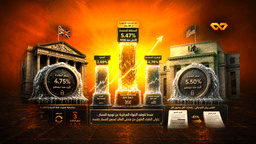
The policy rate in neither London nor Washington has moved since last December. But the voting record within the two committees reversed completely in the first seven months of 2026: in February, four Bank of England members called for a cut; by July, three called for a hike — and the rate was unchanged at both meetings.

Three major power contracts were announced within days: Google is buying 396 MW of geothermal power, Hut 8 is leasing 704 MW in Texas, and Applied Digital has exceeded one gigawatt of contracted capacity.
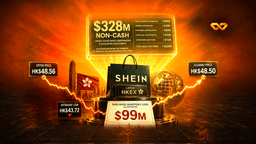
Shein listed on the Hong Kong Stock Exchange at HK$48.56 per share, fell during the session to HK$43.72, around 10% below the offer price, then closed at HK$48.50. Headlines reported the low; the market paid the close: just six Hong Kong cents below the offer price.

Russia has nearly doubled the number of carriers serving its sanctioned Arctic project, from 11 vessels at end-December to 20 today. This occurred just as Asia’s spot LNG price reached a four-year high following the halt in Qatari supplies. Yet the project is operating at around 38% of its active capacity.

On 31 August 2026, the US Environmental Protection Agency granted refiners the largest exemption from renewable fuel blending obligations since 2017. The following day, the White House summoned those same companies over rising fuel prices and called for an investigation into price manipulation. Two levers in opposing directions within twenty-four hours.

In January this year, SB Energy — the energy infrastructure developer controlled by SoftBank — granted stock warrants to its customer OpenAI, rather than to an investor in it. The warrants were worth 3.6 billion dollars when granted and 5.5 billion by end-June, with not a single dollar of cash paid out.

Over nine days, four networks and services deliberately halted themselves, with the largest test being the full shutdown of the Cronos network after the Tectonic lending protocol exploit. The halt achieved its purpose: trapping about 68.7 million dollars out of 75 million before they could leave the chain.

Since the Strait of Hormuz closed in early March, the assumption has been that Asian refineries found alternatives. Our data say something entirely different: no replacement occurred. Asia cut its refining runs by 30% and drew down its tanks, then closed the balance with a shortfall, not an alternative.

Eight major central banks, one question: who actually changed direction? The answer in our record of rate decisions is not the one markets are pricing. Four banks have already raised rates during 2026, with the first moving six months before anyone began pricing it.

Marvell reported a record quarter, and guided the following quarter above consensus estimates on both revenue and earnings, while raising its outlook for two years — yet its shares fell 10.29%. A day earlier, Salesforce beat on revenue by one-fifth of Marvell's margin and rose 22.58%.

The US Department of Justice is preparing to activate a maritime prize court to seize Iranian oil cargoes, an action described as reviving an eighteenth-century law. But the statute is in force today; Congress renumbered it in 2019 and amended it in 2021. Activation requires five conditions, four of which are already met — and the fifth is a two-word phrase.

The door to listing crypto funds opened, and money arrived. But when fund inflows are set against price performance, the relationship does not hold: a Solana fund reached the billion-dollar mark while the token lost 45.6% of its value, and Zcash rose 50.1% two days before its fund was listed — that fund was a conversion of an existing fund since 2017 that did not buy a single token.
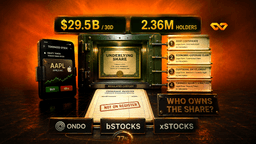
$29.5 billion moved through the tokenized equities market over thirty days, and its holder count exceeded 2.36 million. Yet four different metrics are reported for this market as though they were one number, three issuers account for 77% of it, and none of its four models gives you registered ownership in your name. This is a reading of what you actually own in the chain — link by link.
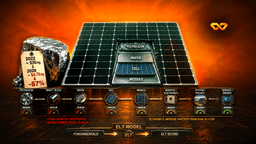
The price of one commodity fell 87% in four years, overturning the profit map of an entire industry. This guide starts at the beginning — what a solar panel is physically, and how it is made and sold — before reaching the discovery around which everything is organised: the closer a company sits to silicon, the more it loses.

France's Pasqal reached Nasdaq on Friday — not through an initial public offering, but through a merger with a Special Purpose Acquisition Company (SPAC) — surging 73% before settling at 40%.
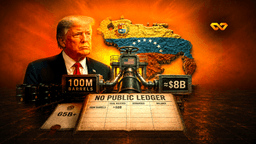
Washington is negotiating an equity stake in Venezuelan oil fields holding 90 billion barrels, while Caracas considers leaving OPEC. But the clearest feature of the dossier is not the prospective deal, but eight months of effective control over exports that moved about 100 million barrels worth an estimated $8 billion — with no published accounting.
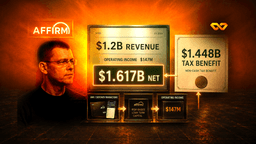
Affirm reported earnings per share more than thirteen times above the consensus estimate, sending the stock up 3.90%. But a reading of the annual report shows the quarter recorded net income greater than its revenue — something that cannot arise from operating activity.
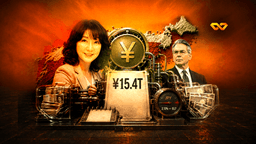
Japan’s Ministry of Finance announced the largest intervention in its history to defend the yen, joined by the US Treasury for the first time since 1998. We divided the amount spent by the actual move and examined positioning to determine whether the bet against the yen was closed — or rebuilt.
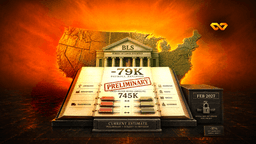
The US Bureau of Labor Statistics published its preliminary annual benchmark revision estimate: −79 thousand jobs. The figure passed without fanfare because it was released at the same moment the Federal Reserve Chair spoke in Jackson Hole. But it conceals 745 thousand jobs shifting between sectors, cuts reported annual growth by 37% — and does not change any published figure before February 2027.

On his 100th day as Federal Reserve chair, Kevin Warsh stood at Jackson Hole and delivered a speech titled «In Our Time», opening with a joke that was his thesis: «Just don't call it forward guidance». He said nothing about September.
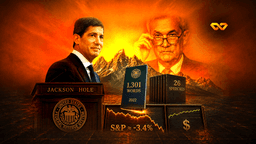
At exactly 10:00 am New York time today, Kevin Warsh (Kevin Warsh) takes the Jackson Hole podium for the first time as Chair of the Federal Reserve. Given the podium's reputation, we measured what it actually does: 26 keynote speeches since 1998, each against the S&P 500 and the dollar, using our price database.

13 press reports discuss NVIDIA's acquisition of Hugging Face, all tracing back to two anonymous sources — which contradict each other. In the company's regulatory filing record, as of the evening of 27 August, there is not a single entry mentioning Hugging Face. This report does not judge the deal; it reads the ledger.
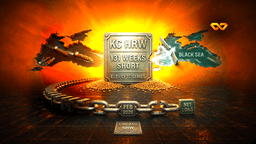
Speculators bet on Kansas wheat falling for 131 consecutive weeks — the longest streak on record since 2007, and about 2.5 times the next-longest streak. The bet broke in February, then the Black Sea shock hit in August on the only US contract that genuinely competes with Black Sea wheat — not the contract quoted in headlines.

Speculator positions are at the 95.3 percentile of twenty years. This alone is not new — positions reached this level in 53 weeks since 2006. What is new is that the previous fifty-one weeks were all buying a recovery from a low price, while the two August 2026 weeks are buying at the peak itself. This says nothing about the direction of the price — and much about the nature of the trade.

Gold closed August — through its 27 session — up 13.298%, on course for its strongest month since September 1999, 1.88 dollars per ounce above last January, with two sessions still open. But the question no one has asked is what gold did after that old candle: four months, three of them negative, and January 2000 closing below September 1999.

Three infrastructure deals in one day appeared to be a pattern; but the data show this is the normal pace for two firms that complete a deal roughly every three days. The real news came from the US Department of Justice that same day: a record $250 million fine, not over a deal, but over notifications that were not filed.

Salesforce's reported earnings beat expectations by 80%; $2.53 of that was a revaluation of an unsold investment stake, not revenue from a customer. CrowdStrike added $332.8 million in net new annual recurring revenue, 16.4% above the high end of its implied guidance. What did operations actually produce on each side?