Track the evolution of major financial and economic events
New York Fed President John Williams initially signaled openness to rate hikes, but Governor Christopher Waller later suggested he could support holding interest rates steady in September. Following these dovish hints, U.S. Treasury yields retreated from three-year highs. This shift sparked a rally on Wall Street and propelled Bitcoin prices to surpass the $80,000 mark.
On August 28, financial markets began pricing in a likely Federal Reserve interest-rate hike for September. This shift in expectations followed the keynote speech delivered by Chair Kevin Warsh at Jackson Hole. Investors now view the rate increase as a probable consequence of the specific comments made during the address.
Federal Reserve Chairman Kevin Warsh is scheduled to deliver a keynote speech at the Jackson Hole symposium this Friday. The appearance coincides with scrutiny over Treasury Secretary Scott Bessent’s plan to buy back long-dated debt. This Treasury initiative has raised questions regarding potential interference in the Federal Reserve's traditional policy domain.
On August 19, the Federal Reserve released meeting minutes detailing recent policy discussions among officials. The documents revealed a readiness to implement further interest rate hikes if inflation does not show signs of cooling down. These minutes underscore the central bank's commitment to monitoring economic data to guide its future monetary policy decisions and maintain price stability.
The Bank of Japan kept its policy rate unchanged at 1.00%, a decision approved by an 8-1 vote in line with market expectations. Board member Hajime Takata dissented, favoring an immediate hike to 1.25%. The bank reinforced its message of gradual normalization, keeping a potential interest rate hike in October firmly in focus.
Investors are closely monitoring the Federal Reserve as they await the latest policy statement. Significant attention is focused on the guidance expected from Chair Kevin Warsh on July 29. The market remains braced for these key updates regarding monetary policy.
The ECB is expected to keep interest rates unchanged at 2.25% during its July 23 meeting, while maintaining the option for a 25bp hike in September. Recent data shows tighter borrowing conditions in the Euro area, with 42% of firms reporting higher loan rates in Q2. While analysts generally expect rates to remain steady this Thursday, some experts suggest that a surprise rate hike cannot be entirely ruled out.
The Fed Chair stated that the fight against inflation continues and emphasized that all monetary policy options remain open, while also indicating a potential softening regarding interest rates. Warren Buffett praised Donald Trump's selection of Kevin Warsh as the new Fed Chair, calling it a good choice. Buffett expressed his confidence that Warsh will perform to the best of his ability in the new role.
Investors are focusing on Federal Reserve Chair Kevin Warsh's upcoming testimony before Congress. The testimony will address the current economic outlook. Markets are closely monitoring the July 14 event to understand the Fed's perspective on the economy.
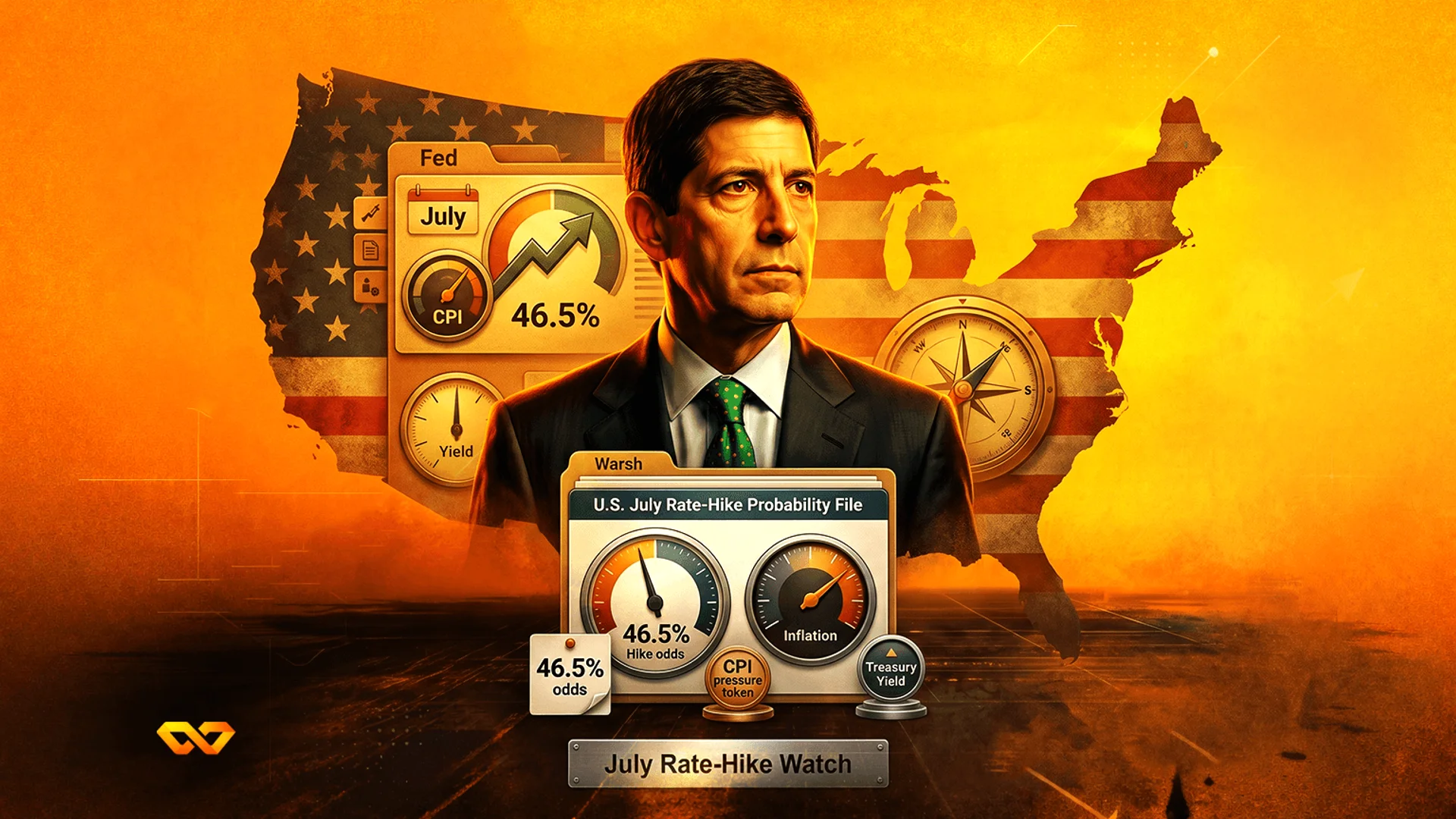
Market expectations for a Federal Reserve rate cut in July 2026 have vanished, with sentiment shifting toward a potential 25-basis-point hike, now at a 46.5% probability. This pivot follows a private sector surplus of over $112B in June, which bolstered risk asset markets. While the S&P 500 is expected to maintain momentum into mid-August, financial models are signaling a deceleration in overall gains.
The Bank of Japan may accelerate interest rate hikes to combat rising inflation pressures, partly driven by the war in Iran. Changing capital flows resulting from these policies could negatively impact risk assets like Bitcoin. Meanwhile, the BOJ maintained its economic assessment across all nine Japanese regions, stating they continue to recover moderately.
On June 23, the U.S. Federal Reserve is scheduled to release the results of its annual bank health checks at 4:00 p.m. ET. On June 24, gold, silver, and Bitcoin fell to their lowest levels of the year due to a strong dollar and fears of interest-rate hikes. On June 27, all 32 largest U.S. banks passed the Federal Reserve's annual stress test conducted on June 24, 2026, which included a hypothetical scenario with unemployment rising to 10%, commercial real estate prices falling 39%, home prices dropping 30%, and total losses of approximately $708 billion.
Markets are awaiting the release of the Personal Consumption Expenditures (PCE) index this week, the Fed's preferred inflation gauge. The career of former Fed Chair Alan Greenspan is being remembered, noting his nearly 20-year tenure across four presidential terms. On June 25, the core inflation rate hit 3.4% in May 2026, the highest since October 2023, strengthening bets that the Fed will hike rates by October.
The U.S. Federal Reserve is scheduled to release the results of its annual bank stress tests this Wednesday. The evaluation will focus on the largest U.S. banks to assess their financial resilience. This upcoming release follows the central bank's routine monitoring of the banking sector's stability.
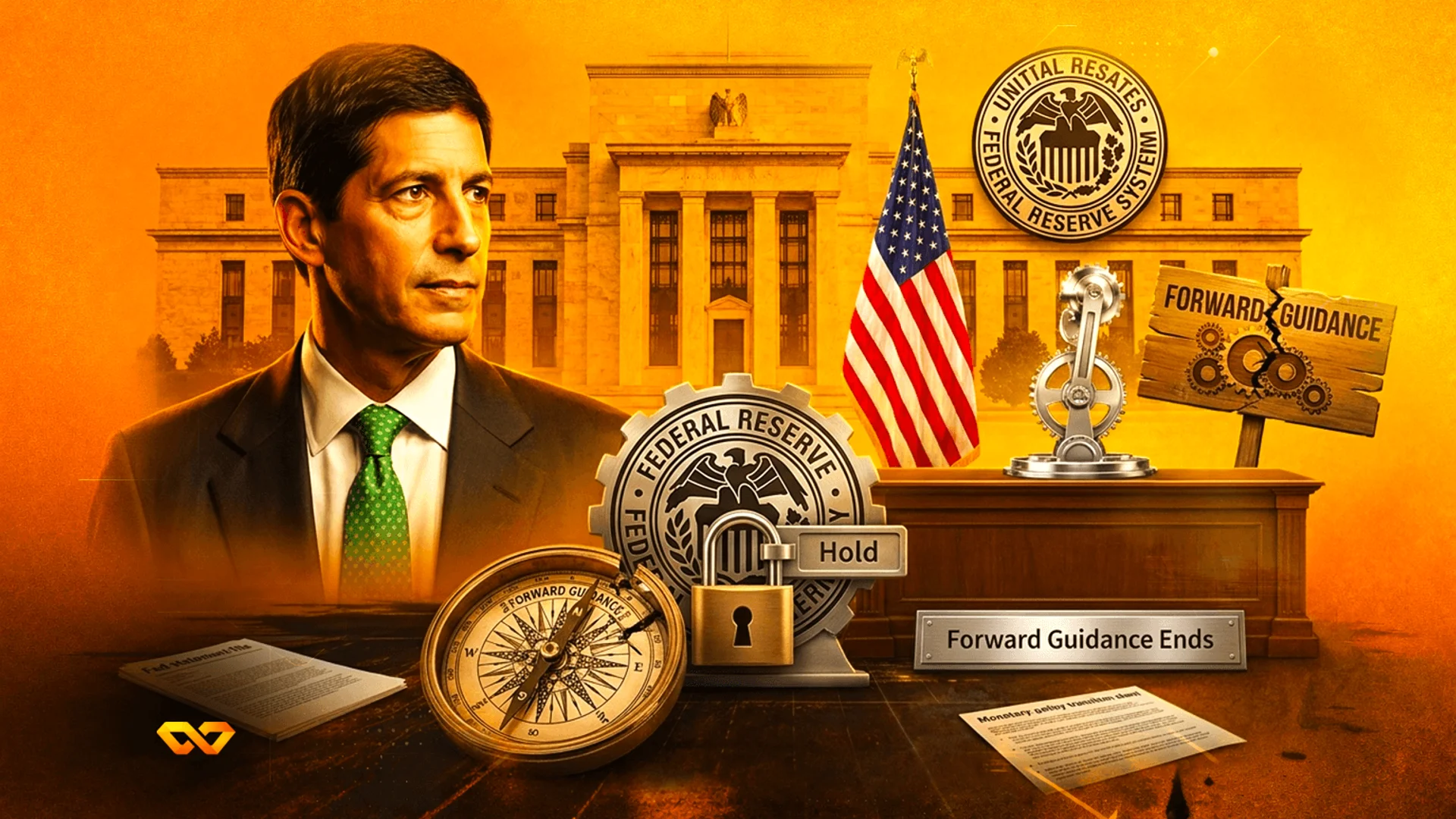
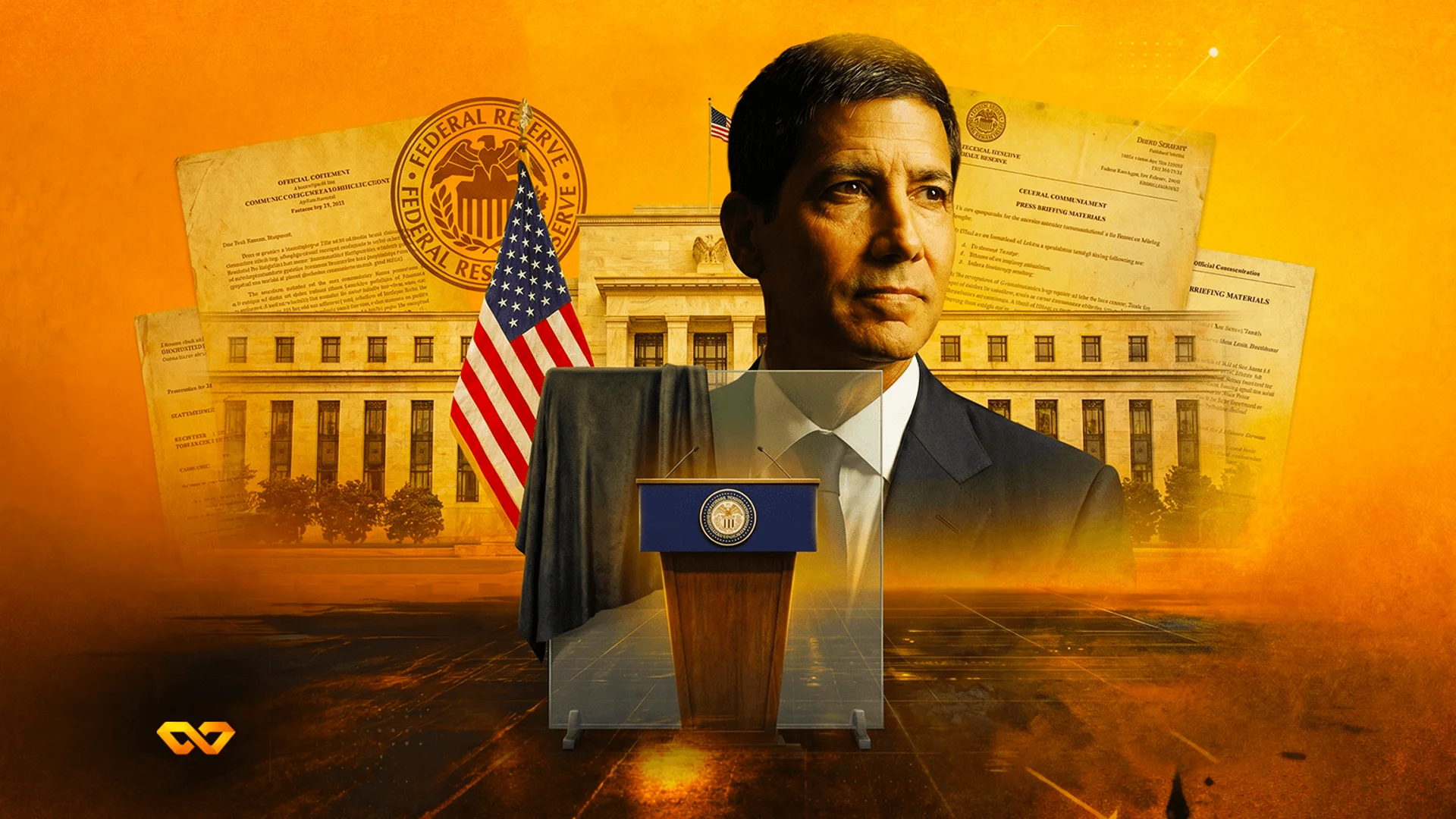
Kevin Warsh's debut as Fed Chair on June 17 signals a significant shift in the central bank's approach. This debut indicates a move toward tighter and more direct communication with financial markets. The event marks a strategic change in how monetary policy signals are conveyed to the public.
Kevin Warsh is preparing to hold his first press conference as Federal Reserve chair this week. This follows his leadership of the first meeting of top Federal Reserve officials scheduled for June 17. Markets are closely watching this debut appearance amid ongoing monetary policy uncertainty.
Newly appointed Fed Chair Kevin Warsh is presiding over his first FOMC meeting on June 16-17, with markets expecting interest rates to remain unchanged due to persistent inflation and labor market resilience. Concurrently, the Bank of Japan raised rates to a three-decade high, while the US dollar index hovered near a 10-day low as risk appetite improved. Reports of a preliminary US-Iran peace agreement further helped calm oil markets and softened the dollar's strength during the meeting period.
Markets are focusing on the upcoming Consumer Price Index data as a critical metric ahead of Kevin M. Warsh's first meeting as Federal Reserve Chair. The new chairman is implementing a strategy that reduces open communication, marking a reversal of long-standing transparency policies. Meanwhile, the Invesco Senior Loan ETF (BKLN) is trading at $20.51 with net assets totaling $7.1 billion.
Bank of Japan Governor Kazuo Ueda was hospitalized for a liver cyst, missing the June 15-16 policy meeting where deputies presided over proceedings. The central bank was widely expected to hike interest rates to a 31-year high to counter yen weakness and inflation. Amidst this potential tightening affecting crypto markets, reports emerged of a peace deal between the US and Iran, potentially shifting geopolitical market dynamics.
On June 11, the European Central Bank raised its policy rate by 25 basis points, marking its first hike since 2023. The ECB cited the Iran War as the primary reason for the increase, becoming the first major central bank to raise rates in response to new inflation concerns. Meanwhile, Chinese ADRs including BABA, PDD, and JD faced increased pressure and regulatory scrutiny.
Federal Reserve Governor Michael Barr issued a warning against the deregulation of U.S. banks during periods of high profitability and financial boom. He emphasized the importance of maintaining robust regulatory standards to ensure long-term stability. Meanwhile, South Korea's Financial Supervisory Service (FSS) has launched a probe into the philanthropic activities of major institutions, including Woori Financial Group and KB Financial Group.
On June 5, Frank Elderson, a member of the ECB Executive Board, emphasized the need for banks to strengthen operational resilience against AI-related risks. On the same day, Piero Cipollone stressed that the evolution of European money aims to ensure citizens' freedom to pay.
On May 29, the Reserve Bank of New Zealand (RBNZ) surprised markets with a hawkish decision, raising the probability of a July rate hike to 79%. On the same day, expectations for a rate hike from the Reserve Bank of Australia (RBA) were scaled back due to softening economic data and rising unemployment. Additionally, optimism over a US-Iran deal led to a drop in oil prices and a dovish repricing of global rate expectations.
ECB data revealed that consumer inflation expectations in the Eurozone surged by 2.5 percentage points due to geopolitical shocks, including the Iran war driving up fertilizer prices. The OECD warns that the war could lead to recessions in some countries and sharply higher inflation. In the U.S., inflation rates have surged significantly, prompting companies to freeze hiring, while Americans are trying to adjust to a new phase of reduced spending power.