Track the evolution of major financial and economic events
Visa announced a strategic collaboration with OpenAI to enable secure payments within agentic commerce experiences. Simultaneously, DCodex launched DPay, a Visa-powered card for spending USDT crypto assets, reporting over 3,000 subscribers and $20 million in deployed capital. Additionally, Getty Images entered a multi-year agreement to integrate its licensed content into OpenAI's ChatGPT search and discovery features.
Casey's General Stores released its fiscal 2026 fourth-quarter earnings report on June 10. On June 13, the company reported results for the period ended April 2026, focusing on operational metrics compared to Wall Street estimates. Additionally, Chewy released its first-quarter results on June 13, with performance evaluated against prior-year figures and analyst expectations.
Amazon secured a $17.5 billion senior unsecured delayed draw term loan credit facility with Citibank and other lenders on June 13. This move follows the company raising over $80 billion in external financing so far this year. Additionally, Clearstead Trust LLC increased its stake in Amazon by 6.9% during the fourth quarter, bringing its total holdings to 67,182 shares.
Bitcoin whales moved over 11,000 BTC off exchanges, signaling a potential reduction in selling pressure as the price stabilized near $60,000. This followed a period of market volatility earlier in June. Additionally, a dormant Bitcoin address inactive for seven years became active, moving 2,373 BTC worth approximately $156 million.
US retail earnings reports for Q1 showed positive mixed signals on June 10. Chewy met estimates with $0.43 earnings per share and a 7.7% increase in net sales, while J.Jill exceeded expectations with $0.45 per share. Additionally, Stitch Fix reported its fifth consecutive quarter of revenue growth, and Navan saw a 50% year-over-year increase in Gross Booking Volume.
Fold sold $45 million worth of Bitcoin (approximately 634 BTC) at an average price of $71,000 to repay debt and fund expansion. The company allocated $20 million to fully cancel its BTC-collateralized debt, while Nakamoto Inc. reduced its outstanding debt by $45 million through asset sales and refinancing. Additionally, the company extended most remaining debt maturities to 2027 and secured lower borrowing costs under revised loan terms.
Mastercard has launched a new infrastructure called Agent Pay for Machines (AP4M) to enable microtransactions and autonomous payments by AI agents. The initiative involves major partners including Coinbase, Ripple, Stripe, Solana, and Polygon to build trusted payment systems. This development aims to support the growing ecosystem of AI-driven financial operations through secure and automated infrastructure.
Bitcoin ETFs recorded three consecutive days of outflows totaling $77 million, led by BlackRock's IBIT, while XRP funds saw modest inflows. Concurrently, BlackRock is preparing to launch its new iShares Bitcoin Premium Income ETF for trading on Nasdaq. The new fund has already received regulatory approval from the U.S. Securities and Exchange Commission (SEC).
The U.S. FDA has approved the expanded use of Organon's TOFIDENCE, a biosimilar to Roche's Actemra, to treat life-threatening immune reactions. The new indications include Cytokine Release Syndrome (CRS) in cancer patients and hospitalized COVID-19 patients, including pediatric cases, who require breathing support. These approvals, issued between June 10 and June 13, allow the drug to be used for a broader range of critical care and inflammatory conditions.
Cheetah Mobile and Workspace Group announced strategic pivots to counter weak 2026 earnings. Cheetah Mobile reported Q1 revenue of RMB259.0 million, with robotics revenue surging 175.9% to offset a 46.3% drop in online advertising caused by platform policy changes. Simultaneously, Workspace Group plans to reposition as an earnings-focused business through simplified pricing and asset disposals following weak fiscal year results.
On June 11, the European Central Bank raised its policy rate by 25 basis points, marking its first hike since 2023. The ECB cited the Iran War as the primary reason for the increase, becoming the first major central bank to raise rates in response to new inflation concerns. Meanwhile, Chinese ADRs including BABA, PDD, and JD faced increased pressure and regulatory scrutiny.
South Korean police raided Bithumb's offices following allegations of hiring favoritism involving the son of lawmaker Kim Byung-gi. In a separate development, authorities detained 23 suspects linked to an $11.1 million money laundering operation. Consequently, the Financial Intelligence Unit is now advocating for stricter crypto transfer reporting rules to encompass smaller transactions.
The total crypto market capitalization fell 2.7% to $2.12T on June 10. Historical data regarding the 200-week moving average suggests a potential 11-month wait before establishing sustainable growth, as Bitcoin briefly slipped below this technical level twice in mid-June. Despite this pressure, Kraken data indicates that purchasing at these levels has historically delivered median returns exceeding 100%.
U.S. regulators at the CFTC have proposed new rules to establish clearer parameters for allowed contracts on prediction markets, moving away from blanket bans. The proposal aims to define which bets serve the public interest amid rapid sector growth while explicitly prohibiting wagering on events like terrorism and assassinations. These rules have now entered a public comment period to delineate legal betting boundaries under federal law before final implementation.
Botanix has announced the shutdown of its Bitcoin Layer 2 network after four years of operation, citing insufficient fee revenue and challenges in sustaining the network without token incentives. A hard deadline of July 9, 2026, has been set for users to withdraw their assets before any remaining funds are permanently swept. The company urges all participants to complete their withdrawals ahead of this cutoff to ensure the safety of their holdings.
Erste Asset Management reduced its stake in Cadence Design Systems by 59.1%, amid a wave of insider selling by CEO Anirudh Devgan and Director Ita Brennan. Conversely, firms like Xponance LLC and Fieldview Capital Management increased their holdings in the company during the same period. Despite the divestment by some institutional holders, analysts maintain a 'Moderate Buy' rating on the stock with an average price target of $386.59. Additionally, Xponance raised its investment in IBM, while Fieldview Capital significantly reduced its position in Ross Stores.
Fiera Capital increased its stake in NXP Semiconductors by 26.1%, while Boston Partners added 406,278 shares and Barclays PLC boosted its position by 31.5% to a total value of $495.6 million. Institutional investors now own 90.54% of the stock, supported by strong Q4 earnings of $3.05 per share which exceeded market expectations. Analysts maintain a 'Moderate Buy' rating with a $295.92 price target, as major firms consolidate their positions despite Boston Partners trimming stakes in other sectors like SLB and Medtronic.
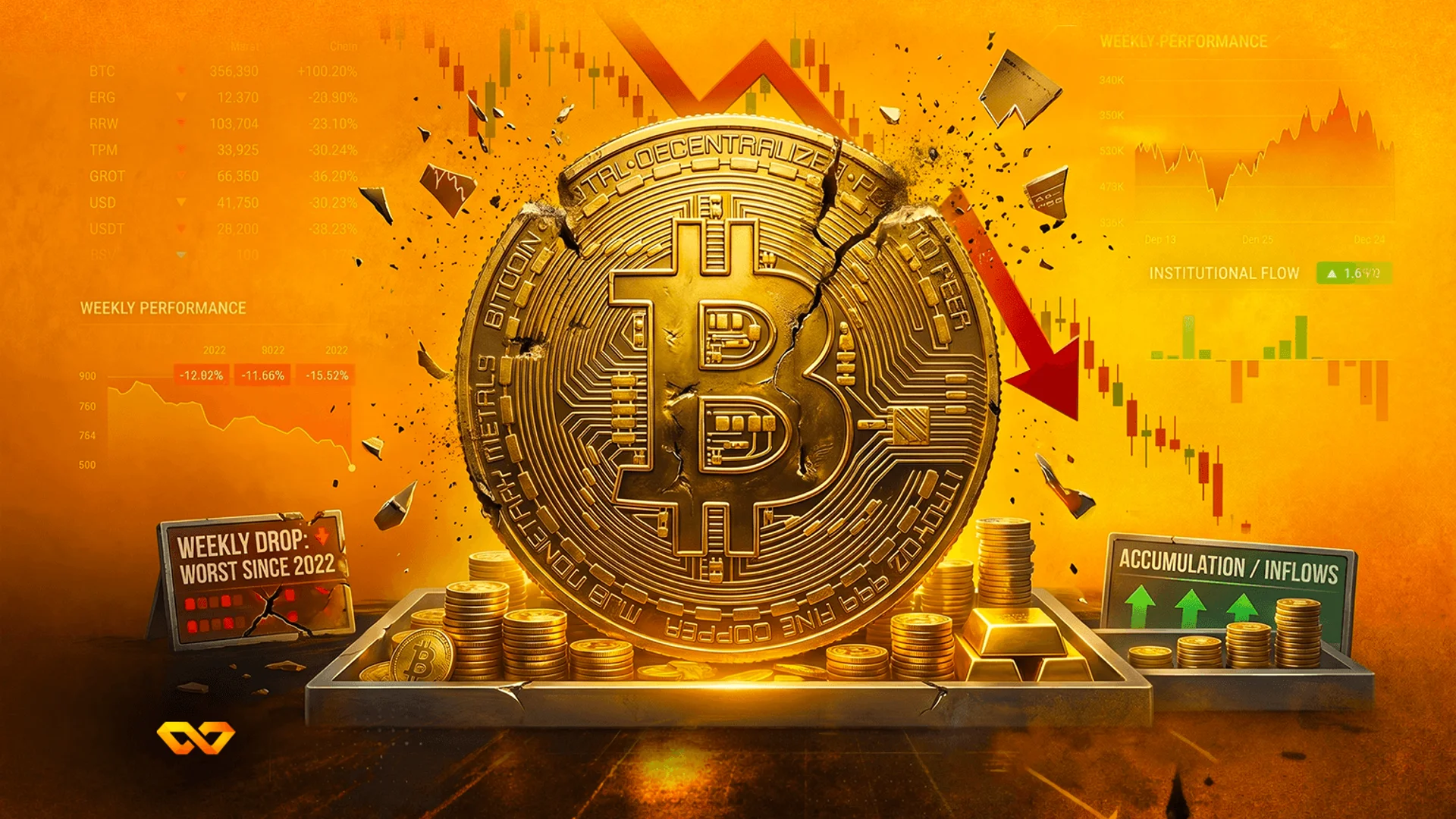
Bitcoin recorded its worst weekly drop since the 2022 FTX collapse, falling 17% and erasing $390 billion in market value before stabilizing near $61,300. Strike CEO Jack Mallers attributed the price action to a global liquidity shortage, viewing Bitcoin as a key indicator of systemic macroeconomic vulnerabilities. Additionally, Mallers raised concerns regarding the sustainability of MicroStrategy's ongoing stock capital dynamics in the current market environment.
Between June 10 and June 14, institutional investors showed mixed activity in semiconductor and industrial stocks. While firms like CenterBook Partners and Boston Partners reduced their stakes in Microchip Technology and Lam Research, others such as Epoch Investment Partners and Castleark Management increased their positions in Microchip. Despite strong earnings and positive forecasts, some institutions trimmed holdings in Emerson Electric and Cummins, whereas Epoch significantly boosted its stake in Texas Pacific Land Corporation by 252.9%.
Cibc World Market Inc. significantly reduced its holdings in Live Nation Entertainment by 69% and Ingersoll Rand by 37.1%. Conversely, Live Nation saw a new position from Triple Frond Partners and a 68.7% stake increase by the Healthcare of Ontario Pension Plan Trust Fund. The same pension fund also boosted its position in Cintas Corporation while trimming its stake in Autodesk by 11.6%.
SoftBank shares plunged 10% and lost its position as Japan's most valuable company following reports that talks for a $6 billion margin loan backed by its OpenAI stake have stalled. The loan target was previously downsized from $10 billion due to creditor hesitation over valuing the unlisted OpenAI and concerns regarding its funding commitments. This decline reflects broader market anxiety over AI-related valuations and OpenAI's failure to meet ambitious internal growth targets.
Gold prices faced intense selling pressure following US strikes against Iranian targets, which were launched in response to the downing of an American helicopter. Although prices showed signs of stabilization by June 12, gold ultimately dropped by 2% on June 13 as it lost its safe-haven appeal despite the geopolitical unrest. Meanwhile, oil prices surged above $93 per barrel driven by the military escalation in the Middle East.
Raymond James Financial appointed Seth Ford, former Vanguard chief architect, as Senior Vice President and Chief Architect to lead AI initiatives and cloud infrastructure modernization. Additionally, the ArdenVest Wealth team, managing $1.2 billion in assets, joined the firm's Beverly Hills office from RBC’s City National Bank. Financial analysis suggests the stock is undervalued, with a narrative fair value estimated at $170.83 compared to its last close of $151.37.
China's Supreme People's Procuratorate recognized Bitcoin as legally protected property under criminal law, resulting in an 11-year prison sentence for a thief who stole 107 Bitcoin. Meanwhile, the cybersecurity administration issued new financial data guidelines, and authorities charged miners with illegal operations for utilizing waste heat. These events highlight a complex legal landscape where Bitcoin is protected as property despite strict bans on related business activities.