Track the evolution of major financial and economic events
On March 30, BullFrog AI signed a commercial agreement with a top 5 global pharmaceutical company by revenue. The agreement utilizes the proprietary bfLEAP® platform to identify and prioritize therapeutic targets for Major Depressive Disorder (MDD). The MDD market was valued at over $8 billion in 2025 and is expected to exceed $11 billion by 2032.
On March 30, the Court of King's Bench of Alberta approved the appointment of Breakpoint Advisory Partners LLC as Chief Restructuring Officer (CRO) for Canacol Energy. The restructuring proceedings are being conducted under the Companies' Creditors Arrangement Act (CCAA) in Canada. The company's shares are traded under the tickers CNNEF on the OTCQX and CNEC on the Bolsa de Valores de Colombia.
4DMedical received CE Mark certification for its CT:VQ™ technology for commercial use in the European Union. The company secured A$83 million in private placement funding to support growth initiatives. The new funding will be used to support commercial expansion in Europe and software development.
Medicus Pharma reported an 80% overall response rate (ORR) in Phase 2 data for SkinJect. Dr. Babar Rao, a key opinion leader, validated that the outcomes are clinically meaningful for treating non-melanoma skin cancer. The treatment could potentially allow the majority of lesions to avoid immediate surgery.
Sable Offshore Corp. officially commenced oil sales from the Santa Ynez Pipeline System on March 30. Based in Houston, this move marks a transition to the revenue-generation phase from its assets.
On March 30, Sintana Energy announced a 57% increase in contingent resources at the Mopane oil complex off the coast of Namibia. Gross 3C contingent resources were raised from 875 million barrels to 1.38 billion barrels. Sintana's net interest in the project has risen to approximately 67 million barrels of oil equivalent.
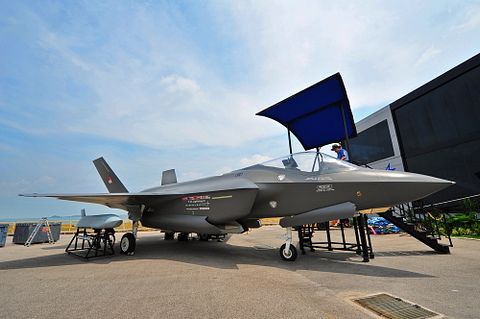
On March 29, Lockheed Martin announced a new framework agreement to quadruple the production of Precision Strike Missiles (PrSM). This production expansion builds on an existing $4.94 billion contract. Additionally, its subsidiary Sikorsky successfully tested and delivered an autonomous Black Hawk helicopter to the U.S. Army.
The HI-PEITHO trial results demonstrated that the EKOS system combined with anticoagulation is superior to anticoagulation alone for treating acute pulmonary embolism. The study showed a statistically significant reduction in clinical event rates among intermediate-risk patients. Findings were published in The New England Journal of Medicine and presented at the ACC.26 conference.
Kevin Tang has been appointed as the new CEO of Aurinia Pharmaceuticals on March 27, amid strong sales growth of Lupkynis, which increased by 25.5% year-over-year to reach $271.3 million in 2025. The company also issued sales guidance for 2026, projecting between $305 million and $315 million. On March 31, Kezar Life Sciences agreed to be acquired by Aurinia, with Kezar shareholders set to receive $6.95 in cash per share plus a non-transferable contingent value right. The deal is expected to close in the second quarter of 2026, and Kezar's board unanimously approved the transaction, while law firms are investigating whether the board breached fiduciary duties.
Alphabet Inc. (GOOGL) shares fell 4.15% following a jury verdict holding YouTube liable in a social media addiction lawsuit. Amazon.com Inc (AMZN) shares dropped 3.10% amid investor concerns over massive capital expenditures for AI factories and AWS. However, Alphabet's shares surged over 5% after OpenAI discontinued its Sora video generation project, and the company launched the cost-effective Veo 3.1 Lite model, achieving an 11.3% revenue growth.
JPMorgan upgraded Argan (AGX) from 'neutral' to 'overweight' with a new price target of $550.00 after the company reported Q4 EPS of $3.47, significantly beating the expected $1.99. The company also achieved Q4 revenue of $262.1 million with a net margin of 13.1% and ROE of 31.4%. This upgrade reflects the company's strong financial performance.
Carnival Corporation reported record first quarter operating results and record bookings for 2026. Adjusted EPS reached $0.20, representing a 50% increase compared to the prior year. The company also announced an initial $2.5 billion share buyback program and launched the 'PROPEL' initiative aimed at reflecting continued earnings growth momentum through 2029.
On March 26, Plantro Ltd., a shareholder of Ag Growth International Inc., called on the board to initiate a formal sale process for the company. The stated goal of this call is to maximize shareholder value by soliciting acquisition bids. Ag Growth International Inc. shares are traded on the Toronto Stock Exchange under the ticker AFN.
On March 26, MARA Holdings announced private agreements to repurchase approximately $1.0 billion in aggregate principal amount of convertible senior notes. The company sold 15,133 Bitcoin to facilitate the repurchase of notes due in 2030 and 2031, with the repurchases made at a discount, costing the company approximately $912.8 million for $1.0 billion worth of notes. On April 3, MARA laid off some staff as part of its new strategy, as the company is redefining its strategy amid ongoing pressure in the crypto market.
On March 25, LivaNova received FDA approval for its aura6000 system to treat Obstructive Sleep Apnea (OSA). The system utilizes neurostimulation technology and represents a pivotal growth step for the company. The approval was granted based on strong results from clinical trials.
On March 25, Lithium Ionic secured five-year offtake agreements with leading global lithium producers. The agreements include a floor price of US$1,000/t with full upside exposure to spot pricing. These agreements are intended to support project financing for the company's Bandeira Project.
SanDisk is investing $1 billion in the Taiwanese chip maker Nanya Technology. This investment is linked to a multi-year supply arrangement between the two companies, ensuring a long-term supply of chips.
Pop Mart's profits quadrupled over the past year, with revenues nearly tripling, surpassing market expectations. These results reflect the company's success in overcoming doubts surrounding its financial performance.
GameStop reported a 14% drop in fourth-quarter revenue. This decline is attributed to the industry's shift toward digital downloads and weaker consumer demand.
Bloom Energy's backlog surged by 140% in 2025, driven by the rising demand for its services. The company utilizes modular fuel cell technology that delivers 800 volts DC, positioning itself as a solution for AI data centers. The demand for on-site power solutions is increasing due to an aging grid that cannot meet the surging demand.
United Airlines plans to take delivery of over 250 new aircraft by April 2028, the most by any airline in a two-year period. The airline will introduce new Airbus A321neo and A321XLR aircraft to enhance transcontinental and international routes. Additionally, the company has increased premium seats per North American departure by 40% since 2021.
On March 23, TC Energy's CEO stated that the war in Iran makes the construction of a second phase of the LNG Canada facility more likely. This outlook is primarily driven by disruptions to global liquefied natural gas supplies. On March 25, Qatar's export capacity was crippled by recent attacks, while Goldman Sachs warned that market disruptions could persist through 2027. Additionally, Chevron's Wheatstone gas plant in Australia sustained storm damage, adding further strain to the global LNG market. On March 30, Golden Pass LNG, a joint venture between QatarEnergy and Exxon Mobil, produced its first liquefied natural gas at its new facility in Texas.
Cosmetics giant Estée Lauder is in merger talks with Puig, the owner of brands including Jean Paul Gaultier and Rabanne. This deal would create a global beauty giant, uniting brands such as Tom Ford, Bobbi Brown, and Rabanne.
On March 23, an analyst downgraded Super Micro's stock, warning of 'flattish' growth ahead. This warning follows the indictment of a co-founder in an export-control scandal, raising concerns about customer trust. On March 26, Super Micro faced a securities fraud lawsuit, alleging that the company failed to disclose sales of servers to Chinese companies in violation of export-control laws.