Track the evolution of major financial and economic events
On May 14, Treasury Secretary Scott Bessent stated that the U.S. will experience significant disinflation following one or two more hot inflation numbers. Bessent's comments come as Kevin Warsh is poised to take over as the chair of the Federal Reserve.
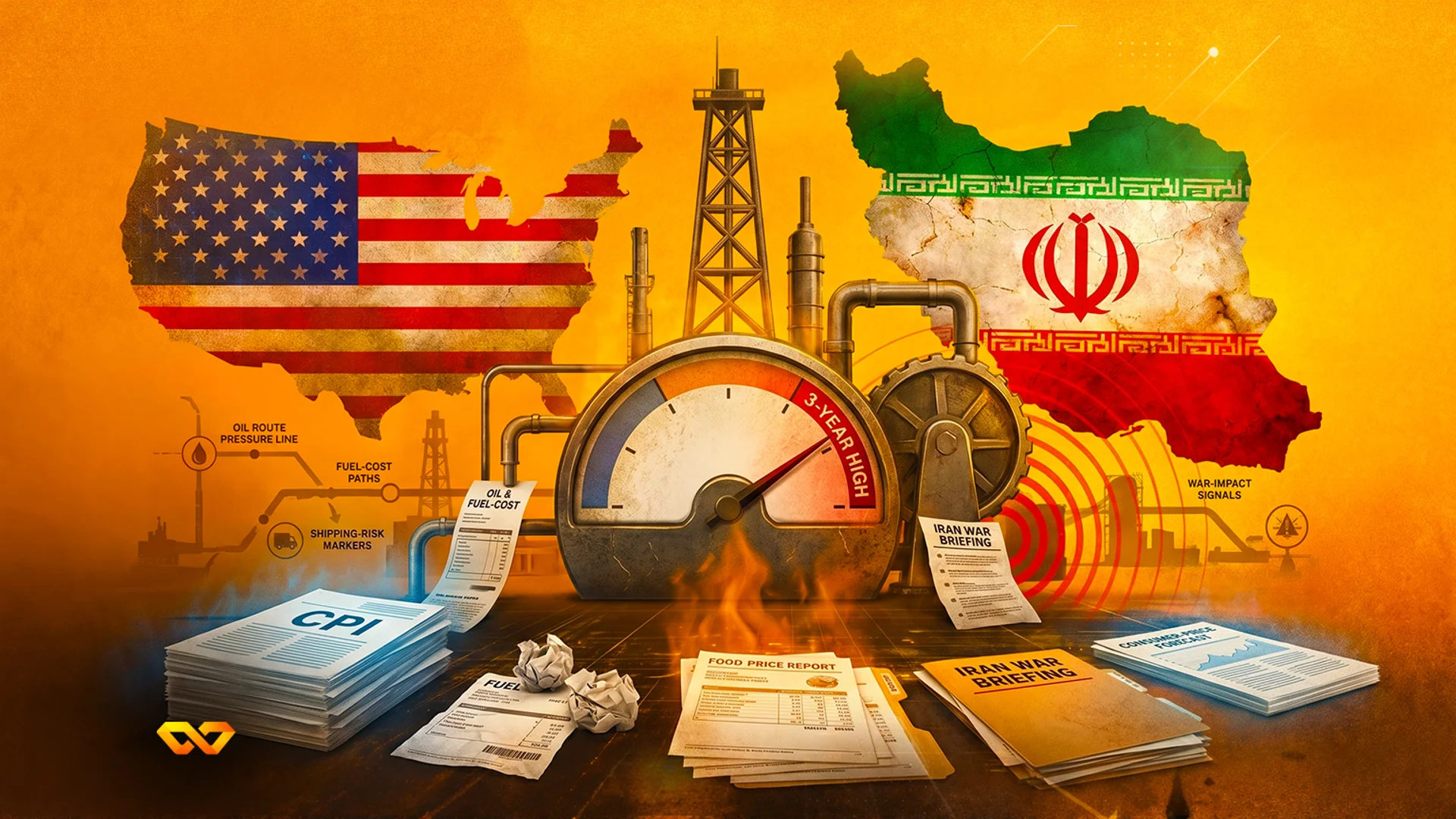
Oil prices surged by 4% due to rising geopolitical tensions between the US and Iran, as hopes for a ceasefire deal failed to materialize. Markets are focusing on US CPI data, with expectations that strong data will support the dollar. Meanwhile, Trump indicated the possibility of military action against Iran if negotiations do not progress, increasing uncertainty in the markets.
China's factory inflation hit a 45-month high in May, driven by a significant shock in energy prices. Car sales in China fell by 21.5% in April, with internal combustion engine sales declining by over 30%. Additionally, the producer price index rose by 6.0% year-on-year, signaling the end of a nearly four-year deflationary cycle.
The conflict with Iran is impacting U.S. inflation outlook, with inflation rising to 3.8% due to surging energy costs. On May 13, U.S. Treasury bond yields reached 5%, prompting investors to ditch government debt. Additionally, Goldman Sachs has delayed its Fed cut outlook to December 2026 as the war drives U.S. inflation.
The April jobs report indicated that hiring in the United States is growing at its strongest pace in over a year. However, white-collar sectors continue to lose workers, with AI potentially contributing to the decline in these roles.
India, the fastest-growing major economy, is facing economic pressures due to rising energy prices from the Iran war, causing the rupee to hit an all-time low. Investors heavily sold Indian assets, and gold prices surged following an increase in import duties. Prime Minister Modi urged citizens to adopt measures to conserve foreign exchange, including limiting travel and working from home.
On May 5, Swiss consumer prices increased by 0.6% year-on-year, surpassing the 0.3% inflation rate recorded in March. The conflict in Iran has driven up imported energy costs, contributing to the overall rise in inflation rates.
In late April, the number of people applying for unemployment benefits sank to a 57-year low. This decline reflects the tight labor market in the United States, indicating a strong economic recovery.
The U.S. national debt has surpassed 100% of GDP in a major fiscal milestone. On April 30, the federal debt exceeded the size of the national economy, marking a significant stage in the financial policy of the United States.
The U.S. economy began 2026 slowly but demonstrated strength at the end of the first quarter despite the geopolitical conflict with Iran. This resilience indicates the economy's ability to adapt to challenging conditions.
On April 27, the US 10-year break-even inflation rate is nearing 2.5%. Inflationary pressures are intensifying due to the ongoing closure of the Strait, impacting maritime supply chains.
Canadian producer prices surged in March, driven by a record increase in energy product prices. The escalation of the Iran war also led to significant price hikes for chemicals and energy products.
Kalshi is engaged in a legal battle that may reach the U.S. Supreme Court to legalize prediction markets related to elections and sports. Meanwhile, Wisconsin has sued Kalshi and other companies, claiming their prediction market platforms operate illegally. Brazil has shut down 27 prediction market platforms, including Kalshi, due to concerns over their negative impact on households. In the U.S., a rule has been passed barring senators from trading on prediction markets amid rising concerns about insider trading.
On April 18, the Russian GDP shrank by 1.8% in January and February. The manufacturing, industrial production, and construction sectors reported negative growth. President Putin publicly acknowledged economic difficulties following mounting warnings of a financial crisis.
On April 17, the Iranian-linked group 'Handala' targeted Stryker with a 'wiper' attack, destroying data on 200,000 devices globally. The attack halted manufacturing and disrupted medical services, signaling a shift toward destruction rather than financial gain.
Foreign investors are returning to South Korean markets after a significant sell-off in March. Expectations are rising for South Korea's inclusion in the FTSE Russell World Government Bond Index (WGBI). This recovery is driven by optimism in the technology sector and index-linked passive inflows.
European export competitiveness is set to decline in 2026 as tariffs converge to 15% for most trading partners. Although the 2025 US tariff shock was historic, its impact on Europe was cushioned due to rising tariffs on rival suppliers. European exports have already fallen amid higher tariffs and economic uncertainty.
On April 16, Treasury Secretary Yellen stated that a Fed rate cut is possible this year. She projected that US economic growth could exceed 3% or 3.5% this year despite the war involving Iran. On April 17, FOMC minutes revealed the Fed's concerns about the war's impacts. The Fed views a rate hike as likely as a cut due to increasing two-sided risks. Federal Reserve governor Chris Waller expressed concern about a lasting increase in inflation due to the surge in oil prices linked to the Iran war.
Geopolitical tensions in Iran are impacting commodity supply chains, threatening to raise food costs. On April 14, four major chokeholds were identified that are squeezing investor portfolios and increasing grocery price inflation.
An unusually powerful 'super El Niño' event is expected to form later this year, threatening global food price stability. Fears over food security are rising amid ongoing conflicts, with fertilizer and fuel prices increasing in the UK. Severe drought in the U.S. is impacting crops and livestock, with 60% of the country experiencing drought as the Northern Hemisphere growing season begins.
Gartner predicts that 50% of new warehouses in developed markets will be human-optional by 2030. Key drivers include labor shortages, rising costs, and a workforce less willing to perform manual tasks. New facilities will rely on smart robotics and AI for self-optimizing operations.
Pakistan is set to repay a $3.5 billion loan to the UAE this month, increasing pressure on its foreign exchange reserves. The $7 billion IMF program requires maintaining reserves above $18 billion by June, while current reserves stand at $16.4 billion. Additionally, there is a $1.3 billion Eurobond repayment due by June. Meanwhile, a Pakistani military force has arrived at King Abdulaziz Air Base in Saudi Arabia as part of a strategic defense pact, and Saudi Arabia and Qatar will provide Pakistan with $5 billion in financial assistance to support its dwindling reserves.
The UK services sector has experienced a sharp decline in sentiment due to rising operating costs driven by the Iran conflict. Companies reported significant cost increases and a drop in demand, exacerbating economic pressures. House prices have fallen, and mortgage rates have risen, impacting the market overall.
France's debt crisis deepens as the budget deficit is projected to stabilize at around 5% by 2026. Total French public debt has reached approximately 115% of GDP. Public spending in France accounts for 57% of GDP as the state apparatus continues to expand.