Track the evolution of major financial and economic events
Silver prices plunged 8% on June 6 following strong U.S. jobs data, triggering margin call selling and testing key support levels. Prices consolidated near the 200-day Moving Average by June 12 before rebounding 4% to approximately $70.80 on June 15. This recovery occurred as Washington and Tehran signaled support for a tentative agreement to end hostilities and reopen the Strait of Hormuz.
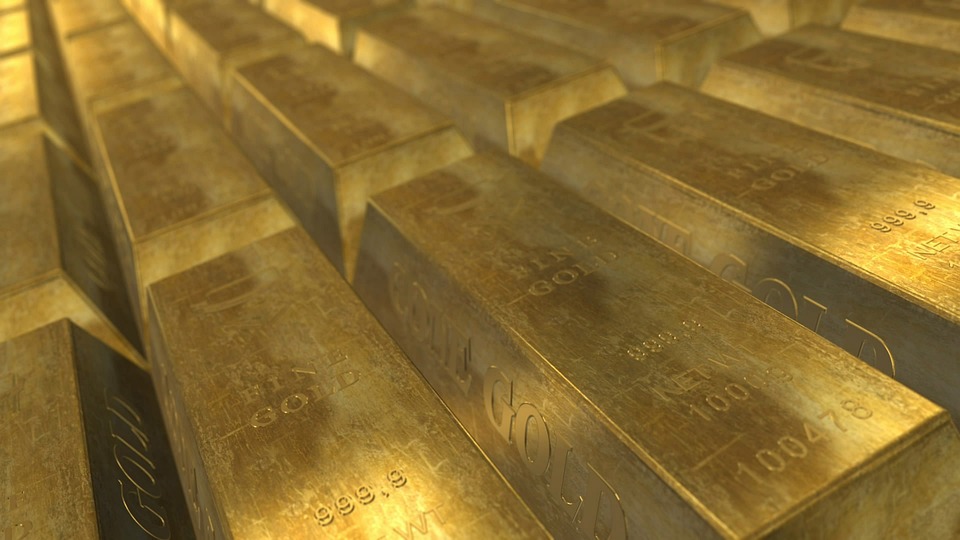
Gold prices rebounded from a one-week low as a weakening US Dollar, pressured by the Israel-Lebanon truce, reduced safe-haven demand. Prices later held steady near $4,330 per ounce as markets balanced geopolitical optimism against a firmer dollar. Investors are now focused on the upcoming US Consumer Price Index (CPI) report for May to gauge future market risks.
Wood Mackenzie warned that the conflict with Iran has removed over 80 million tonnes per annum of LNG, equivalent to 20% of global supply. This supply shortfall poses a significant threat to global energy markets.
On May 30, ExxonMobil Senior VP Neil Chapman warned that global crude oil prices could soar to $160 per barrel. This warning is driven by dwindling global commercial inventories reaching critically low levels.
U.S. gas prices have surged to four-year highs amid rising tensions with Iran. Analysts warn that prices could reach $5 per gallon if the Strait of Hormuz remains closed. Following some progress in negotiations, oil prices fell, but U.S. military strikes on Iranian sites reignited fears about regional stability and oil prices. Meanwhile, reports indicate that U.S. commercial inventories have dropped to their lowest levels since 2004, raising concerns about potential price hikes in the future.
On May 13, the Dallas Fed models indicated that a potential war with Iran could drive oil prices up to $167 per barrel. The analysis suggests that a three-quarter oil shock could elevate core inflation and reshape sector outlooks.
On May 5, the 400,000 barrels-per-day Kirishi refinery owned by Surgutneftegas was hit by drone attacks, causing fires. NASA satellite imagery detected heating anomalies indicating fires at the refinery and nearby areas. On May 22, Ukraine targeted the Yaroslavl oil refinery and President Zelensky announced the use of long-range drones against Russian oil refining assets. On May 24, Russia launched a massive attack on Kiev using hypersonic ballistic missiles, resulting in at least one death and 20 injuries.
Global rice supply is expected to decline this year as Asian farmers reduce planting acreage due to fertilizer shortages and soaring fuel costs. Additionally, the Iran war and the emerging El Nino are set to further squeeze the output of the world's most consumed staple.
On April 21, Rosneft's Tuapse refinery was hit by a second drone strike within a week, causing major fires. The previous attack on April 16 resulted in a 10,000 square meter oil spill in the Black Sea. The Ukrainian military claimed responsibility for the attack on the refinery and oil depots in Crimea.
Aluminium prices are targeting $4,000 per ton due to supply constraints. Indian stocks Vedanta and Hindalco have been upgraded following the surge in metal prices. Aluminium prices have reached a four-year high amid market discussions.
ASP Isotopes' Virginia Gas Project emerges as a strategic alternative to the Qatar helium crisis as Qatar's Ras Laffan complex and the Strait of Hormuz face disruptions threatening one-third of global helium supply. The Virginia Gas Project in South Africa features helium concentrations of up to 12%, significantly higher than Qatari or U.S. levels. Phase 1 production is scheduled to begin in late 2026 with a capacity of 58 MCF per day.
On April 16, Iran halted oil tanker traffic through the Strait of Hormuz, effectively breaching the terms of a fragile ceasefire agreement. President Trump expressed optimism regarding a potential peace deal with Iran despite ongoing ceasefire strains. As a result of these tensions, oil prices rebounded due to renewed supply concerns.
Oil prices fell by 16% on April 16 following reports of a US-Iran ceasefire. Despite the fragile ceasefire, the Strait of Hormuz remains closed as kinetic action continues in the Gulf.
Fears of stagflation in the US have risen as the March Consumer Price Index (CPI) hit 3.3%, the highest reading since May 2024. Q4 GDP growth was reported at 0.5%, indicating an economic slowdown. Inflation remains above target alongside weak growth, reinforcing the stagflation narrative. On April 20, the US Navy seized an Iranian vessel, reigniting inflation fears. Gold prices slid to $4,780.
The global lithium-ion battery market saw a 20% increase, surpassing $150 billion in 2025. Solid-state batteries are emerging as a new frontrunner, offering higher energy density and faster charging, potentially challenging China's dominance in the global energy storage sector. In this context, the Amplify Lithium & Battery Technology ETF surged by 18.3%, demonstrating its ability to decouple from broader market stagnation.
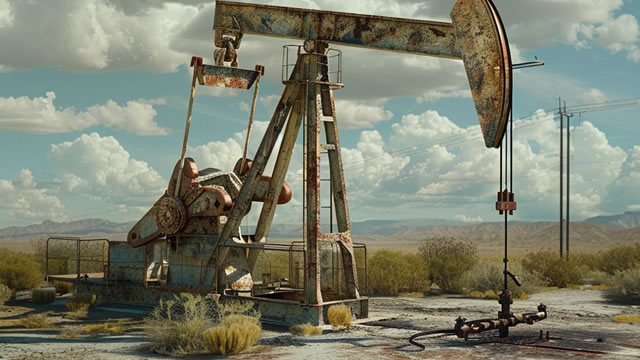
On April 15, President Trump issued several pipeline permits to facilitate the transport of crude oil and petroleum products between the U.S. and Canada. The permits include approval for the construction of a new pipeline, according to White House documents.
In March, central banks in Poland, Uzbekistan, and China made significant gold purchases. According to the World Gold Council report, central banks took advantage of lower prices to boost their gold reserves.
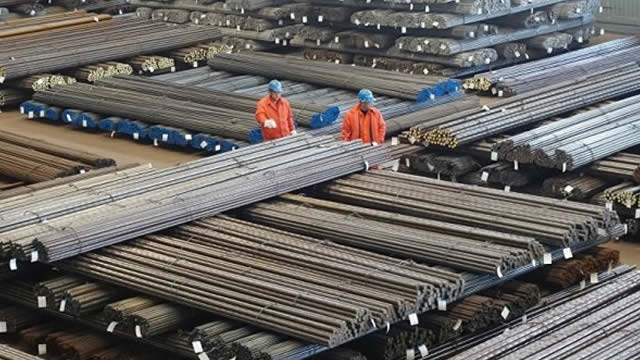
On April 14, Chinese state iron ore buyer officials informed local mills that they could resume bidding for certain BHP cargoes priced in U.S. dollars. This move is part of the government's efforts to support domestic mills amid economic challenges.
Middle East tensions threaten global oil supplies, potentially leading to shut-ins of up to 9.1 million barrels per day. Oil prices surged sharply, with Brent crude exceeding $121. Additionally, several countries, including Pakistan, are facing severe fuel shortages, raising concerns about critical supply shortages in the coming months.
Qatar's shutdown of the world's largest LNG facility has disrupted global helium supply, threatening critical sectors such as semiconductor manufacturing, medical applications, and national defense technology. This disruption is directly linked to the ongoing conflict in the Middle East and its impact on energy facilities. Experts have warned that the petrochemical supply shock is affecting a range of industries in Asia, resulting in a 29% increase in costs of raw materials like PTA and Caprolactam. This impact also extends to textile and apparel production in India.
On March 31, the Global X Copper Miners ETF (COPX) surged by 7.92% to a price of 76.35. Reports include analyses on the demand for critical metals and the impact of inflation on markets in early 2025. The coverage also featured technical analysis from Ira Epstein regarding gold and other metals.
US gas prices surged nearly 25% in March, marking the largest monthly increase on record. Brent crude is trading near $102 a barrel, while WTI is around $95. JPMorgan warned that policy measures will have limited impact unless safe passage through the Strait of Hormuz is assured. On March 27, oil prices rose again above $110.
On March 16, the U.S. Export-Import Bank issued letters of interest for $4.2 billion to support Japan and South Korea's purchases of enriched uranium. $2.4 billion is allocated for Japanese utilities and $1.8 billion for South Korean utilities. This move aims to reduce reliance on Russian suppliers and secure a domestic nuclear fuel chain within the U.S. On March 17, Oklo announced that the U.S. Department of Energy approved its Nuclear Safety Design Agreement for its test reactor. On March 21, Amazon-backed X-energy filed for an IPO, capitalizing on rising interest in nuclear power due to increasing energy demand from AI.
The global gas crisis is escalating, with fuel prices surging by 11% on March 15. Amid this crisis, California is debating fuel rationing options. A dozen countries have already implemented fuel restrictions, mirroring the energy crisis playbook of the 1970s.