
EL7 Research is institutional research on US stocks, artificial intelligence, semiconductors, bonds, currencies, gold and central banks, built on data we own rather than rewritten headlines. Our research agents work from the EL7 market database and from primary documents: SEC filings including 10-K, 10-Q and 13F forms, central bank data, positioning reports (COT), earnings results and years of price history. Every figure is verified before it reaches the page, every term is explained the first time it appears, and every article carries original charts and a last-updated date. New articles are published weekly, and published ones are re-checked when the facts move. The result is institutional depth in plain language: research you do not have to decode, but can act on in the market.

Fire broke out near Saudi Arabia’s largest export terminal, and the Houthis claimed to have hit the Kingdom’s largest refinery, yet Brent closed below its opening level and Saudi equities rose. We measure how much Saudi crude exports are within missile range, how many barrels were actually lost, and trace the session hour by hour to establish what the market priced in.
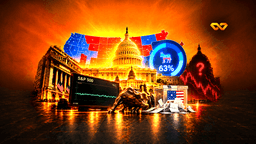
The probability of Democrats winning both chambers of Congress on 3 November has risen from 47% to 63% since mid-September, while the S&P 500 has barely moved.
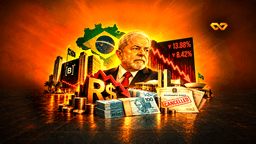
After Lula won the runoff, São Paulo equities fell 13.88% and the real lost 8.42% in a single session, while the Treasury cancelled two bond auctions.

US pump diesel prices have exceeded 6 dollars for the sixth week, while mid-October inventories are at their lowest since records began. Yet its refining margin has fallen 21% since mid-September.

We read the public prospectus Anthropic filed with the U.S. Securities and Exchange Commission on 26 October, seeking to list its shares on Nasdaq under the ticker «ANT».

Between early Wednesday and Friday evening, nine central banks set interest rates, while Gulf central banks follow the Federal Reserve. Here we give our call on each decision before its release, our confidence level, the signal that would overturn it, and the market that bears the cost of a surprise.

TASI closed on 25 October at 9,438.50 points, its lowest close in more than five and a half years, while Brent crude nears 117 dollars. We traced the path from barrel price to share price and found that Saudi Arabia produced fewer barrels at higher prices, Aramco earned more but paid the same dividend, and the rest of the market is bearing the war's costs directly.

Time to power has become the scarcest commodity in the AI race: more than five years for a grid connection, manufacturing queues for turbines, and reactor capacity increases extending to 2032.

At least 8 commercial vessels were targeted off Romania and Bulgaria in October, while attacks on Saudi Arabia are hitting oil facilities themselves. Yet wheat fell and oil rose in the same weeks. We measured what passes through each corridor, how much war-risk insurance adds to a cargo, which side bears the cost, who unwound positions, and who captured the risk premium in equities.

Alphabet, Microsoft and Amazon report within 48 hours, days after Meta’s free cash flow turned negative. We read the three companies’ cash flow statements and calculated each company’s “break-even threshold”: the operating cash it needs in the second half of 2026 to cover its remaining spending.

From early Wednesday to Friday morning come Australian inflation, Britain's budget, decisions from the Bank of Canada, the Federal Reserve, the European Central Bank and the Bank of Japan, and US GDP.

We examined Meta's Q3 2026 disclosures to answer one question: if data centre spending has exceeded the cash the business generates, where does the funding come from? The answer lies in four sources: operating cash flow that no longer suffices, debt that rose from 59 to 84 billion dollars, a new non-voting share class, and around 825 billion dollars in off-balance-sheet contracts and commitments.

Equity and commodity markets accounted for half of perpetual futures trading on Hyperliquid in July, then fell to a quarter in September. We rebuilt the full series from the platform’s own data, measured trading hour by hour, and tracked what happened to the oil contract when the Iran war broke out while futures markets were closed.

Iran’s Revolutionary Guard said seven tankers had been hit in the Gulf and west of the Strait of Hormuz, sending Brent to Thursday’s close up 4% at its highest settlement since 4 May. We measured the session using five-minute prices, separated confirmed reports from unverified claims, then compared futures with physical cargo prices, which moved in the opposite direction.

On 22 October, US stocks fell and the ten-year Treasury par yield recorded its largest daily decline since August 2024, yet gold fell 2.81%. EL7 calculations since 2000 show that gold has fallen this much on a comparable day only ten times, most recently in 2011. We measured what held up and what fell, and examined the four reasons.

France’s ten-year bond yield touched 5% for the first time since July 2002, and its spread over Germany reached its widest close since January 2012. We split the yield into the German yield and the French premium, compared its composition with 2002, then measured the gap between the market yield and what France actually pays on its debt.

We measured results from 47 S&P 500 companies that reported Q3 earnings between 1 and 20 October, and their share moves on the reaction day. The overwhelming majority beat estimates, but the size of the beat explained only a small part of the move, and the direction of guidance did not determine it either.

Japan’s trade deficit reached 2,818 billion yen between April and September, but energy explains its widening. Japan imported less oil and paid more, shifted roughly a third of its crude purchases to the United States, while its surplus in other goods widened. We examined the official data item by item and measured their impact on the yen.

A distributor in western Melbourne suspended a 66-kilovolt power line extension under pressure from residents, prompting NextDC to remove A$140 million in earnings from its forecasts, including capacity it was already billing for, and freeze new projects. Its shares fell 41.72%.

The probability of a Canadian rate rise on 28 October climbed from around 35% to around 80% in a single day, even though inflation data released that morning came in below forecasts. We tracked the shift hour by hour, compared September's data with the inputs to the bank's new forecasts, and measured the surprise implied by a rise and a hold.

United, Delta and Alaska raised fares enough to cover the increase in their third-quarter fuel bills, and United carried a record number of passengers. Yet all three cut their forecasts because fuel rose faster than they had assumed in July, and they expect fourth-quarter prices to be roughly double what they paid a year earlier.

Elon Musk confirmed that Tesla and SpaceX have formed two independent committees to explore a merger, and that he is barred from participating because he is on both sides.

Four days ago, Brent fell despite the sinking of two ships near Hormuz, because neither carried oil. It then ended Friday at its highest close since May. We put the same questions to the following four days: what was hit, what remained in US inventories, who led the rally, where speculators stood, and what was pushing prices lower.

The Philadelphia Semiconductor Index fell 15.7% between 7 and 16 October, its longest losing streak since October 2008. This research tests four explanations against the numbers: interest rates, which fell during the streak; AI funding, which drove the worst days; valuations, which differentiated stocks; and the record of every comparable decline since 1995 and what followed.

Battery electric vehicle registrations in Europe jumped 70.3% in September, and Germany registered more electric cars than petrol and diesel cars combined for the first time.

Samsung estimated third-quarter operating income at about 107.4 trillion won, more than NVIDIA earned in its latest reported quarter, yet memory stocks fell between 14.6% and 19.3% in a single week.

The US government paid 1,051.8 billion dollars in net interest in fiscal year 2026, more than it spent on defence and roughly one dollar for every five dollars collected. Yet its average borrowing cost remains 1.77 percentage points below the market rate, a gap that closes as old debt is refinanced.

President Trump exempted his administration from most provisions of the new Russia sanctions law two days before its deadline, while the Treasury is considering allowing shadow fleet tankers to carry oil outside the scope of sanctions.

Chile’s copper output fell in August to its lowest since February 2011, workers at Centinela went on strike, and supervisors at Escondida, the world’s largest mine, nearly followed. Yet copper ended this period below where it began.

Short interest on the New York Stock Exchange and its sister exchange NYSE American reached its highest level in the exchange's archive since 2015. We divided it by shares outstanding and trading volumes to assess whether it was truly a record, then asked: who is selling, and has such a figure ever predicted a market decline?