
Yen Rises After Takaichi Confirms Trump Raised Currency Concerns
Key Facts
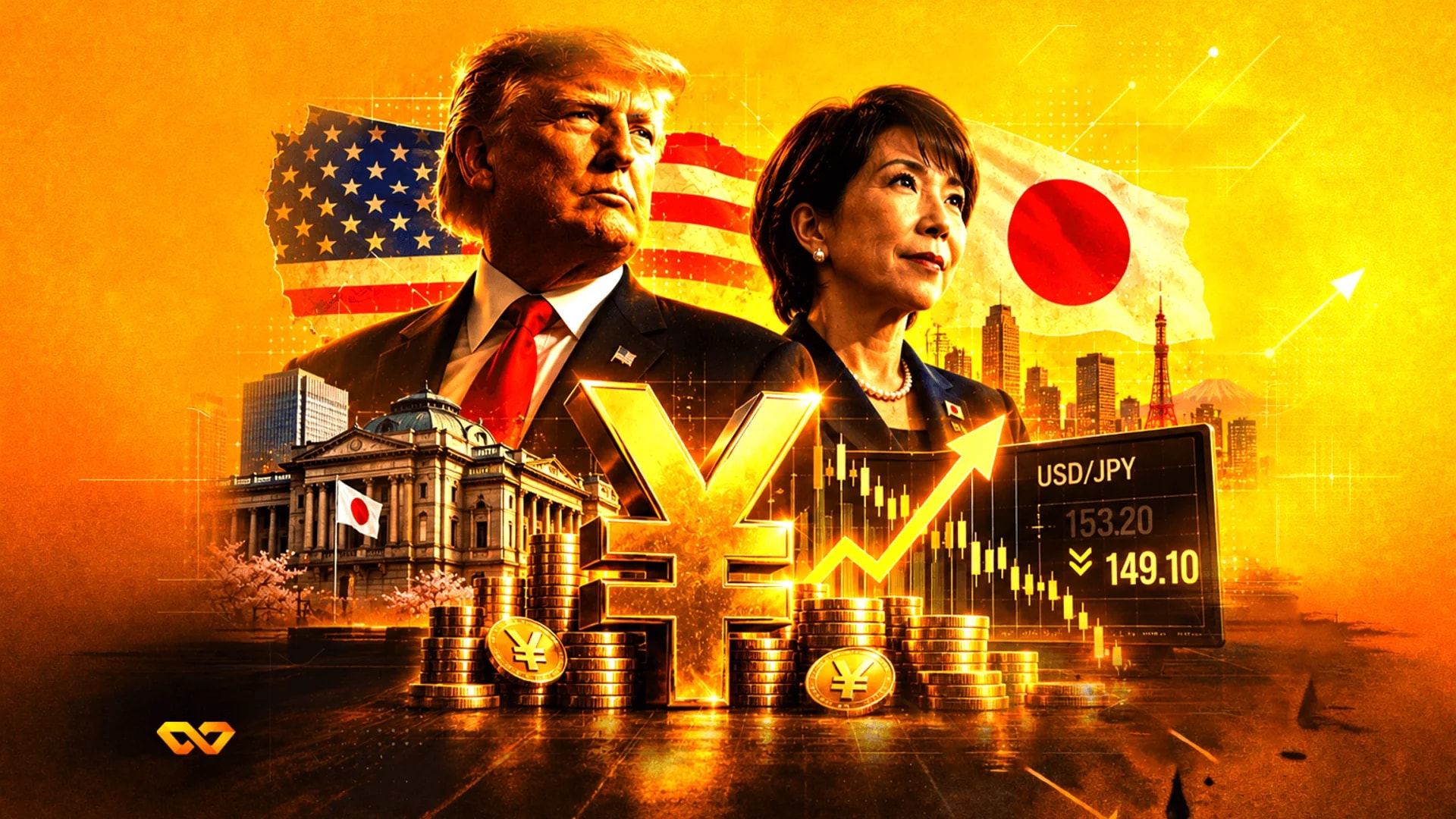
The yen rose against the dollar on September 25 after Japanese Finance Minister Satsuki Katayama disclosed that President Donald Trump had raised the currency’s weakness with Prime Minister Sanae Takaichi in New York on September 22. Takaichi later confirmed that the U.S. side had linked the weak yen to difficulties for its trade. She said she had replied that an undervalued yen was problematic as a general principle. The dollar moved from about 158.60 yen before Katayama’s remarks to around 158 yen afterward, Reuters reported. Katayama said she would keep communicating with U.S. Treasury Secretary Scott Bessent on matters including foreign exchange. The development combined a political signal with a currency move, without an announcement of a new market operation.
A dollar-yen quote shows how many yen are needed to buy one dollar, so a move from 158.60 to around 158 means the yen strengthened. The dollar had traded above 159 yen early Friday, according to Jiji Press, before reversing after the remarks. Trading Economics said the move ended a run of 5 losing sessions for the yen as traders again watched the pair’s approach to 160. Those figures describe different points: an early high, a rate before the remarks and a later rate, rather than one measure of a full session’s return. The 160 level is a market reference, not a published official intervention trigger; the governments’ stated test concerns the character of market moves. Assessing the size of the response therefore depends on the starting point and time of measurement as well as direction.
Currencies can move when traders revise the probability of official action, even before authorities place a trade. Japan bought yen in coordination with the U.S. Treasury on July 31, according to Japan’s finance ministry, giving subsequent warnings practical weight. As the perceived chance of another official yen purchase rises, positions betting on further yen weakness become more exposed to a sudden reversal. Closing those positions requires buying yen and selling dollars, which pushes the dollar’s yen price lower. Reuters reported that Japanese authorities conducted rate checks on Friday, a step traders watch for a possible signal but which is not itself intervention. That chain explains a price response to the remarks without assuming that the two governments carried out another operation.
The officials’ separate remarks distinguish political concern from a commitment to intervene. Katayama attributed the concern about yen weakness to Trump and said Takaichi responded that an undervalued currency was problematic as a general principle. Takaichi later confirmed the exchange but said the leaders had not discussed monetary or fiscal policy at the meeting. Katayama’s stated undertaking was to keep in close contact with Bessent on subjects including foreign exchange. None of those statements set a dollar-yen target or a date for another yen purchase. They remind traders of an existing policy option rather than announce an order to execute it. That distinction matters when pricing position risk more than reading the remarks without the conditions attached to intervention.
A joint statement by the U.S. and Japanese finance ministers issued in September 2025 sets out the official framework for exchange-rate volatility. It says exchange rates should be market determined and that excessive volatility and disorderly movements can harm economic and financial stability. Under that framework, intervention may be considered against such conditions whether a currency is falling or rising sharply. The statement also calls for disclosure of intervention operations at least monthly. Crossing a level watched on trading screens therefore does not, by itself, show that the official test has been met. A standard tied to market behavior differs from automatically defending a particular number, a key distinction when estimating the chance of another operation. Later disclosure can also separate a move driven by expectations from a confirmed official trade.
The July 31 intervention provides a useful comparison between official action and the present verbal signals. Japan’s finance ministry confirmed in an August 3 statement that it had bought yen in coordination with the U.S. Treasury to counter excessive volatility and disorderly moves. It said it would not hesitate to conduct further joint intervention if circumstances warranted it. At a September 11 news conference, Katayama reaffirmed that stance and close communication with U.S. officials. The latest remarks reaffirm consultation and reveal the leaders’ concern about yen weakness, but do not record a new yen purchase. The earlier operation makes the option credible to traders; it does not make every later yen gain the result of intervention. Keeping those events separate helps judge whether the move reflects a lasting policy shift or repricing of the chance that existing policy will be used.
There is also a monetary-policy channel separate from officials’ comments. On September 18, the Bank of Japan voted 7 to 2 to guide its short-term rate to around 1.25%, with the guideline taking effect on September 24. A higher return on yen assets makes them relatively more attractive when other conditions are held constant. But the currency effect also depends on U.S. yields, because investors compare returns in the two currencies and the cost of hedging between them. The bank said in its decision that yen depreciation and higher oil prices were pressuring producer prices, with some pressure passing through to consumers. Price developments could therefore shape expectations for later bank decisions and, through yields, the exchange rate even without official intervention. This is a separate explanation from the immediate effect of a political warning.
A weaker currency has competing economic effects, helping explain why both Tokyo and Washington care about its path. The Bank of Japan linked yen weakness to higher input costs, particularly when it comes alongside expensive oil. That raises costs for importers and can pass from producer prices to consumers if firms pass on the increase. Takaichi, meanwhile, said Trump had raised difficulties the weak yen created for U.S. trade, a competitiveness concern rather than a shared exchange-rate target. The net effect on a company depends on the currencies in which it earns revenue and buys supplies, and on its ability to pass through costs. Benefits to some exporters from a cheaper currency therefore do not erase the burden on import-dependent businesses. These channels explain why the exchange rate matters to policymakers beyond currency trading desks.
For an investor long the dollar against the yen, the possibility of intervention or another warning increases the risk of a rapid fall in the pair even if the interest-rate outlook does not immediately change. For a yen buyer, the political exchange supports the case for appreciation, but a durable gain requires more than one statement. Trading near 160 makes the market’s sensitivity to warnings clear, while the published intervention test still concerns volatility and disorderly moves. Traders will test whether yen gains have support from changed rate expectations or sustained dollar weakness, or are a brief response to the news. The gap between diplomatic communication and actual official buying remains central to risk on both sides of the trade. Subsequent moves are therefore best assessed alongside yields and official announcements, rather than against a single exchange-rate number.
Scheduled releases may help distinguish monetary-policy effects from intervention expectations. The Bank of Japan is due to publish minutes of its July meeting on September 28 and a summary of opinions from its September meeting on October 1, according to its calendar. Its next policy meeting is set for October 29 and 30, and the September meeting’s minutes are scheduled for November 5. Those releases may change traders’ assessment of the bank’s willingness to tighten further and thus affect the yen through yields. Separately, the finance ministers’ framework calls for at least monthly disclosure of intervention, providing later evidence of any actual operation. A sustained yen advance supported by rate expectations or an official intervention announcement would strengthen the case for further gains. Fading gains with no change in stated policy would suggest that the remarks had a shorter-lived effect.