
Iran Claims Strikes on Jordan Base and 20 Vessels; Amman Says 18 of 20 Missiles Intercepted
Key Facts
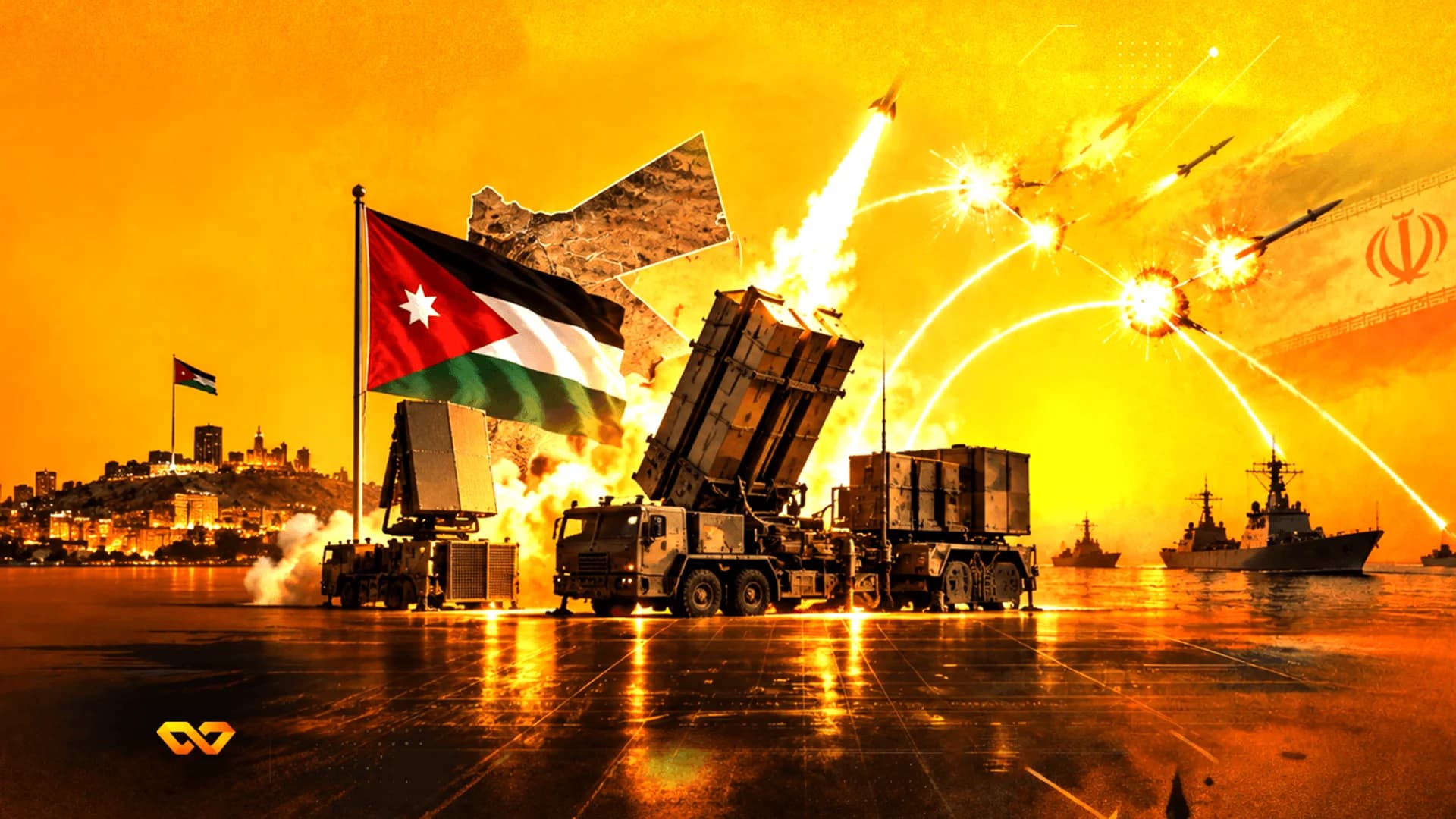
Iran's Revolutionary Guard said on September 9 that it fired ballistic missiles at a base near Al Azraq in Jordan used by U.S. forces. It also said its naval forces targeted 2 U.S. vessels, 8 oil tankers and a separate group of 10 other ships near the Strait of Hormuz—20 vessels in total—but the results were not independently confirmed.
Jordan's armed forces said 20 ballistic missiles were launched from Iranian territory toward the kingdom and that air defenses intercepted and destroyed 18. The remaining 2 fell in unpopulated areas, with no casualties reported.
CENTCOM denied that any U.S. Navy warship was struck. Separately, reports carried by Reuters and the Associated Press cited UKMTO notices involving disabling fire against several merchant vessels in the northern Gulf and Gulf of Oman, but those incidents do not independently establish that all 20 targets claimed by Iran were hit.
Reuters reported that a U.S. official said all American troops were accounted for, while the Revolutionary Guard claimed extensive damage to the base. The reviewed sources contained no detailed official or independent assessment resolving the extent of physical damage.
The escalation followed CENTCOM's announcement that it struck 5 Iranian crude oil tankers on September 8 and rendered them inoperable. CENTCOM said the operation followed 2 Revolutionary Guard attempts over 2 days to target a U.S. warship with ballistic missiles; the ship evaded the attacks and no American personnel were harmed.
CENTCOM identified the tankers as M/T Kaviz, M/T Charminar, M/T Horizon 1 and M/T Riesco in the Gulf of Oman, plus M/T Derya near Kharg Island. That placed 4 tankers in the Gulf of Oman and 1 near Kharg, and the command said crews were directed to abandon the vessels before the strikes.
U.S. Maritime Advisory 2026-011 superseded the previous notice and kept the assessed risk of Iranian attacks on commercial shipping high in the Persian Gulf, Strait of Hormuz and Gulf of Oman. It advises U.S.-flagged vessels to remain at least 30 nautical miles from U.S. military ships and register with UKMTO 24 hours before entering the reporting area.
EIA data show the scale of the economic exposure: oil and petroleum-liquid flows through Hormuz averaged 4,900,000 barrels a day in Q2 2026, versus 21,600,000 barrels a day in Q4 2025. In its September 9 outlook, the agency assumed Middle East flows would remain constrained through Q4 2026 and estimated production shut-ins at 6,700,000 barrels a day in August and 5,700,000 barrels a day in that quarter.
U.S. commercial crude inventories fell by 4,450,000 barrels in the week ended August 28, from 428,910,000 to 424,460,000 barrels. Lower inventories can increase market sensitivity to supply shocks, but the draw alone does not establish a price effect from the latest attacks. The next signals are damage assessments, military responses, vessel reports and actual transit volumes through Hormuz.
Latest Updates · 2
- Notable·
Update: These military developments immediately impacted financial markets, with U.S. stock futures declining amid investor anxiety. Simultaneously, oil prices extended their rally as concerns mounted over potential supply disruptions following the retaliatory strikes in the Gulf region and the Strait of Hormuz.
- Notable·
Update: Iran's IRGC announced on September 9 the seizure of a US Dive-LD unmanned submersible in the Strait of Hormuz, adding a new dimension to naval tensions. Conversely, a US official attributed the incident to a technical malfunction, downplaying Iranian claims of a deliberate interception.