
U.S. Strikes 3 Iranian Tankers as Brent Closes at $99.39
Key Facts
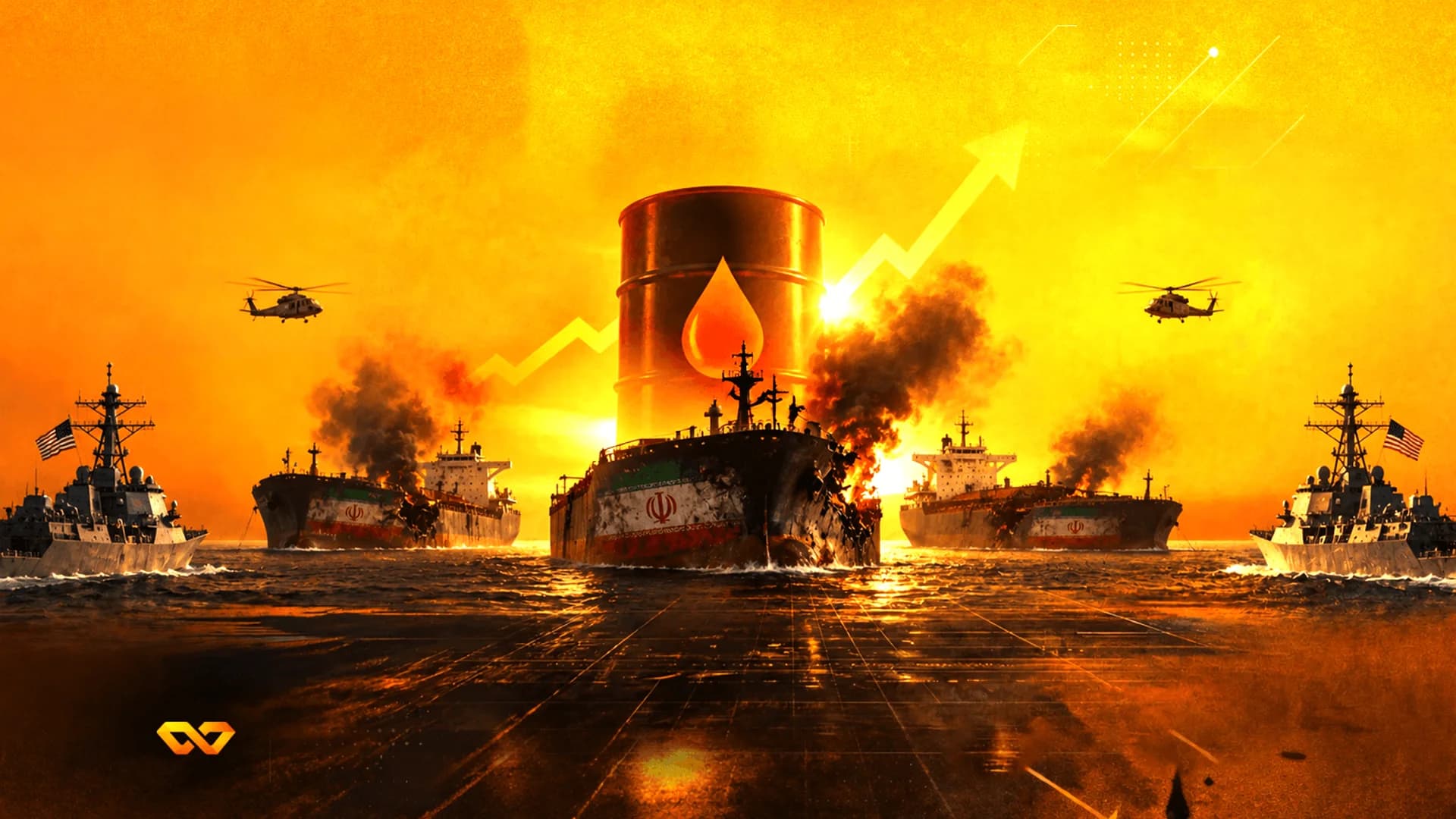
U.S. Central Command said its forces struck 3 Iranian crude carriers on September 5, 2026, after the Islamic Revolutionary Guard Corps launched ballistic missiles toward 2 U.S. warships. It said an aircraft carrier and a destroyer evaded the attacks and no U.S. personnel were harmed.
CENTCOM said M/T Downy off Kharg Island and M/T Stark 1 near Jask were permanently disabled. The unladen M/T Kylo, also known as Noxen, was destroyed in the Gulf of Oman after its crew was directed to abandon the vessel.
The Associated Press reported that Iranian state television said 4 U.S. missiles struck a tanker about 10 kilometers from Kharg Island without causing casualties. That detail remains an attributed Iranian state-media account, not an independent verification of the strike.
Brent closed on September 8, 2026, at $99.39 a barrel, according to EL7 data, after trading as high as $99.45 and as low as $95.97. The contract therefore approached the $100 threshold without closing above it.
The market sensitivity reflects the confrontation's proximity to one of the world's most important energy corridors. The U.S. Energy Information Administration estimates that about 20% of global liquefied natural gas (LNG) trade transited the Strait of Hormuz in 2024 and describes the waterway as critical for oil and petroleum products.
The tanker strikes therefore matter primarily through their implications for shipping and supply risk, not only through the loss of individual cargoes. Available evidence does not isolate how much of Brent's move was caused by these strikes alone; risk pricing will depend on subsequent U.S.-Iran responses and vessel movements around Hormuz.
Latest Updates · 4
- Notable·
Update: Oil prices jumped by more than $1 in early Wednesday trade on September 9, 2026, extending a rally for the fourth consecutive session. The surge followed reports of fresh Iranian attacks on U.S. military assets in the Gulf, further intensifying market concerns over the stability of energy supplies through critical maritime corridors.
- Notable·
Update: U.S. Central Command later announced the destruction of two additional Iranian oil tankers, bringing the total number of vessels disabled or destroyed to five. These additional strikes are part of the ongoing military response to the ballistic missile attacks launched by the IRGC in the region.
- Major·
Update: The escalation has taken a more critical turn as Iran issued direct threats of 'economic warfare' and missile strikes against US interests, coinciding with reports of Houthi attacks targeting Saudi Arabian territory. These field developments significantly increase the probability of regional energy supply disruptions, further intensifying upward pressure on global oil risk premiums.
- Notable·
Update: Oil prices climbed to $98 per barrel on September 8, 2026, following reports of tit-for-tat military strikes between the US and Iran targeting regional vessels. This direct escalation on the ground marks a critical shift, intensifying the geopolitical risk premium and pushing prices closer to key resistance levels.