
Trump Imposes 50% Tariffs on Canada with Key Exemptions for Energy and USMCA Goods
Key Facts
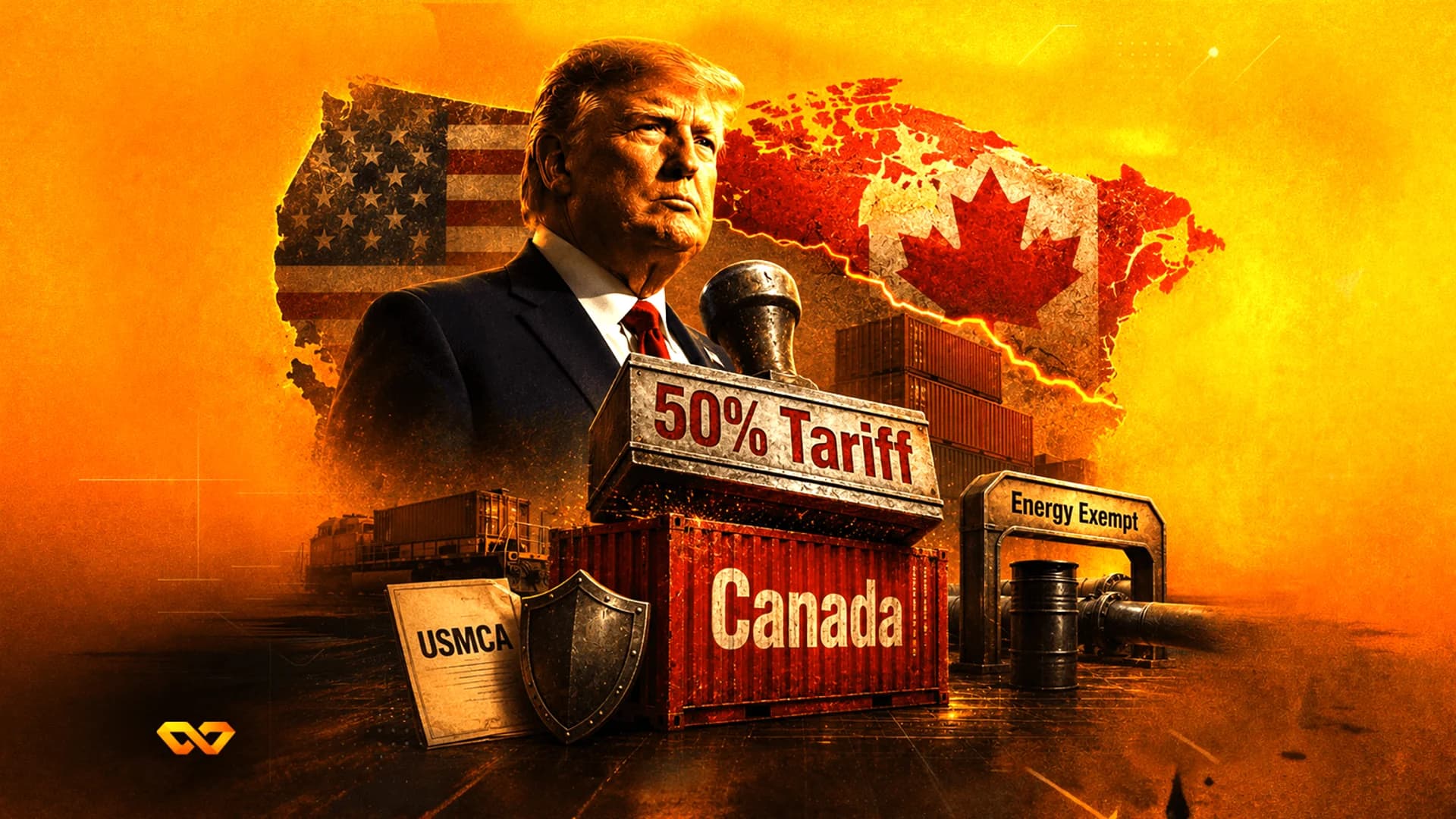
In a pivotal shift for U.S. trade policy, President Trump signed three proclamations imposing 50% tariffs on specific Canadian imports using the previously untested legal authority of Section 388. Crucially, the measures include significant exemptions for energy, potash, and critical minerals, as well as goods covered under the USMCA trade agreement. The administration framed these duties as a retaliatory response to alleged Canadian trade discrimination against American interests.
The exemption of the energy and minerals sectors significantly mitigates the expected economic shock, as Canada remains the primary supplier of crude oil to the U.S., thereby shielding American refineries from immediate cost spikes. Compared to Trump's first-term tariffs of 10% to 25% on steel according to Reuters data, the 50% rate remains exceptionally high for non-exempt sectors. Trade experts suggest that preserving USMCA protections indicates a strategy to pressure Ottawa without dismantling the regional trade framework entirely.
Traders are now monitoring the Canadian Dollar and local equity markets following the narrowed scope of the tariffs, as uncertainty persists for non-exempt consumer goods. According to the economic calendar, China's trade balance surplus reached $125.62 billion on July 14, 2026, underscoring global trade imbalances. Investors should watch for official responses from the Canadian government regarding potential retaliatory measures as the primary catalyst for market direction in the coming days.
Latest Updates · 5
- Notable·
Update: The USTR justified these measures by accusing Ottawa of granting preferential trade terms to other nations and failing to rescind prior retaliatory actions. Simultaneously, U.S. officials signaled a potential expansion of trade friction toward Europe, specifically targeting government subsidies for Airbus in its rivalry with Boeing, suggesting a broadening of the administration's protectionist agenda.
- Notable·
Update: Subsequent details have clarified that the 50% tariffs specifically target the motor vehicle, alcoholic beverage, and dairy sectors. This move places additional pressure on Canadian industrial supply chains and consumer goods not covered by the initial exemptions.
- Notable·
Update: In the first high-level official response, Canadian official Mark Carney vowed to intensify trade negotiations with Washington to mitigate the impact of the decision. These remarks aim to stabilize markets and reduce pressure on sectors not covered by the newly announced exemptions.
- Notable·
Update: The tariffs are scheduled to take effect 30 days after the signing, utilizing the legal authority of Section 338 of the 1930 Act. The specific list of affected imports includes hockey equipment, furniture, clothing, and cement, placing targeted pressure on Canadian manufacturing and consumer sectors not covered by the primary exemptions.
- Notable·
Update: The new tariffs specifically target Canada's automotive, dairy, and alcoholic beverage sectors, amid ongoing bans on American alcohol in eight Canadian provinces since 2025. This escalation follows the U.S. formal refusal to automatically renew the USMCA on July 1, 2026, triggering a rigorous annual review process for regional trade.