
Trump Invokes 1930 Tariff Law Against Canada in Historic Trade Move
Key Facts
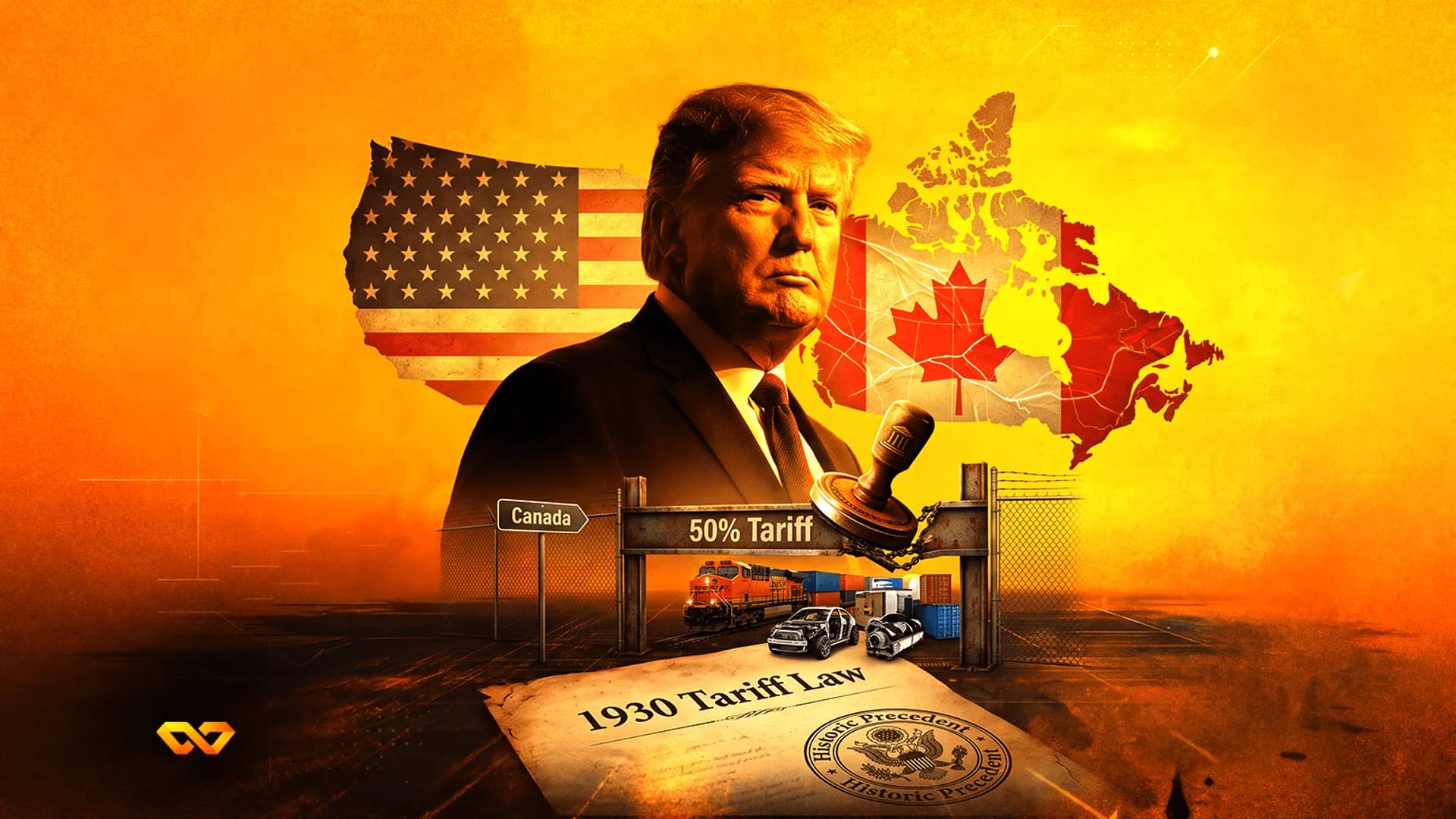
In a move reflecting escalating trade tensions in North America, the Trump administration has invoked a rare 1930 tariff law to impose new trade barriers on Canada. This action, which has never been used by any other U.S. president, follows the expiration of previous global tariffs. The administration cited Section 338 of the Depression-era law to retaliate against what it terms as Canadian discrimination against the U.S. auto industry. According to reports, the legal evidence supporting these specific tariffs is considered weak, adding significant legal uncertainty to US-Canada trade relations.
This escalation serves as a continuation of a broader trade strategy following global tariff deadlines, with the U.S. claiming that Canadian duties disadvantage American commerce relative to other nations. Per market data, the regional trade landscape shows Mexico’s Balance of Trade at 4.09 billion in July 2026, while the U.S. Goods Trade Balance reported a deficit of 101.5 billion dollars on July 28, 2026. These figures highlight the persistent trade imbalances providing the backdrop for the administration's latest protectionist measures.
Investors should closely monitor the impact on consumer sentiment and manufacturing sectors, noting that the Dallas Fed Manufacturing Index stood at 1.3 as of July 27, 2026. Notably, the Bank of Canada conducted a Market Participants Survey on July 27, which may offer further insight into how Canadian markets are adjusting to these unprecedented trade barriers.