
The information provided on EL7.AI is for educational and informational purposes only and does not constitute financial advice.
The information provided on EL7.AI is for educational and informational purposes only and does not constitute financial advice.
Sign in to access this content
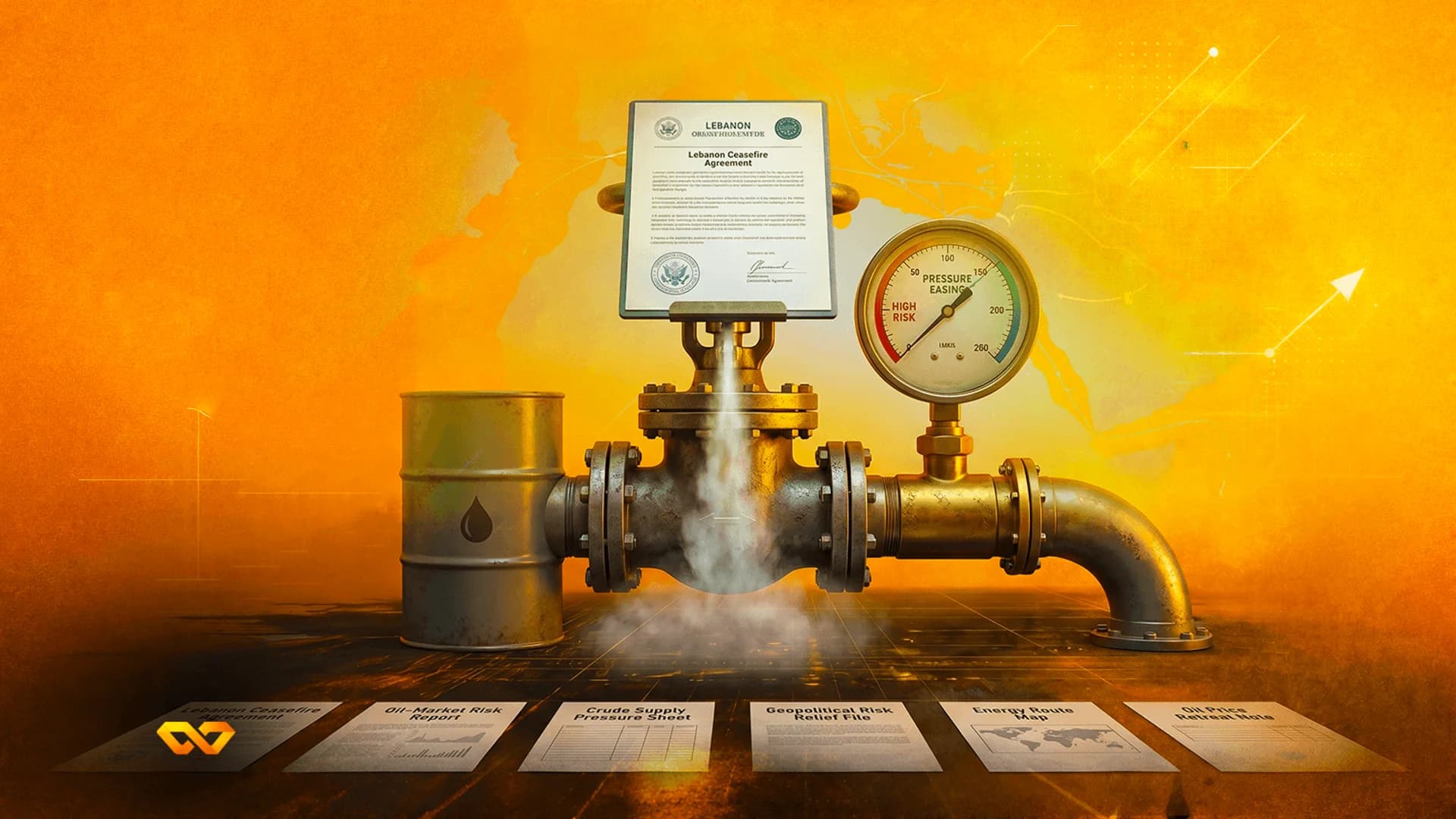
Sign InIn a move reflecting the erosion of the risk premium in global energy markets, oil prices declined in early Asian trade following the announcement of a ceasefire agreement between Israel and Lebanon. According to reports, Brent crude prices fell 1.24% to settle at $96.60 per barrel, while West Texas Intermediate (WTI) dropped 1.10% to reach $94.96 per barrel. Traders view this de-escalation as a potential precursor to a broader deal between the U.S. and Iran, which could lead to the reopening of the Strait of Hormuz and secure supply flows.
This decline comes as markets monitor the performance of major producers, where previous data showed relative stability in production for giants like ExxonMobil and Chevron despite geopolitical volatility. Compared to the previous quarter, market data indicates that oil prices continue to face pressure from slowing global demand, especially with U.S. GDP growth figures coming in at 1.6%, missing the 2% forecast according to economic calendar data from May 28, 2026.
Looking ahead, investors are awaiting the EIA Weekly Petroleum Report to assess U.S. inventory levels, following a previous draw of -3.327 million barrels recorded on May 28, 2026. With Brent crude at $96.60 (as of June 4, 2026), focus remains on upcoming Fed official speeches, such as Williams' address, due to their direct impact on dollar strength and subsequently dollar-denominated commodity prices.
Update: Downward pressure on prices intensified as signs of weak Chinese demand emerged, with Iranian exporters forced to offer discounts for the first time since April. According to market reports, traders also lowered premiums for Russian crude to entice Chinese buyers, reflecting broader concerns over slowing consumption in the world's largest oil importer.