Track the evolution of major financial and economic events
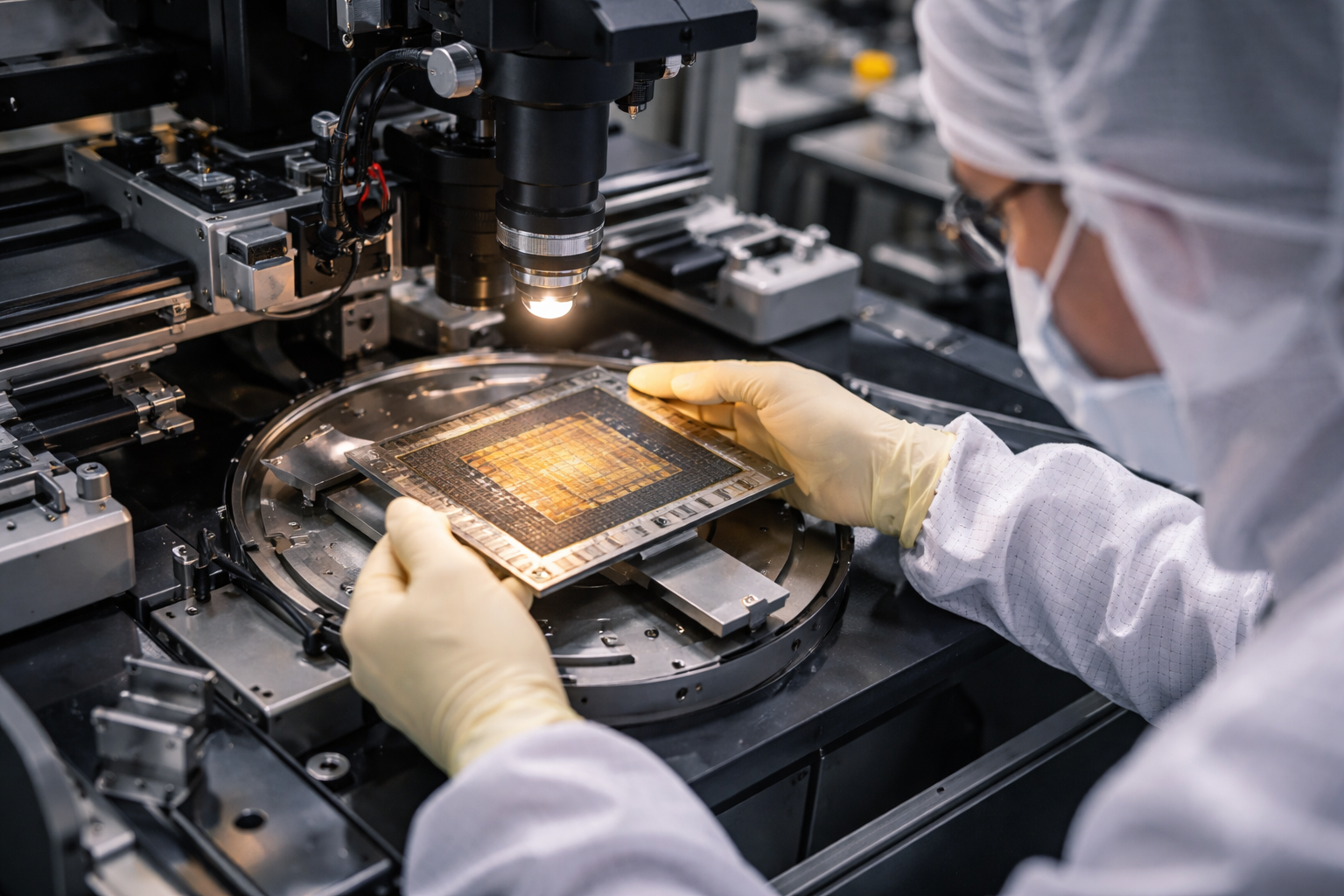
Semiconductor stocks declined at the start of Q3 following a record-breaking Q2 rally where Micron, Intel, and AMD added $2 trillion in combined market value. The sector is facing pressure as investors question the long-term sustainability of AI infrastructure spending beyond 2026. Amidst this volatility, SK Hynix plans a US ADR debut to fund its expansion, while Cadence Design Systems remained steady due to robust demand for semiconductor design software.
JPMorgan's Q2 2026 earnings preview indicates a continuation of the strong beat streak, with the bank achieving an average surprise of 7.25% over the last two quarters. Major banks, including JPMorgan, Bank of America, Citigroup, and Wells Fargo, will kick off the Q2 reporting cycle on July 14th. The earnings revisions trend remains positive, with expectations steadily increasing over recent months.
Venice AI raised $65 million in a Series A round led by Dragonfly, reaching a $1 billion valuation. Meanwhile, AI startup Prime Intellect secured $130 million to expand its services in helping enterprises train custom AI models, officially achieving unicorn status. Additionally, financial data startup Databento raised $97 million, supported by a high-profile client base that includes Nvidia, OpenAI, and major hedge funds.
S&P 500's H1 2026 earnings growth is notably driven by the Information Technology, Energy, and Materials sectors. Profit margins for S&P 500 reached a record high, while most other sectors showed modest growth. Analysts' expectations for S&P 500 earnings are rising at the fastest rate since the post-Covid pandemic recovery. Market leaders like NVDA, MSFT, and AAPL are generating record profits and free cash flow, distinguishing this cycle from the 2000 dot-com bubble. 40% of the S&P 500 is concentrated in the top 10 stocks, with elevated P/E ratios and valuation risks.
On July 1, Meta shares jumped on reports that the company plans to launch an AI cloud business targeting external customers. On the same day, the Dow Jones Industrial Average hit a new record high, while semiconductor stocks fell 4.5%, dragging down the Nasdaq 100. On July 3, it was reported that Meta is partnering with Samsung to manufacture AI chips in a deal valued at approximately $6.5 billion.
Fidus Investment achieved a 23% year-over-year growth in net investment income, with a 125% dividend coverage ratio in Q1. The portfolio value grew by 19% year-over-year to $1.37 billion, defying negative industry trends. Meanwhile, Chemtrade Logistics reported strong cash flows despite a 50% year-over-year decline in net income driven by higher operating and finance costs.
On July 1, Artivion received FDA approval for its AMDS Hybrid Prosthesis, removing a key hospital adoption hurdle and opening an estimated $150 million annual U.S. market. On July 2, Tenon Medical received FDA 510(k) clearance for its updated Catamaran SI Joint Fusion System, which includes the reclassification of certain instruments from disposable to reusable status. The company expects reusable instrumentation to drive lower capex and improve gross margins and cash flow. On the same day, Avanos Medical and American Industrial Partners announced the receipt of all required regulatory approvals to complete the pending acquisition.
On July 1, the FDA authorized Philip Morris to market 20 ZYN nicotine pouches with claims of reduced disease risk after a scientific review. On July 3, the FDA classified Insulet's correction to its Omnipod systems as a Class I recall due to a cannula defect. On July 6, the FDA classified Insulet's Omnipod recall as Class I after reports of insulin under-delivery linked to serious injuries.
On July 1, Pacira (PCRX) sold its iovera franchise to Zimmer Biomet (ZBH) in a deal worth up to $140M to sharpen its focus on biopharmaceutical growth. On July 2, U.S. Physical Therapy purchased a majority stake in a physical therapy practice. Additionally, Orthofix Medical shares rose following a decision by the Centers for Medicare & Medicaid Services (CMS) to reverse its stance on non-invasive bone growth stimulators.
AIG has appointed Nancy Bewlay as Executive Vice President and Global Chief Underwriting Officer, effective September 8, 2026. The company also appointed Christine Williams as Head of Global Client and Broker Relationships, effective September 1, 2026.
MSC Industrial (MSM) reported quarterly earnings of $1.43 per share, beating the Zacks Consensus Estimate of $1.28 per share, compared to $1.08 per share a year ago. The company also reported revenues of $1.05 billion, representing a 7.8% year-over-year increase. The stock price rose 3.69% to $123.34, hitting a new 52-week high.
On July 1, Micron Technology and General Motors signed a Strategic Customer Agreement to secure a long-term supply of memory and storage platforms for vehicle production. On July 6, Micron and Ford announced a long-term supply agreement for automotive memory chips. On July 9, Micron Technology announced plans to invest up to $3 billion to strengthen the U.S. semiconductor supply-chain ecosystem.
On July 1, the US DOE approved the Documented Safety Analysis for Oklo's Groves Isotope Test Reactor, boosting the stock. On July 3, Oklo received approval from the U.S. Department of Energy for the Safety Analysis Report for its Groves Isotope Test Reactor. On July 6, BWX Technologies completed the acquisition of Precision Components Group (PCG) and its subsidiaries PCC and DCF, aiming to expand BWXT's heavy-manufacturing footprint and U.S.-made nuclear component delivery capabilities.
Crypto enters Q3 with thinner liquidity and less leverage after an $8.35 billion liquidation. On July 1, Bitcoin and Ether open interest fell sharply following the liquidation. On July 2, centralized crypto lending loan books decreased by 6% in Q1 2026 to $23.3 billion, marking the first contraction since Q3 2024. Tether maintains a dominant 68% share of the centralized finance loan market. On July 6, HTX Research released its Q3 2026 outlook report titled 'Liquidity Defines Crypto', focusing on global liquidity repricing and regulatory developments.
Bitcoin fell 20% in June 2026, marking its worst month since 2022. In the same month, Bitcoin ETF outflows reached a record $4.5 billion.
Bank of America is expected to report Q2 earnings on July 14, with analysts projecting EPS of $1.10 and revenue of $30.26 billion. BAC stock fell 1.6% on Tuesday ahead of the announcement. The SEC fined BAC subsidiary Merrill Lynch $7.5 million for delayed suspicious activity reporting. BAC's projected losses in the Federal Reserve's stress test are considered modest relative to its $3 trillion in market assets.
Eurozone inflation declined in June as cooling energy prices increased the likelihood that the European Central Bank will refrain from raising its key interest rate this month. A jump in energy company profits is forecast to drive European blue-chip earnings growth in the second quarter. Energy sector growth is expected to overshadow far weaker gains across the rest of the European market. The EU plans to offer carbon market flexibility to address concerns regarding industrial sector competitiveness.
U.S. stock futures slid in early European trading, indicating that global equities were set to start the second half of the year in the red. Mixed premarket performance was observed as investors awaited June jobs data. Investors are closely monitoring Tesla's latest quarterly delivery numbers. On July 6, Nasdaq 100 futures rose 1.1% and S&P 500 futures climbed 0.4% as traders returned from a long holiday weekend. The Japanese Yen weakened against the Dollar, with USD/JPY reaching 162.31, while 10-year Treasury yields eased to 4.46%.
Japan spent $74 billion propping up the yen, which hit a 40-year low. Investors noted that intervention alone is insufficient due to wide U.S.-Japan rate differentials. Finance Minister Satsuki Katayama stated Tokyo's readiness to respond appropriately to disorderly currency moves, confirming close coordination with Washington. The yen steadied at 161.2 per dollar after recovering from a low of 162.84. Bankruptcies linked to the weak yen rose 32.3% in the first half of the year, totaling 45 cases.
The S&P 500 and Nasdaq finished Q2 2026 with their biggest quarterly gains since 2020, as investor optimism about economic and earnings growth persisted despite the Middle East conflict. The S&P 500 recorded its best quarterly performance since 2020 following a recovery in recent weeks. Investors returned to growth stocks amid optimism regarding peace negotiations in Iran and strong corporate earnings. The S&P 500 index finished the week up 1.7%, marking its best weekly performance in two months.
On July 1, SeekingAlpha published the Q2 2026 earnings call transcript for Progress Software.
On July 1, Allison Transmission was announced to be added to the S&P MidCap 400 index, leading to a rise in its shares. On July 2, Genuine Parts shares surged 13% following a report that O'Reilly Automotive submitted a cash bid for its auto-parts division, which could value the division at $10 billion or more. On the same day, O'Reilly Automotive's stock declined by 4.4% following the news of the bid. On July 7, Trimble shares gained following reports that the company is looking to sell its transportation and logistics unit.
On June 30, Donald Trump's financial disclosure revealed over $1 billion in income from cryptocurrency deals, along with large sums from licensing and legal settlements. On July 8, AI Financial, the company behind the Trump family's crypto wealth, was in talks to sell its core business. The company had channeled more than $500 million to the Trumps prior to this abrupt reversal.
KKR announced the acquisition of EDF's North American power solutions operations for $4.2 billion. The deal may include additional payments of up to $390 million based on certain performance conditions. EDF's power solutions unit is currently ranked among the top 10 renewable capacity owners in the United States.