Track the evolution of major financial and economic events
Silver prices (XAGUSD) experienced fluctuations in July driven by shifting interest rate expectations. On July 6, the outlook improved as a weak jobs report lowered the odds of a rate hike. However, by July 14, silver prices declined as surging oil prices increased the probability of further interest rate hikes by the Federal Reserve.
On July 6, Ripple secured preliminary authorization as a Crypto-Asset Service Provider (CASP) from Luxembourg's financial regulator (CSSF). This authorization marks an important step for Ripple in strengthening its presence in the European market.
On July 6, Vitalik Buterin unveiled a multi-year transformation initiative called 'Lean Ethereum' targeting 10,000 transactions per second. This overhaul is positioned as the third fundamental evolution of the network, comparable in scope to the 2022 Merge. On July 8, Ethereum mainnet gas fees dropped to 1 gwei, providing a rare window for low-cost transactions. On July 9, Ethereum gas fees fell to as low as 1 gwei, significantly slowing the network's ETH burn rate.
Bitcoin sustained its position above the $63,000 threshold entering the new week, recovering from late June setbacks. Digital asset markets registered consistent weekly advances as cryptocurrencies demonstrated stability despite tech equity vulnerabilities. On July 9, Bitcoin was trading near $62,000 with technical indicators suggesting an attempt to recover from its recent decline.
Sovereign wealth funds have shown a clear preference for accessing Bitcoin and digital assets through regulated investment channels. On July 7, Switzerland-based Bitcoin Suisse secured double licensing wins for digital asset services in the Middle East and Europe. The Middle Eastern operations are expanding through the subsidiary BTCS (Middle East) Ltd., which secured full regulatory authorization to operate in Abu Dhabi on July 8.
Bitcoin reclaimed the $63,000 level in early July, driven by whale accumulation that offset record outflows from spot ETFs. By mid-month, crypto regulation surpassed geopolitics as the primary market catalyst, leading to steady prices as traders awaited policy decisions. Despite this recovery, the first half of 2026 saw a 59-percentage-point performance gap, with public crypto companies gaining 23% while crypto assets fell 36%.
Speculation regarding a potential merger between Tesla and SpaceX has intensified following SpaceX's record-breaking IPO, which JPMorgan valued at $1.77 trillion. Analysts suggest the IPO has simplified the valuation and structuring of a deal, providing Elon Musk with significant acquisition currency. Furthermore, reports indicate an increasing exchange of engineers and resources between the two companies as a potential precursor to a formal combination.
On July 6, OPEC+ agreed to further increase its oil output targets starting from August. On the same day, exports via the Strait of Hormuz began to recover, potentially contributing to global supplies. On July 7, the extension of production increases was confirmed as Gulf oil flows recovered and prices cooled.
Circle Internet Group shares plummeted 17.5% to a four-month low of $62.63 on July 5. The company is currently facing a criminal complaint in Wisconsin for allegedly failing to comply with a court order to recover stolen USDC funds linked to an investment fraud probe. While the stock rose 5% to $66.14 on July 13 following US regulatory approval for its national trust bank, it remains down approximately 20% year-to-date with technical indicators suggesting potential further declines.
Traders are watching the Federal Reserve minutes on July 5 to see if gold can break above its 52-week moving average. Gold prices experienced noisy trading on July 9 as market participants monitored interest rate markets and the US dollar. Technical analysis indicates a looming 'Death Cross' formation, signaling potential downside risks for gold.
Wood Mackenzie analysts predict the end of cheap U.S. natural gas by 2035, driven by AI data center demand and LNG export expansion. Despite this long-term outlook, futures prices declined in mid-July due to larger-than-expected inventory builds and cooler weather forecasts. Additionally, planned maintenance at the Freeport LNG facility is expected to reduce both demand and export volumes.
Falling crude oil prices have been identified as a key catalyst for US market movements this week. Investors are awaiting key corporate earnings and the release of FOMC meeting minutes. On July 6, the S&P 500 triggered a rare bullish technical signal seen only a handful of times since 1950. However, Polymarket traders expect the S&P 500 to open lower despite another record close for the Dow Jones Industrial Average.
Federal Reserve working papers found that unauthorized immigration during the Biden administration increased U.S. home prices by 2.2% and rents by 1.4%. Research from the Dallas Fed further estimated that illegal immigrant flows accounted for 30% of home price growth and 20% of rent increases. Consequently, federal authorities issued new guidance to financial institutions regarding credit risks associated with borrowers lacking U.S. work authorization.
On July 5, Michael Saylor stated that Bitcoin's traditional four-year cycle is fading due to institutional capital flows and credit. On July 6, Saylor asserted that Bitcoin's four-year halving cycle is obsolete and is no longer the primary market driver.
Bitcoin and Ethereum saw gains in early July as liquidity shifted toward large-cap crypto assets amid cooling broader risk appetite. While the market capitalization of altcoins excluding the top two assets fell 23% in H1 2026 to $666B, recent data shows a shift in momentum. As of July 13, the Altcoin Season Index rose to 58 points, signaling a potential rotation of capital from Bitcoin into the broader altcoin market.
RTX was recently removed from the Russell 1000 Dynamic Index, potentially impacting index-linked funds despite maintaining a robust backlog and a fair value estimate of $215.73 per share. In July, its subsidiary Raytheon invested $100 million to expand its Rhode Island facility. Additionally, RTX secured a 15-year, $2.68 billion contract to provide training services for the British Army.
Russell reclassified Intuit from growth to value indices, prompting analyst concerns regarding the company's new pricing strategy and growth targets. Despite mixed analyst ratings ranging from Buy to Hold, Intuit reported 10% growth in revenue and EPS for Q3 FY2026. As part of a strategic pivot toward AI, the company reduced its workforce by 17% and authorized a new $8 billion share buyback program.
Binance founder Changpeng Zhao proposed freezing 1.1 million Satoshi Nakamoto bitcoins to protect them from potential quantum computing threats, sparking debate among experts. Meanwhile, 44 defendants were dropped from a lawsuit targeting dormant Bitcoin wallets from the early mining era. The Bitcoin Policy Institute has moved to block this legal action, warning that a ruling favoring the plaintiffs could destabilize property rights within the Bitcoin network.
SpaceX stock is facing pressure due to persistent financial losses despite achieving technical milestones. While making progress in space exploration and expanding broadband access, the space segment is experiencing slow revenue growth. The stock price remained relatively flat through its first 15 trading days post-IPO. Starlink and xAI have been identified as key non-rocket launch business units for future growth. SpaceX announced plans to acquire Anysphere, the developer of the AI coding platform Cursor, in a deal valued at $60 billion, marking the company's largest acquisition to date.
On July 4, Riot Platforms transferred 500 BTC to NYDIG custody, signaling a potential sale to raise liquidity. This transfer highlights the funding challenges faced by public Bitcoin miners to expand AI capabilities. On July 6, rare bottom-zone readings indicate severe pressure on Bitcoin miners due to low hashprice. Miner survival now depends on the ability to withstand current weak mining profits. On July 8, the US Energy Information Administration projects electricity consumption will climb to 4,399 billion kilowatt-hours by 2027.
Enphase Energy shares fell 9.5% following its reclassification into value indexes and the launch of the new IQ9N GaN-based microinverter. The company expanded into AI data center power and subsequently launched the IQ Battery 5P for modular home storage. Additionally, Enphase was highlighted as a key beneficiary of potential Federal Reserve rate cuts following recent CPI data.
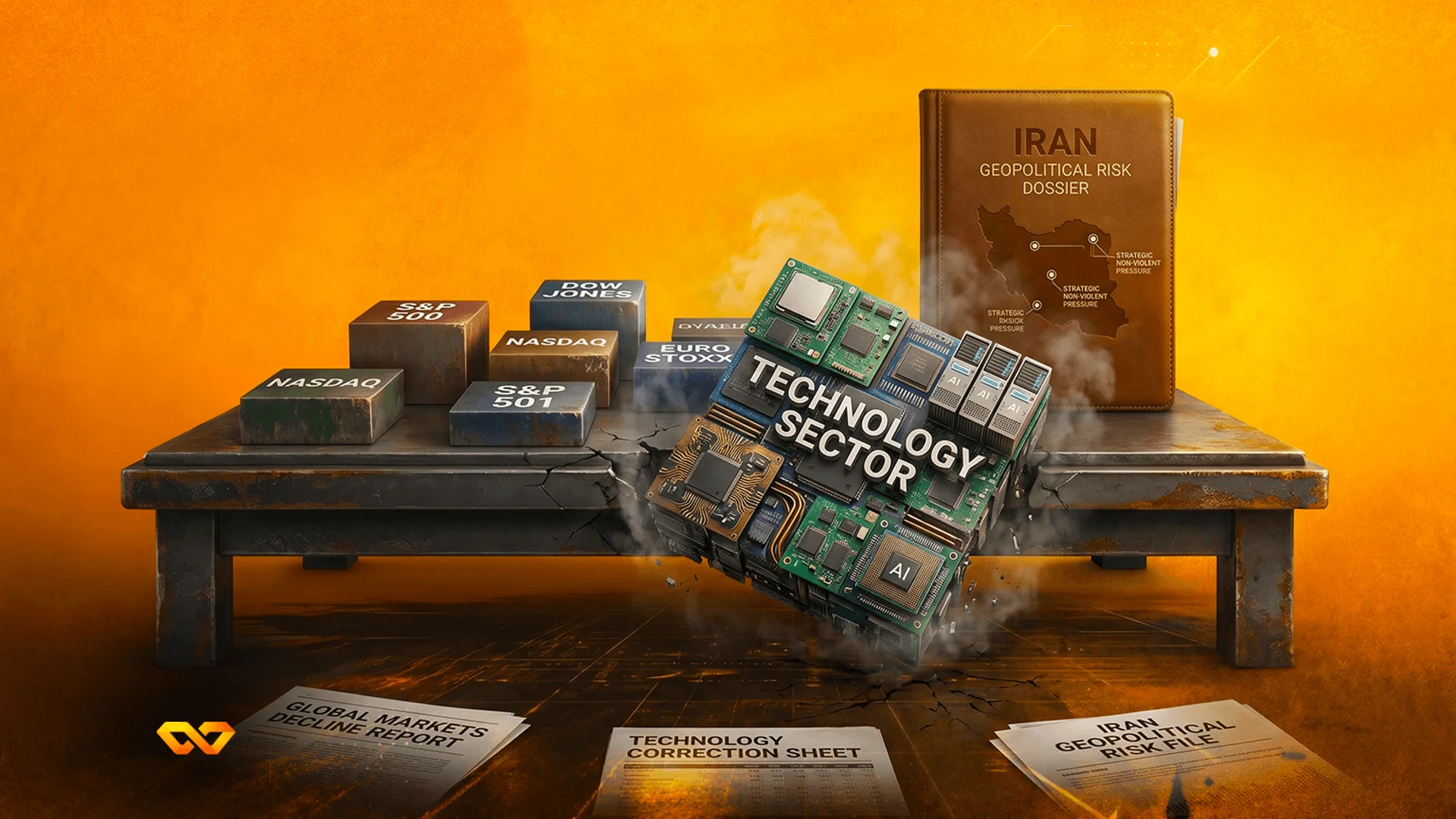
Markets are awaiting the release of the FOMC minutes on Wednesday, offering a deep look into the policy direction of new Fed Chair Kevin Warsh. The S&P 500 is facing pressure from stretched valuations, a cooling labor market, and fresh weakness in semiconductor stocks. Investors are focusing on tomorrow's release of the meeting minutes to gauge the future interest rate path. The minutes of Warsh's first Federal Reserve meeting are scheduled for release at 2 p.m. ET.
QRG Capital Management increased its stake in Bank of America by 8.6%, bringing its total holdings to $43.24 million. QRG Capital also raised its positions in Goldman Sachs by 1.6% and Philip Morris by 21.7% during the first quarter. On the same day, Osborne Partners grew its stake in Pool Corporation by 33% as the company announced a $600 million share buyback plan. On July 8, Bank of America provided a $520 million credit line to OpenAI after previously deeming the firm too risky.
Strs Ohio trimmed its stake in Lockheed Martin by 4.6% in the first quarter of 2026, selling 2,725 shares while retaining 56,316 shares valued at approximately $34 million. Despite weaker-than-expected quarterly results, Lockheed Martin maintained its full-year 2026 EPS guidance. Additionally, K.J. Harrison & Partners Inc. reduced its stake in Lockheed Martin by 95.2%, and Burney Co. cut its stake by 16.4% during the same period.