
Shenzhen Summit Brings China, Russia and U.S. Leaders Together on Nov. 19 to Discuss Nuclear Disarmament
Key Facts
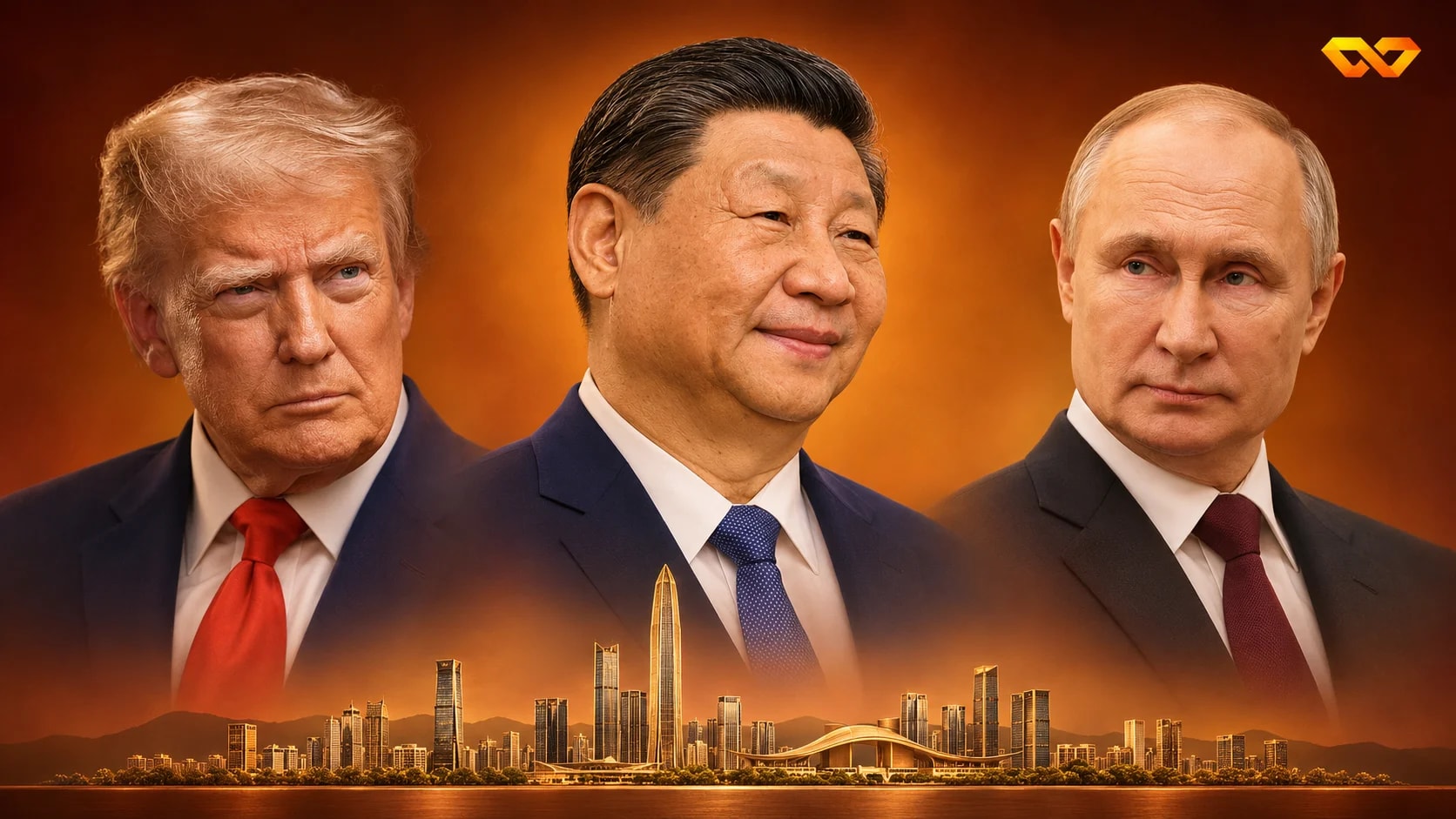
Xi Jinping, Vladimir Putin and Donald Trump will hold a trilateral summit in Shenzhen on Nov. 19, according to an announcement by China’s Foreign Ministry, in the first in-person meeting between the leaders of the three countries. The ministry’s spokeswoman said the leaders would exchange views on important issues affecting world peace, while Washington said the meeting is intended to start a conversation about nuclear disarmament. A U.S. official said the aim is for the conversation to be “the beginning of a dialogue that we hope will be productive in the future.” The official added that no agreements are expected to be announced during the summit. China’s participation gives the meeting a dimension beyond dialogue between Washington and Moscow, bringing together the three countries with the largest nuclear arsenals, according to estimates cited by the Associated Press.
The potential nuclear conversation comes after the New START treaty between the United States and Russia expires in February 2026, removing limits on the two largest arsenals for the first time in more than half a century, according to the Associated Press. Pentagon estimates cited by the news agency put China’s arsenal at more than 600 nuclear warheads, compared with more than 5,000 each for the United States and Russia. The disparity in arsenal sizes poses a challenge to any trilateral arms-control dialogue, at a time when Washington does not expect an announced agreement in Shenzhen. The Associated Press said analysts do not expect major breakthroughs and believe the meeting may carry more symbolic than practical weight. That sets a low bar for expectations from the first round, while leaving open the possibility that dialogue will continue.
Statements on Ukraine diverged: a U.S. official said Trump would avoid discussing the war, while Trump later announced that he intended to discuss it with Xi and Putin. Trump also said he wants to talk with the two leaders about limiting nuclear weapons and ending the war in Ukraine, according to the Associated Press. On Iran, the U.S. official said Washington intends to discuss the war with all three leaders. Reuters reported that trade, artificial intelligence and nuclear weapons, along with the two wars, are among the issues that could be raised. Beijing did not provide details of the agenda, saying the leaders would discuss important issues affecting world peace and that it would release information about the summit in due course.
The summit is being held on the sidelines of the APEC Economic Leaders’ Meeting in Shenzhen on Nov. 18 and 19, while the CEO Summit takes place on Nov. 17 and 18, according to China’s Foreign Ministry. APEC comprises 21 economies representing 60% of global economic activity, half of world trade and 40% of the world’s population, according to the Associated Press. The forum does not issue binding decisions, but over 37 years it has served as a venue for building consensus on cooperation and more open trade. Ahead of the meeting, Xi called for free and open trade, while Putin criticized Western sanctions in two speeches on the sidelines of APEC, according to Reuters. Putin said he expects “significant potential benefits” from the trilateral summit.
The talks come amid trade and technology understandings between Washington and Beijing, including mutual tariff reductions on products worth about $30 billion for each side. The two sides also agreed to hold the next round of their artificial intelligence dialogue by November 2026, according to China’s Ministry of Commerce. Reuters said advanced-chip export controls are likely to be on the agenda and that the two sides discussed cooperation on AI safety. But a proposed mechanism for each side to notify the other of serious incidents had not yet become operational when the news agency published its report. Reuters also said Washington and Beijing would not announce further progress on the tariff-reduction initiative during the summit, while Trump and Xi are expected to meet again at the Group of 20 summit in Miami in December.
October data present a mixed picture of China’s economy ahead of the summit: industrial output grew 4.8% year over year, while value added in manufacturing rose 5.4% and in high-tech manufacturing 17.6%, according to the National Bureau of Statistics. By contrast, retail sales rose 0.4% year over year in October, and grew 1.0% in the first ten months of 2026. The surveyed urban unemployment rate was 5.1% in October, down 0.1 percentage point from the previous month. Fixed-asset investment, excluding rural households, fell 8.1% from January to October, while investment in real estate development dropped 21.6%. In foreign trade, the total value of goods trade rose 31.2% year over year in October to 4,868.3 billion yuan, with exports up 28.7% and imports up 34.7%.
Behind the summit are concerns among smaller economies in Europe and Asia that the major military powers may disregard their interests, according to Reuters. The Shenzhen meeting brings together nuclear security, wars, trade and technology in a regional forum that has no authority to issue binding decisions. China’s spokeswoman said Beijing would release information related to the summit in due course, while the ministry has not announced details of the agenda. On trade, the next round of the artificial intelligence dialogue was due by November, while Reuters indicates that Trump and Xi are scheduled to meet again in December at the Group of 20 summit. The summit’s outcomes, and whether they are followed by steps in nuclear or trade dialogue, will determine whether it moves from political symbolism to a sustained negotiating track.
Latest Updates · 2
- Notable·
Update: The Trump administration extended export controls on high-end AI accelerator chips on November 18, 2026, now requiring licenses for renting large quantities of these chips to specific nations. China's Ministry of Commerce responded by announcing it will take countermeasures to safeguard its national interests, adding fresh tension to the technology agenda ahead of the Shenzhen summit.
- Notable·
Update: The Shenzhen meeting will include bilateral talks between Trump and Xi Jinping on November 19, 2026, focusing specifically on AI semiconductors and rare-earth supply chains. This session is set to deepen discussions on ongoing tech disputes between the two superpowers alongside the broader trilateral summit.