
Two Tankers Attacked in Hormuz on Nov. 16; Crew of One Unaccounted For
Key Facts
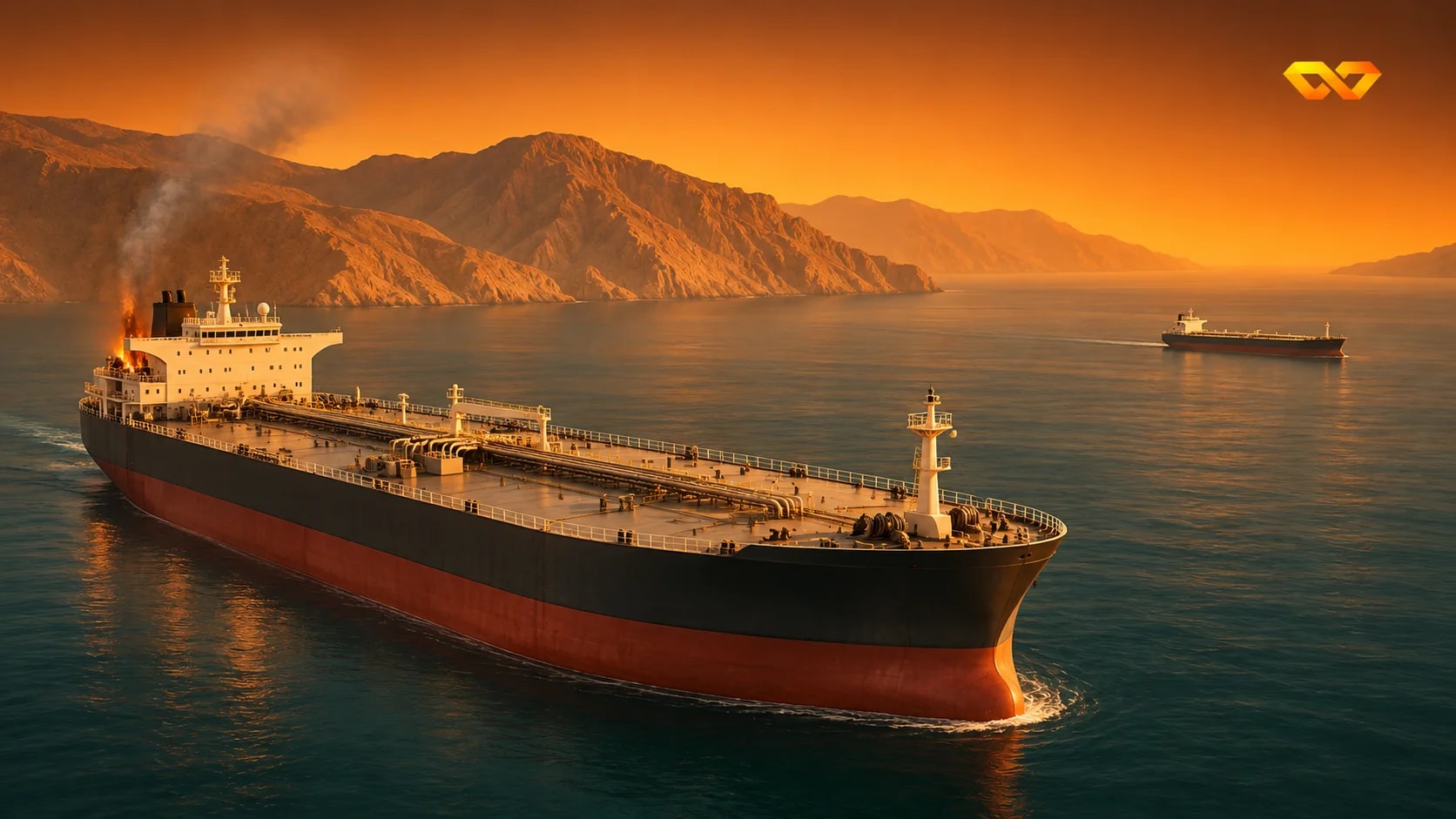
The United Kingdom Maritime Trade Operations (UKMTO) reported two separate incidents involving tankers in the Strait of Hormuz on Nov. 16, while Reuters reported the next day that the crew of a tanker hit in a second attack north of Khasab was unaccounted for. Citing a maritime security agency, UKMTO said the second strike occurred 7 nautical miles, or 13 kilometers, north of Khasab and sparked a fire aboard the tanker. After the first strike, UKMTO said the crew was safe, though the vessel was disabled after a fire in the engine room. Available information does not establish that the tanker whose crew was reported unaccounted for was the same vessel reported hit in the other incident that day. In its initial alert, UKMTO said a tanker sailing out of the strait was struck by an unknown projectile, starting a fire in the engine room; no injuries were reported and all crew members were accounted for.
The company’s vessel security center received a report of the first incident at 0558 UTC on Nov. 16, according to UKMTO’s incident log. The agency said at the time that a damage assessment was unavailable and the fire’s environmental impact was unclear. Authorities were investigating, it said, and vessels were advised to transit the area with caution and report any suspicious activity. Regarding the second strike, Reuters cited UKMTO as saying the extent of the damage was also unknown. The agency did not identify the vessels involved in that day’s attacks or those responsible, according to gCaptain, which said authorities were investigating both incidents.
The incidents followed another attack reported on Nov. 15, when Indian shipping authorities notified UKMTO that a vessel had been attacked while heading east through the Arabian Gulf toward the Strait of Hormuz. gCaptain said all crew members aboard that vessel were reported safe. The Joint Maritime Information Center recorded five attacks off Oman’s Musandam Peninsula since Nov. 1, the same source said, adding that shipping traffic remained far below prewar levels. The center estimated that around 227 commercial vessels were stopped at key anchorages east of the strait, including Fujairah, Khor Fakkan, Sohar and Musandam. The figures put the incidents in the context of crowded nearby anchorages and reduced commercial traffic through the area.
The center’s latest reading showed 83 transits by vessels receiving U.S. assistance between Nov. 12 and 14. On a separate track monitoring commercial vessels not covered by that assistance, the daily count ranged from the single digits to the low double digits. The two readings cover different groups of vessels, gCaptain said, and therefore do not represent a single measure of total transits. For commodity traffic, Reuters reported that five bulk commodity vessels transited the strait on Nov. 14, with none recorded on Nov. 15, citing ship-tracking data from Kpler. The number of transits over the previous weekend, on Nov. 7 and 8, was 31, underscoring a sharp decline in recorded traffic during the latest weekend.
Despite the new incidents, oil futures settled lower on Nov. 16, Reuters reported, as a recovery in Middle Eastern oil flows bolstered expectations of a supply surplus. Brent crude fell 3.6% to $92.44 a barrel at settlement, while West Texas Intermediate declined 3.2% to $85.72. The International Energy Agency expected average supply to reach 105 million barrels per day in the fourth quarter of 2026, 1.7 million barrels per day above projected demand. That followed the agency’s earlier forecast of a supply deficit in the same quarter. The agency also said 71 million barrels from the record release of its members’ oil reserves would remain available by the end of February 2027, including 15 million barrels of diesel to ease tight market conditions.
The strait’s importance to the energy market reflects the volume of flows passing through it; the Associated Press said one-fifth of the world’s oil transited Hormuz before the war. Against the backdrop of slower shipping, Reuters reported that traffic through the strait fell over the weekend after tanker attacks, while U.S.-Iranian talks aimed at resolving the Middle East conflict stalled. UKMTO urged vessels to continue transiting with caution and report any suspicious activity, while damage assessments and the incidents’ environmental impact remained unknown at the time of its alert. The agency said authorities were continuing their investigation, without identifying the vessels or those responsible for the attacks in its alerts. The reserve supplies announced by the International Energy Agency are due to remain available until the end of February 2027, Reuters reported.