
Iran’s Revolutionary Guard Says It Launched 6 Drones at U.S. Radar Site in Bahrain
Key Facts
Iran’s Revolutionary Guard said on November 15 that it launched 6 drones at a U.S. air defense radar system at Riffa base in Bahrain, in a new security development in the region. Al Jazeera quoted the Guard as saying it targeted the radar system, while Bahrain’s Defense Force said its air defense systems “confronted, intercepted and destroyed a number of Iranian aerial attacks” that day. The Bahraini force did not identify the locations targeted in the attacks in its statement. U.S. or Bahraini authorities also did not confirm that the site the Revolutionary Guard said it targeted was hit. The divergence between the two accounts places the announced attack in the context of a security escalation, without independently resolving whether the radar was struck.
Bahrain’s Interior Ministry issued two alerts to residents within about 3 hours, asking them to go to the nearest safe place, according to Al Jazeera. The alerts came on the same day the Revolutionary Guard announced the drone launch, and Bahrain’s Defense Force said its defenses had dealt with several aerial attacks. In the information available, the ministry did not link the alerts to a specific site or clarify whether they were a direct response to the Iranian account. The Defense Force also did not identify the locations of the attacks it said it intercepted. The measures reflect a state of domestic alert alongside the competing accounts of the targeting and interception.
The developments carry additional security significance because Manama is home to the U.S. Fifth Fleet, according to Al Jazeera. U.S. Central Command had said its forces shot down two Iranian drones on Friday, November 13, according to Al Jazeera’s report on the earlier incident. The Associated Press also reported that the U.S. military said on Friday it had shot down two drones heading toward Bahrain, denying Iran’s claim that a U.S. radar system in the kingdom had been hit. Washington said in its account of that earlier incident that there were no casualties or damage. The November 13 incident is separate in time from the Revolutionary Guard’s announcement on November 15 and does not settle what happened to the site it said it targeted the following day.
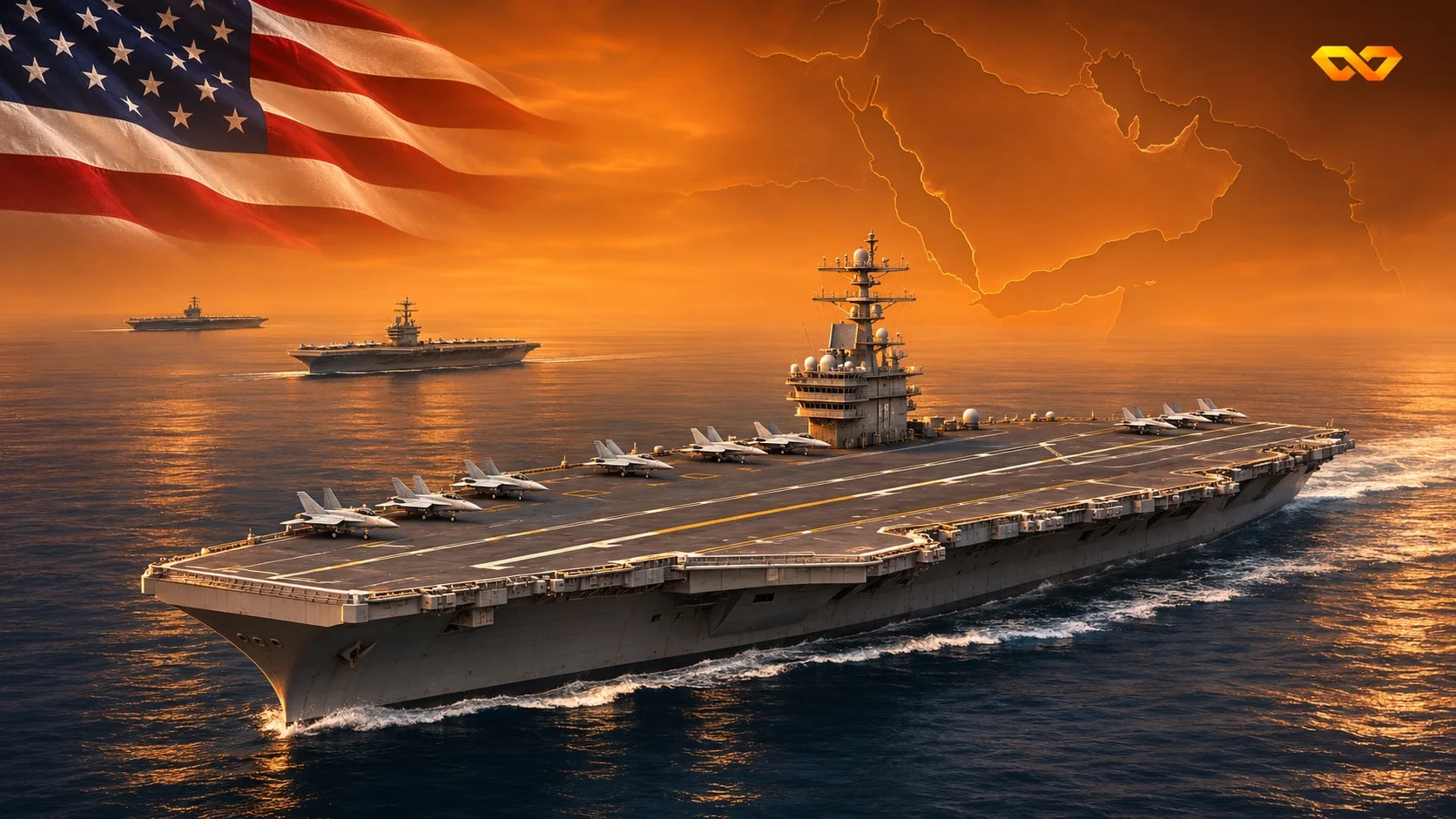
Against the backdrop of U.S. naval movements, The National said in a report published on November 6 that satellite images showed the aircraft carrier USS Theodore Roosevelt leaving the South China Sea and heading toward the Strait of Malacca. The report estimated at the time that the carrier would reach the Arabian Sea late the following week, an estimate made before the Bahrain developments reported on November 15. It could not be verified that the Roosevelt arrived in the Middle East within a day or that the number of carriers in the region had risen to three. The newspaper said the three carriers could give the United States a force of up to 144 F-18 and F-35 strike fighters. That figure is an estimate of potential air power if all three carriers were present, not confirmation that the Roosevelt had arrived or was in the region on the day of the attack.
The National report said the Roosevelt was accompanied by warships including the guided-missile cruiser USS Chosin, two destroyers and a nuclear submarine. The report added that the vessels were equipped with Tomahawk land-attack missiles, describing the accompanying force as reported on November 6. It also said the carrier could be heading to the region to replace one of the two carriers there, a possibility that does not necessarily imply an imminent combat commitment. In a separate report published on October 1, the Associated Press quoted a U.S. official as saying the group of ships heading to the Middle East included more than 7,000 sailors and 2,000 Marines. These reports provide context on the scale of the naval deployment, but do not establish a causal link between the carrier’s movement and the announced attack in Bahrain.
On November 13, U.S. Secretary of State Marco Rubio said further U.S. military action against Iran was unnecessary, noting that economic pressure on Tehran was significant, according to the Associated Press. The statement predates the Revolutionary Guard’s announcement on November 15 and does not clarify whether the U.S. position would change afterward. On maritime security, the United Nations’ International Maritime Organization counted 134 incidents in the Strait of Hormuz and the wider Middle East maritime region through November 11, according to the Associated Press. The agency said 25 sailors had died in those incidents, while others were injured or remained missing. These figures place the Bahrain incidents within a broader maritime security environment, without the organization attributing those incidents to the Bahrain event or identifying an impact on supplies.