
Iran’s Russian Grain Imports Jump 70%, Making It Third-Largest Buyer
Key Facts
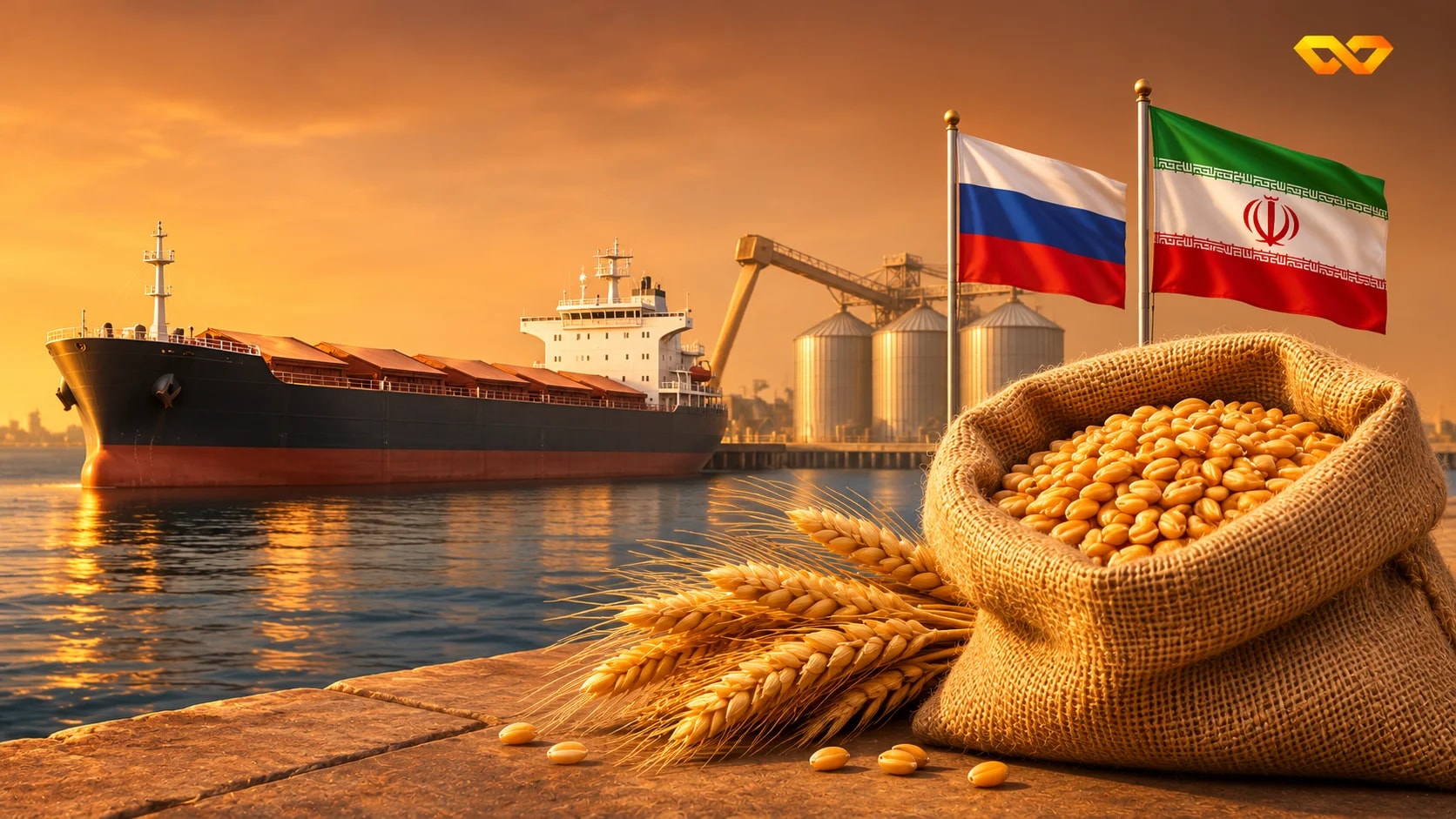
Iran’s imports of Russian grain rose 70% between January and August compared with the same period a year earlier, making Tehran the third-largest buyer of Russian grain, according to a report published by Le Monde on November 14. The report places the increase in trade within a broader rapprochement between the two countries spanning food, diplomatic cooperation and intelligence sharing. Iranian ports on the Caspian Sea are receiving steady shipments of Russian wheat, corn, sunflower oil and livestock feed. The report says this route helps Iran secure essential imports amid difficulties importing through other sea routes. It links those difficulties to tensions around the Strait of Hormuz and U.S. sanctions.
The report highlights the Caspian Sea as a logistics corridor extending beyond food trade, carrying military equipment, drones, missiles and ammunition between Russia and Iran. On July 25, the Ukrainian army attacked two commercial vessels in the Caspian Sea, the Port Olya 2 and the Beghi, and Kyiv said they were carrying Iranian equipment to Russia. The Port Olya 2 is subject to international sanctions, according to the report. The Ukrainian account could not be independently confirmed, the report said. The trade and logistics route places bilateral relations in a context that goes beyond grain purchases, while details of military shipments remain an account attributed to Ukraine.
On security, Le Monde cited experts as estimating that Russia may have supplied Iran with information on U.S. military positions and satellite imagery that could be used for targeting during the 2025 and 2026 confrontations with the United States and Israel. The report presents this as a possibility, not confirmation that the information was supplied. Reuters reported, citing a Ukrainian intelligence assessment it reviewed, that Russian satellites conducted at least 24 surveys of areas in 11 Middle Eastern countries, covering 46 sites, from March 21 to 31, 2026. The assessment also pointed to cooperation between Russian and Iranian hackers in cyberspace. Reuters quoted officials as saying Russian information could help Iran target U.S. assets, while adding that Washington had not detected Russian guidance on how to use that information.
But the level of military cooperation does not mean a broad flow of weapons, according to researcher Nikolay Kozhanov, whom Le Monde quoted as saying that “some arms shipments may still be taking place, but on a limited scale.” Russia cannot supply Iran with some equipment that it needs itself, including air-defense systems, ballistic missiles and cruise missiles, because of constraints related to the war in Ukraine, the report added. It also says the two countries have no mutual defense treaty, so the Kremlin would not intervene directly if a conflict broke out. On the diplomatic front, Iranian President Masoud Pezeshkian met his Russian counterpart, Vladimir Putin, in Moscow on October 27 during the Gas Exporting Countries Forum, where they discussed bilateral cooperation. The Kremlin hosted Mohsen Rezaei, an Iranian official and member of the Supreme National Security Council, on November 5; after the meeting, he referred to an important discussion about the prospects for relations between the two countries.
Cooperation also extends to the nuclear sector. Alexey Likhachev, head of Rosatom, announced that the number of Russian workers at the Bushehr nuclear power plant in southern Iran would reach 200 during November, with the possibility of rising to 700 later. This adds a practical dimension to the political contacts and trade discussed in the report. The announcement gives a near-term date for an increase in the Russian workforce at the plant, but does not specify a timeframe for reaching the later figure. Le Monde’s account of relations brings together food supplies through the Caspian Sea, assessments of intelligence sharing and ongoing nuclear cooperation. The limits on arms transfers remain tied to Moscow’s military needs, as described in the report.