
Reports of Two Missiles Landing on Qeshm as Official Information on Damage Remains Unavailable
Key Facts
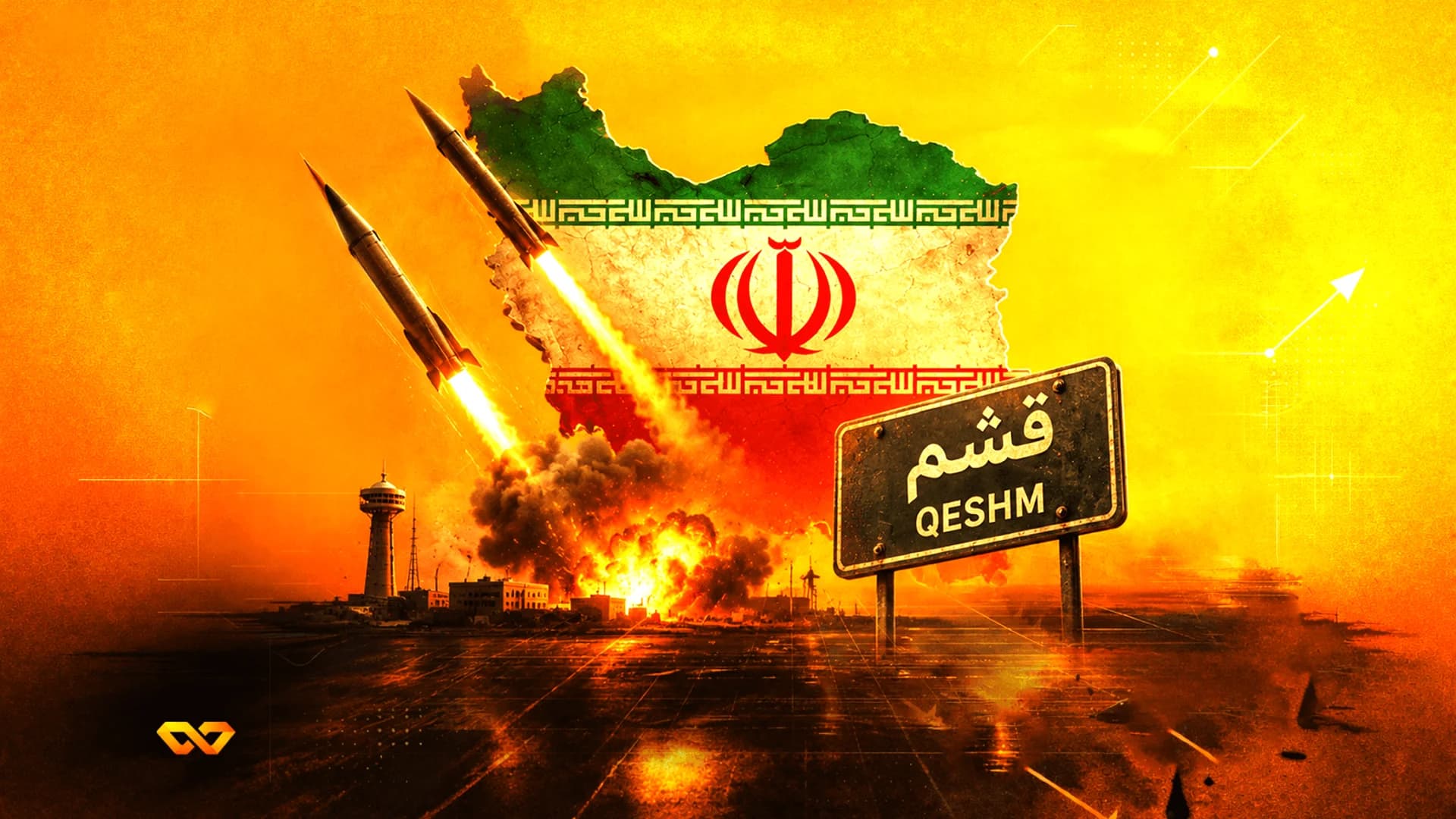
Tasnim reported that preliminary accounts said two missiles landed on Qeshm Island on Saturday, November 7, adding that no official information was available on possible damage. In a separate account carried by IRNA, local witnesses said two projectiles hit the Soza area of the island after the sound of an aircraft was heard overhead. Iranian state media reported hearing two explosions in Soza, which lies on a vital route for oil shipments, according to The Associated Press. The accounts did not independently identify who launched the projectiles or what they were. The available information also included no official confirmation of possible damage. Details of the incident remain subject to what Iranian authorities announce after confirming it.
The reports from Qeshm came after U.S. President Donald Trump said the U.S. military carried out limited strikes on Friday targeting an Iranian air defense system. Trump described the military action as "minor," according to The Associated Press. He said U.S. forces had disabled a recently built anti-aircraft system, adding: "We knocked it out in about 15 minutes, maybe five." Trump provided no further details about the target, the news agency reported. The timing places the U.S. announcement close to the reports from Qeshm, but does not establish a link between the announced strikes and the projectiles landing on Saturday. The available information included no official account linking the two incidents.
The U.S. military announced on Monday that it had carried out what it described as defensive strikes in the Strait of Hormuz, according to The Associated Press, while explosions were heard in Qeshm, Hengam and Bandar Abbas. The news agency quoted a U.S. official as saying the targets were Iranians using surface-to-air missiles against the United States in the strait. The official, who spoke on condition of anonymity because he was not authorized to comment publicly, said: "The strikes targeted Iranians using surface-to-air missiles against the United States in the strait." Those strikes relate to an earlier, separate incident, distinct from Saturday's reports. This context adds to security tensions around the strait, without explaining the latest incident on Qeshm.
Qeshm is geographically significant because it lies in the Strait of Hormuz, one of the main routes for oil exports. The International Energy Agency estimated that about 20 million barrels of oil per day passed through the strait in 2025, equivalent to nearly 25% of global seaborne oil trade. The agency estimated total oil exports through Hormuz that year at about 19.87 million barrels per day, including 14.95 million barrels of crude oil and condensates. It said Iran, Iraq, Kuwait, Qatar and Bahrain depend on the strait to export the vast majority of their oil. U.S. Energy Information Administration data put total oil flows through the strait at 4.9 million barrels per day in the second quarter of 2026, compared with 21.6 million in the fourth quarter of 2025. These figures provide earlier context for the route's sensitivity and do not measure the impact of the reports from Qeshm.
On the diplomatic front, two Middle Eastern officials told The Associated Press that Iran was reviewing proposals from Qatar, the main mediator, to address disputes with the United States over Iran's nuclear program. The news agency quoted regional officials as saying the proposal includes confidence-building measures over two days, with the Strait of Hormuz to reopen on the second day under an Iranian-Omani understanding that Washington has not approved. One official said Tehran was not willing at that time to negotiate with the Trump administration over its nuclear activities before the United States agreed to basic Iranian conditions under a ceasefire agreement. In a separate statement carried by Reuters, Qatar denied reports that Washington and Tehran had failed to reach an agreement to end the war and said mediation efforts were continuing in coordination with both sides. The sources did not say that these talks were directly linked to what Iranian media reported in Qeshm.