
European Gas Prices Jump More Than 150% as Supply Disruptions Persist
Key Facts
European benchmark gas prices have risen more than 150% since the start of the year, according to a Reuters report published in October, as LNG supply disruptions persist and the continent prepares for winter. Underground gas storage facilities in the European Union were 72% full on 1 October 2026, according to the European Network of Transmission System Operators for Gas. In its winter assessment, the network warned that continued constraints on LNG availability could push inventories well below 30% by the end of the coming winter. In a separate assessment of the ability of networks and facilities to serve consumers, it said "European gas infrastructure remains sufficiently resilient to meet demand." Its warning about inventories relates to continued constraints on available cargoes, while its resilience assessment concerns infrastructure's ability to meet demand.
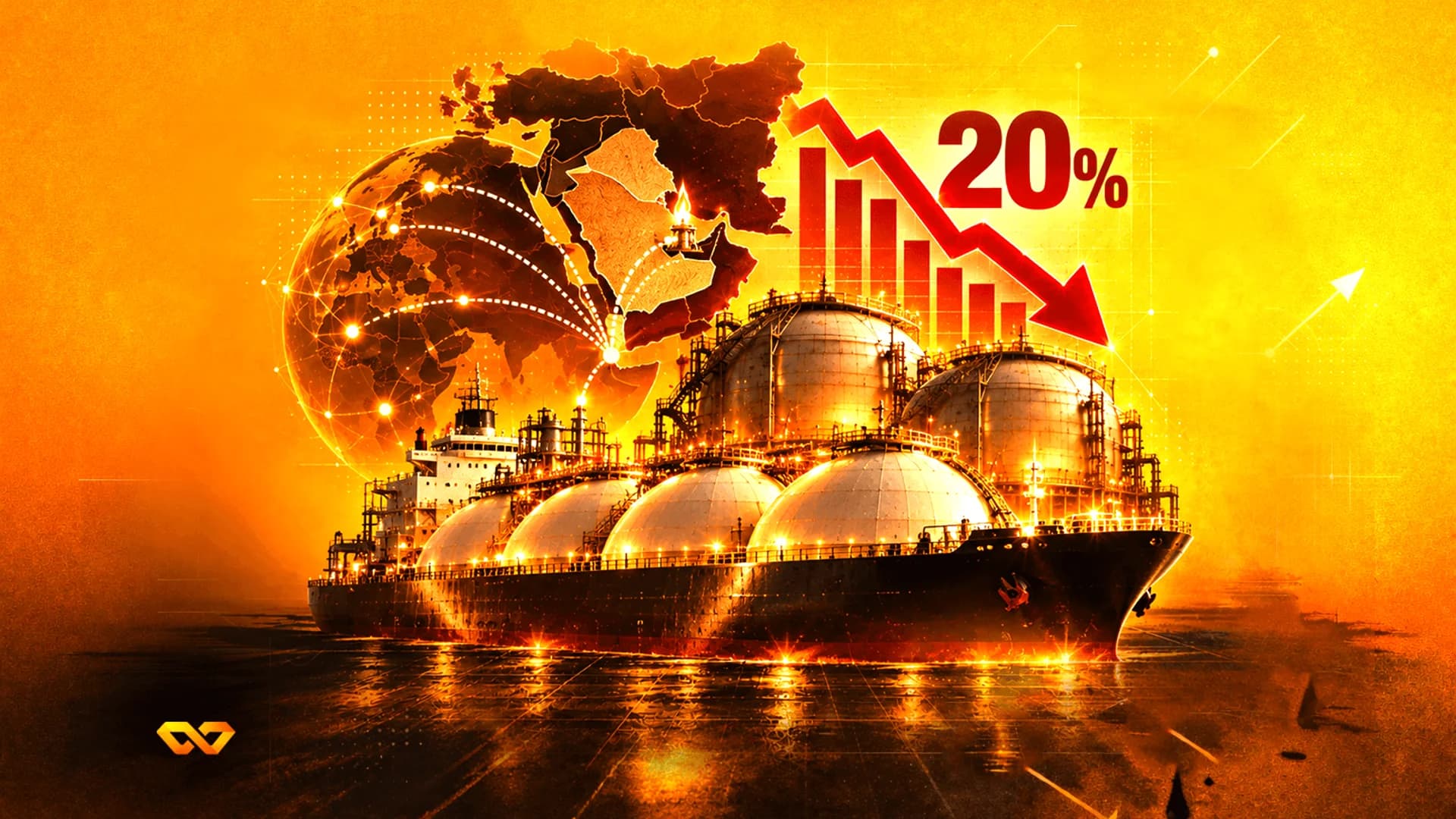
Before trade through it was disrupted, the Strait of Hormuz carried nearly 20% of global LNG trade, according to the International Energy Agency. Between March and June, LNG loadings from Qatar and the UAE fell by 35 billion cubic metres compared with the same period a year earlier. Meanwhile, LNG production outside the Gulf rose about 18% year on year over the same period, equivalent to around 27 billion cubic metres. That increase offset some of the volumes lost from the two countries, according to the agency's gas market report for the third quarter of 2026. The net decline in global production during that period was 4%, or 8 billion cubic metres, year on year. That decline reflected increased production from suppliers outside the Gulf against lower Qatari and UAE loadings.
Asia stands out among the regions affected by the disruption to the route, having received nearly 90% of all LNG exported through Hormuz in the year before the crisis, according to the International Energy Agency. In South Asia, pre-war forecasts had pointed to LNG demand growth of 2.7 million tonnes in 2026. That would have represented an annual increase of 7%, according to Wood Mackenzie. But in an analysis released in October, the company forecast a decline in the region's demand of about 6 million tonnes this year. The emergency response to the crisis included gas rationing for end-use consumers, according to the same analysis. Globally, the International Energy Agency forecast in its July report that natural gas demand would contract by 0.5% during the year, mainly because of lower use in power generation and industry.
Limited spare capacity in the Dolphin pipeline constrains the scope for rerouting Qatari gas, according to the International Energy Agency. The agency said "the pipeline has limited spare capacity," restricting its ability to accommodate additional volumes. Delivery disruptions also affected Edison's supplies from QatarEnergy, with the company announcing in an August statement that a total of 29 LNG cargoes were subject to force majeure. The cargoes covered totalled about 3.8 billion cubic metres, according to the same disclosure. The International Energy Agency also expects infrastructure damage to delay Qatar's planned expansion of LNG production capacity. The effects of the gas disruption have extended to fertiliser supply chains, which rely on it as a key feedstock, putting pressure on food security, according to the agency.
On upcoming delivery schedules, Edison announced in a September update that the overall force majeure period for QatarEnergy deliveries had been extended. The period now runs from the start of April until early December 2026, according to the company's statement. Edison said the extension "will effectively extend the overall force majeure period from the beginning of April to early December 2026." As for a return to pre-conflict market levels, Jason Ying, a commodities analyst at BNP Paribas, forecast in the Reuters report published in October that this would not happen before 2028. Ying said "the market will not return to pre-conflict levels until 2028," in a conditional analytical assessment of the recovery path.