
Fed leaves door open to further rate rise after lifting target range to 3-3/4–4%
Key Facts
Minutes of the Federal Reserve's September meeting showed most participants believed another rate increase would likely be appropriate before year-end, after the target range was raised to 3-3/4–4%. The Federal Open Market Committee approved a 1/4 percentage-point increase in its September decision, according to the U.S. central bank's statement. The statement linked the move to accelerating inflation's return to target, putting price stability at the heart of the decision's rationale. The policy statement was approved unanimously, by a vote of 12 to zero, among the committee's voting members at that meeting. "The Committee will achieve price stability," the committee said in its statement, affirming its commitment to that goal as it approved higher borrowing costs.
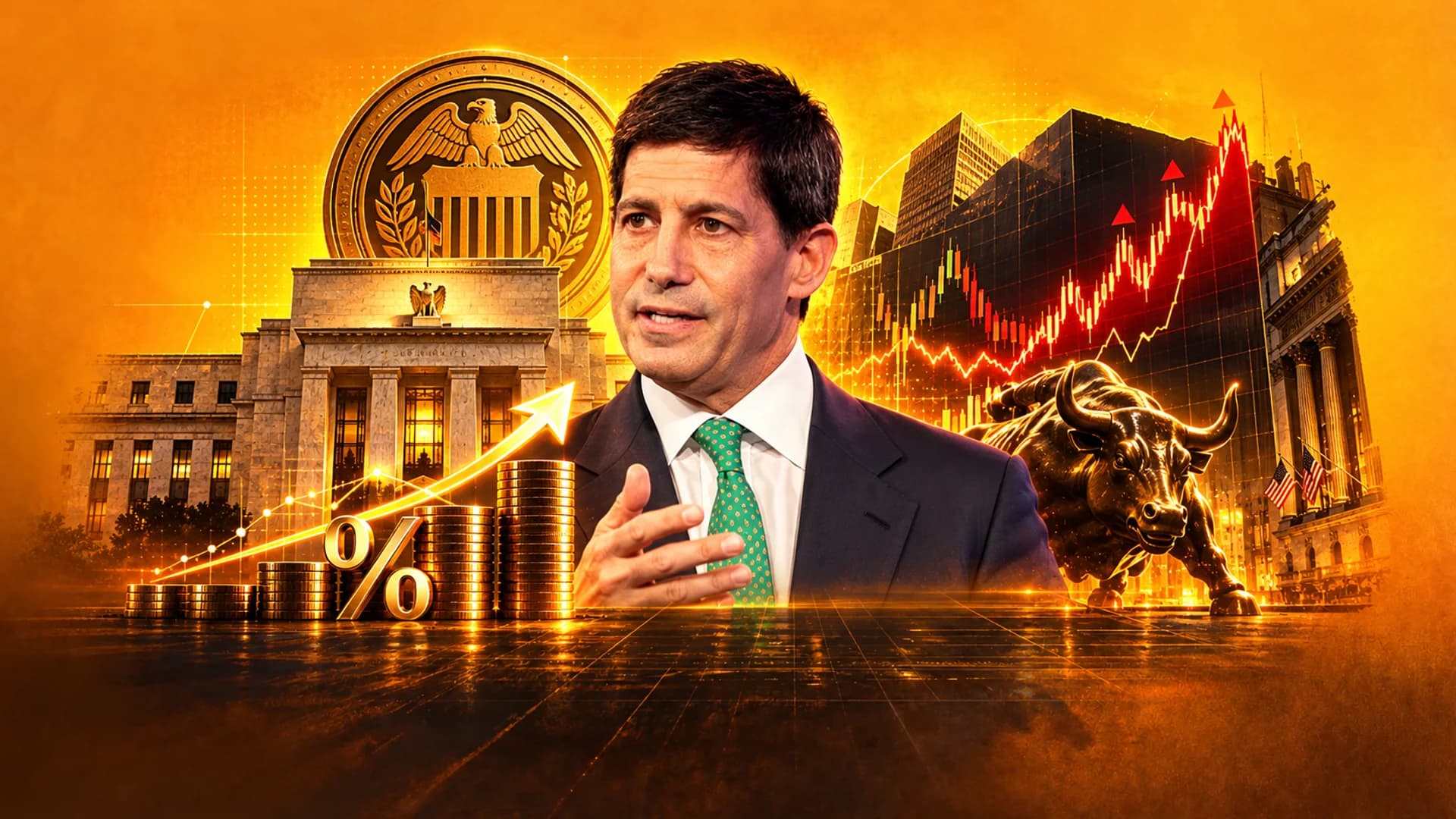
In assessing the degree of monetary tightening, several participants at the September meeting considered prevailing interest rates either nonrestrictive or only slightly restrictive, according to the minutes. Federal Reserve Chair Kevin Warsh's remarks after the decision highlighted his continued concern about the underlying inflation trend over the summer. "Inflation readings this summer do not indicate to me that underlying trends have improved materially," he told the press conference. On business costs, some meeting participants cited higher energy prices as a factor adding to pressures on businesses. They added that the ongoing expansion of artificial intelligence infrastructure was also increasing cost pressures, alongside the impact of energy, according to the meeting discussions.
In the U.S. services sector, the Institute for Supply Management's purchasing managers' index fell to 54.9 points in September, according to a report published by Investing.com in early October. That compared with 55.4 points in August, as activity in the sector slowed during the month in which the Fed decided to raise rates. Meanwhile, the prices paid index for services companies rose to 74.0 points in September, according to the same report. The price index had stood at 72.6 points the previous month, with rising input costs coinciding with a decline in the overall activity reading. Services performance in September thus combined slower activity than in August with stronger price pressures on companies, at a time when monetary policymakers were expressing concern about business costs.
In the economic backdrop to the September decision, participants' median projection for real gross domestic product growth in 2026 was 2.3%, according to the Federal Reserve's Summary of Economic Projections. This estimate measures the change in output between the final quarter of the previous year and the final quarter of the current year. The median unemployment projection was 4.1%, covering the average unemployment rate in the final quarter of 2026. On prices, participants' median forecast put core personal consumption expenditures inflation at 3.4% for the year, also measured from final quarter to final quarter. Their median projection for the midpoint of the target interest rate range at year-end was 4.1%, among the estimates released with the September meeting. The Federal Reserve Bank of St. Louis said these projections "do not represent a committee plan or a binding decision on future policy."
In markets, the Dow fell 1.2% during the rate-decision session on 16 September 2026, according to Reuters coverage published by Investing.com. The index hit its lowest level in 3 months during that session, coinciding with the announcement of the U.S. rate increase. The decline came in the same session as the decision in which the central bank raised its target interest rate range by 1/4 percentage point. Warsh had declined to prejudge future rate decisions at the press conference following the announcement. "We will not prejudge any decisions we make in the future," he said, leaving the assessment of subsequent steps tied to the committee's deliberations and the information it receives.
The Federal Open Market Committee meets again on 27–28 October 2026, according to the meeting schedule published on the Federal Reserve's website. That comes ahead of the year-end meeting, scheduled for 8–9 December, which will be accompanied by a new Summary of Economic Projections. Participants in the September discussions stressed that upcoming decisions would depend on information received by the U.S. central bank. Their assessment includes the implications of that information for the economic outlook, linking the next rate decision to changes in the outlook for the economy. The committee will also take the balance of risks into account when determining its next monetary policy step, according to the minutes.