
Iran offers help with Saudi-Yemeni dialogue after Riyadh attack kills 13
Key Facts
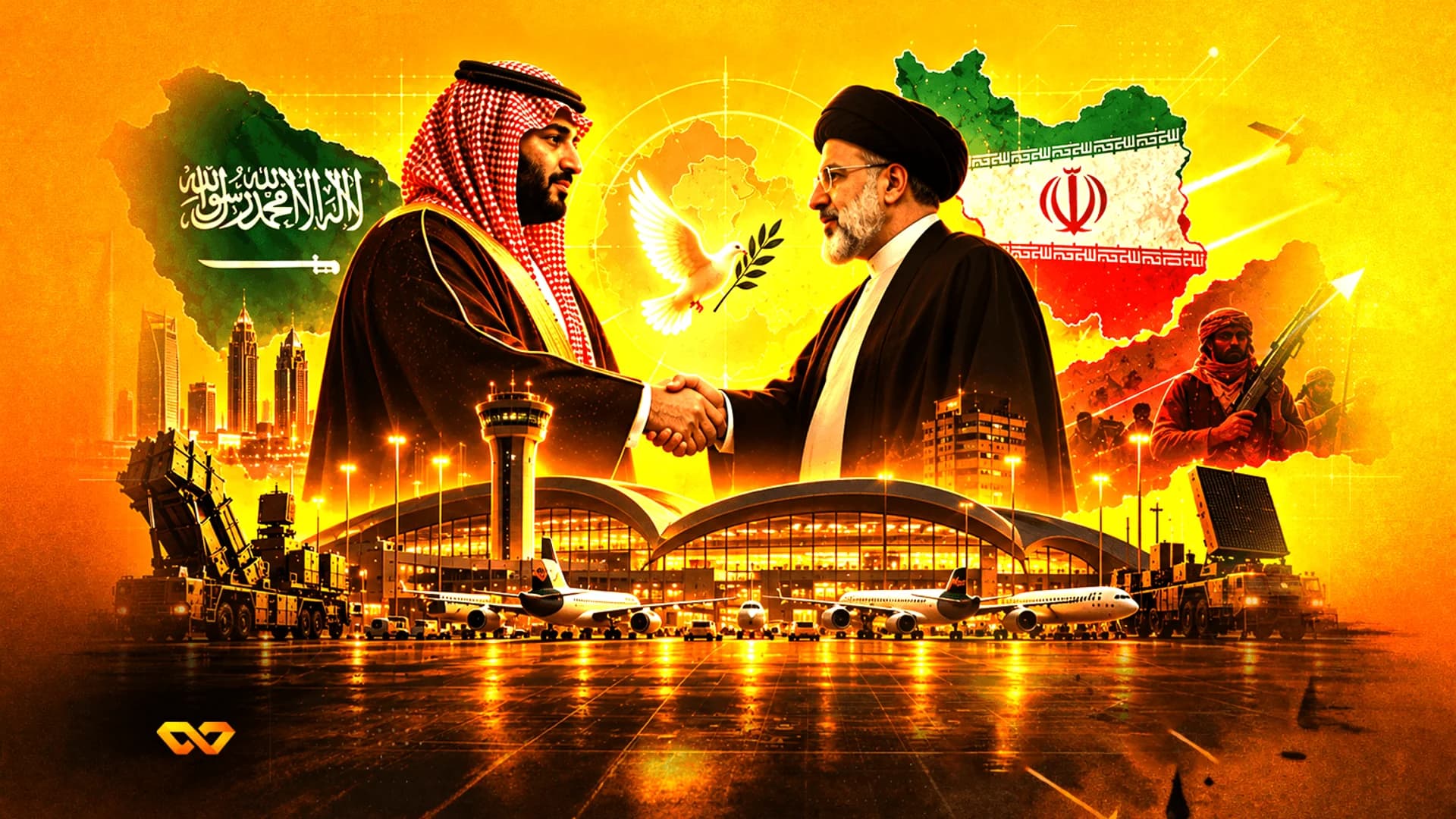
Iranian Foreign Minister Abbas Araghchi offered Tehran's help in mediating dialogue between Saudi Arabia and Yemen following Saturday's attack on Riyadh airport, which killed 13 people, according to Reuters. More than 300 others were injured in the attack, which was followed by a call between Araghchi and his Saudi counterpart as Houthi attacks on the kingdom escalated. The call was the first public contact between the foreign ministers since those attacks intensified, the agency said. Araghchi said in a Telegram post that Tehran was ready "to provide any assistance in mediating dialogue between Saudi Arabia and Yemen." The Iranian minister thus offered his country's help in initiating dialogue and reaching a political solution following the deadly attacks.
On air traffic, King Khalid Airport has remained closed since Saturday's missile attack, according to the Associated Press. A regional official who spoke to the agency said a missile struck the complex housing terminals 3 and 4, which handle domestic flights at the airport. Sunday's attack then also targeted the domestic terminal complex, according to Saudi authorities' announcement on the subsequent attack. Authorities said a Pakistani national was killed in Sunday's attack, which took place while the airport was still closed from the previous day. They added that the attack also injured 11 others in the complex, according to the Saudi toll cited by the Associated Press.
The fallout from the attack extended to diplomatic responses, with U.S. Secretary of State Marco Rubio confirming that an American citizen had been killed, according to the Associated Press. Rubio condemned the attack that killed the American citizen at the Saudi airport, the agency reported. Turkey, Pakistan, Egypt and Saudi Arabia also condemned the Houthi attacks on Riyadh airport, according to Reuters. The countries described the attacks as "a dangerous escalation that cannot be justified or accepted under any pretext." These statements followed the targeting of the airport and coincided with Saudi-Iranian contact during which Araghchi offered help with dialogue.
On Saudi Arabia's response to recent events, Energy Minister Prince Abdulaziz bin Salman said: "Our response must be equally serious," according to The National. In his statement, the minister linked the scale of the Saudi response to the seriousness of recent events in the kingdom. On supplies, he pledged to keep supplying customers with oil, in remarks addressing the sector's situation after the Riyadh attacks. The pledge covered the domestic and international customers the kingdom supplies with oil, according to the newspaper's account of the energy minister's remarks. Prince Abdulaziz bin Salman stressed that supplies to those customers would continue "regardless of the circumstances," alongside his call to treat the events seriously.
The kingdom has a crude export route through the East-West pipeline, which carries oil to Yanbu, according to The National. This route allows crude exports to bypass the Strait of Hormuz as part of the infrastructure used to move Saudi oil to export outlets. By October 6, crude flows through the pipeline had recovered to about 5.8 million barrels per day, the newspaper said. That compares with pipeline capacity of about 7 million barrels per day, according to its figures on flows and available capacity. The recovery in flows preceded the attacks on Saudi airports on October 7, followed by the deadly attacks on Riyadh airport over the weekend.
The October 7 attacks targeted King Khalid International Airport and Abha International Airport, according to the chronology published by The National. Those attacks killed 3 foreign nationals, according to Saudi authorities, whose toll the newspaper cited. Authorities also reported that 36 people were injured in that day's attacks, before the wave of attacks on Riyadh airport over the weekend. On upcoming moves, Reuters said the mutual defence pact involving Turkey, Saudi Arabia and Pakistan was expected to be submitted to the Turkish parliament in the following days. The pact's expected parliamentary consideration follows the countries' condemnation of the attacks on Riyadh airport and their description of them as a dangerous escalation.