
Iraq Raises Public Dollar Rate to 1,520 Dinars Amid Liquidity Crisis
Key Facts
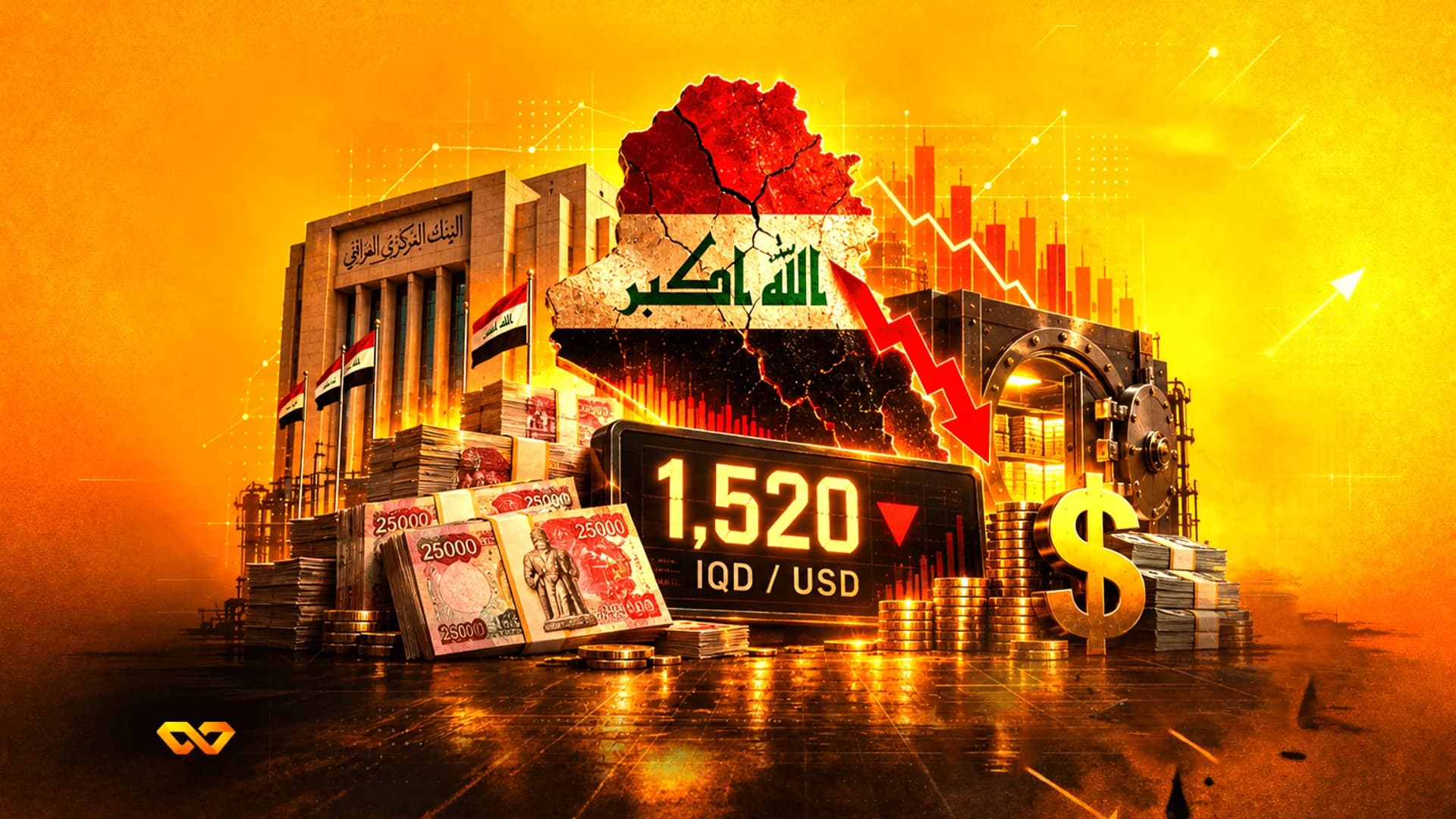
Iraq devalued the dinar on October 7, 2026, raising the cash dollar selling rate for the public to 1,520 dinars amid liquidity pressures and disruption to oil exports, according to The National. The decision sets the central bank's dollar purchase rate from the Finance Ministry at 1,500 dinars, the rate at which the treasury receives local currency in exchange for dollars. The dollar selling rate for banks was set at 1,510 dinars under the new pricing structure reported by the newspaper. The new public selling rate compares with a previous rate of 1,320 dinars per dollar, according to The National. The previous exchange rate was set in 2023, according to the Associated Press.
The currency adjustment followed a decline in Iraq's oil exports to about 2.34 million barrels a day in August 2026, Reuters reported. Exports had exceeded 3.6 million barrels a day before the war, placing the exchange-rate decision against a backdrop of shrinking oil flows to overseas markets. Tanker traffic from Basra's ports was disrupted by intermittent closures of the Strait of Hormuz and threats to shipping, according to The National. The disruptions led to delays and discounts on oil cargoes loaded at the ports as exports through the sea passage faltered. Since the outbreak of the war, Iraq has resorted to transporting oil overland through Syria for export, a route the Associated Press described as more costly and less efficient.
The decision to devalue the dinar was preceded by salary payment delays in some Iraqi provinces, according to The National, as liquidity pressures extended to existing government obligations. Authorities also postponed payments owed to wheat farmers and construction companies, extending the delays to suppliers and contractors alongside employees. Baghdad relied on short-term borrowing from state banks to manage the deficit, according to the newspaper, as payments faltered. Against this backdrop, the International Monetary Fund said in an earlier assessment that the oil price needed to balance the public finances reached about $84 a barrel in 2024. That compares with $54 a barrel in 2020, according to the fund, which recorded an increase in the price needed to balance revenue and expenditure.
The dinar's devaluation raises import costs for Iraqi buyers, according to the Associated Press, potentially feeding through to the prices consumers pay for goods. The exchange-rate shift also affects the finances of traders who sell locally in dinars and pay for overseas purchases in dollars. Ali al-Bahadli, a Baghdad trader who imports clothing from China, told the agency: "People owe us money in Iraqi dinars, and we owe people in China money in dollars." He explained that amounts owed by his customers are denominated in local currency, while his obligations to suppliers remain denominated in the U.S. currency. This mismatch between the currency he collects and the currency he pays exposes him to losses when the exchange rate changes, according to his account of the decision's impact on his business.
In Baghdad's parallel market, the dollar rose to 1780 dinars on the day of the decision, according to Asharq News, as trading was disrupted following the announcement of the rate adjustment. The dollar had traded at around 1600 dinars the previous evening, a comparison that reflects the market's movement between the two periods. In Erbil, the dollar reached 1800 dinars on the day of the decision, according to Asharq News, exceeding its rate in the Iraqi capital. The Associated Press reported that many currency exchange shops in Erbil closed following the announcement of the adjustment as trading rates shifted. In Baghdad, markets were almost completely paralysed and trading halted in economic centres, according to Asharq News's description of the response to the decision.
Following the decision, the Central Bank of Iraq affirmed that its foreign reserves were sufficient, according to Asharq News's account of its position on conditions in the foreign-exchange market. The bank said it could meet all requests for overseas transfers, an assurance concerning the availability of foreign currency for transactions abroad. On next year's public finances, the proposed 2027 budget assumes an oil price of $58 a barrel. Expected spending under the proposal totals 217 trillion dinars, according to Investing.com, which published its details shortly before the exchange-rate adjustment decision. These figures remain part of the proposed 2027 budget, which sets the oil revenue assumption and expected spending for next year.