
ECB: Gas Prices Reach Consumer Inflation Within 1-3 Months in Over Half the Euro Area
Key Facts
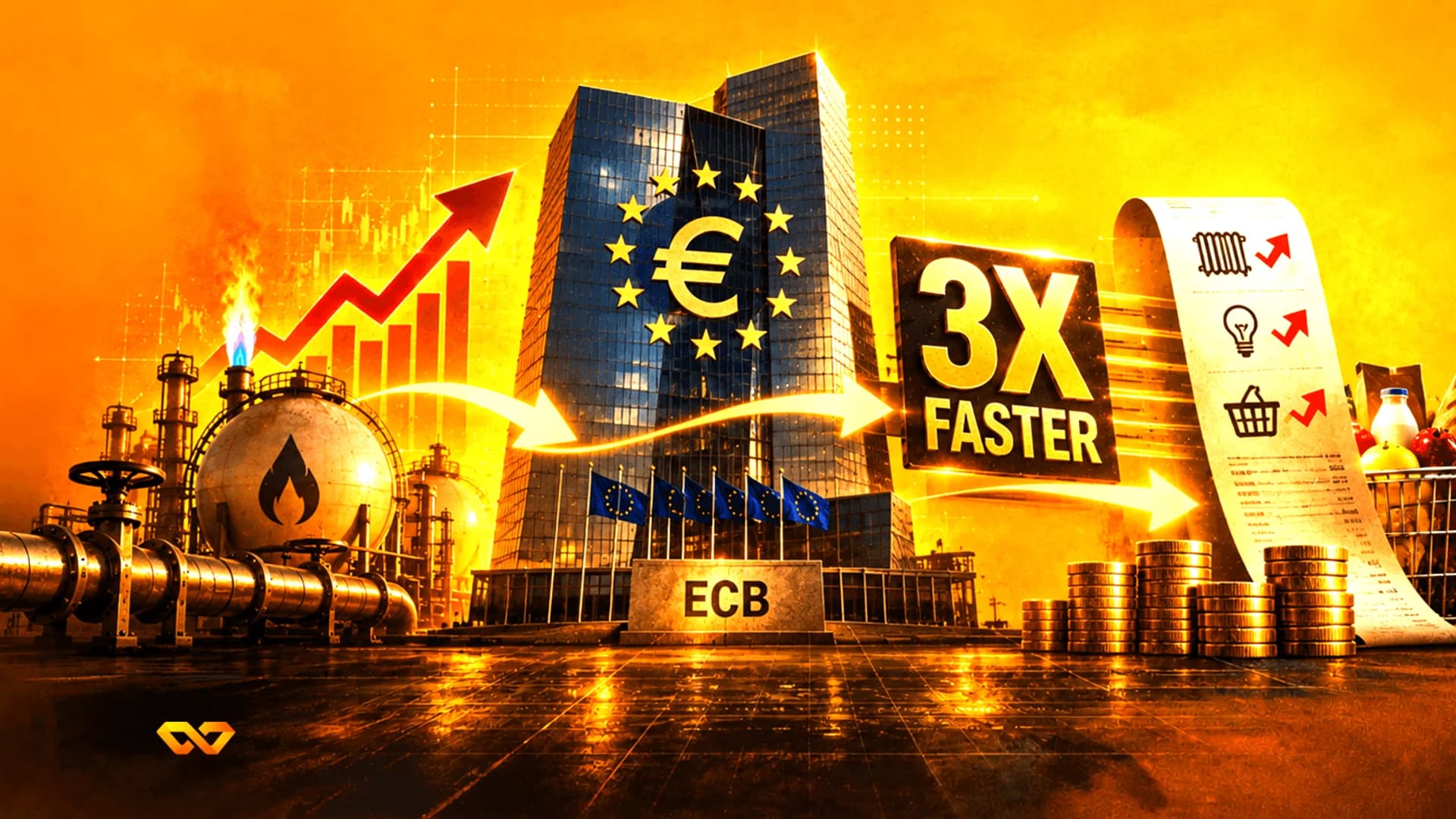
A 2026 Eurosystem survey found that wholesale gas-price changes are expected to feed into consumer gas inflation within 1-3 months across more than half the euro area. The lag is 4-6 months in about one-tenth of the region and 7-12 months in roughly one-third, highlighting substantial differences between countries.
Gas-price pass-through has accelerated from 2022: the share of countries reporting a 13-24 month lag fell from about 40% to about 5%. The electricity-price lag ranges from under 1 month to 24 months and remains broadly similar to its 2022 level.
The mechanism depends on retail price-setting. Flexible market-linked tariffs transmit wholesale moves more rapidly, while fixed contracts, forward purchasing, taxes and charges slow the adjustment; taxes and charges represented an average 31% of gas prices and 27% of electricity prices in the euro area in 2025.
The 2026 energy shock has so far been smaller than the 2021-2022 crisis. A higher share of renewable electricity has also weakened power prices' dependence on gas, helping wholesale electricity prices rise more modestly than during 2021-2022 even as gas-price pass-through to consumers accelerated.
The findings follow the ECB's 25-basis-point increase in its key interest rates on September 10, 2026. August inflation stood at 3.3% against the ECB's 2% medium-term target, making the speed of energy-cost transmission relevant to its assessment of future price pressures.
The ECB projects inflation to average 3.0% in 2026 and peak at 3.6% in Q4 2026 before moving close to 2.0% later in 2027. The Governing Council will continue deciding meeting by meeting based on incoming data, as energy prices that remain high for longer are more likely to spread into other prices and wages.
Latest Updates · 2
- Notable·
Update: Bundesbank President Joachim Nagel has noted that oil prices are now an increasingly vital indicator for ECB policymakers when determining interest rate paths. This commentary reinforces concerns over how global energy volatility is directly shaping monetary policy decisions and inflationary expectations within the Eurozone.
- Notable·
Update: ECB Executive Board member Philip Lane stated on September 22, 2026, that a second wave of energy price increases will delay inflation normalization until mid-2027. This outlook suggests that restrictive monetary policy may persist longer than previously anticipated to counteract the ongoing supply-side shocks.