
European Gas Hits Highest Since 2022-2023 Crisis Amid Supply Risks
Key Facts
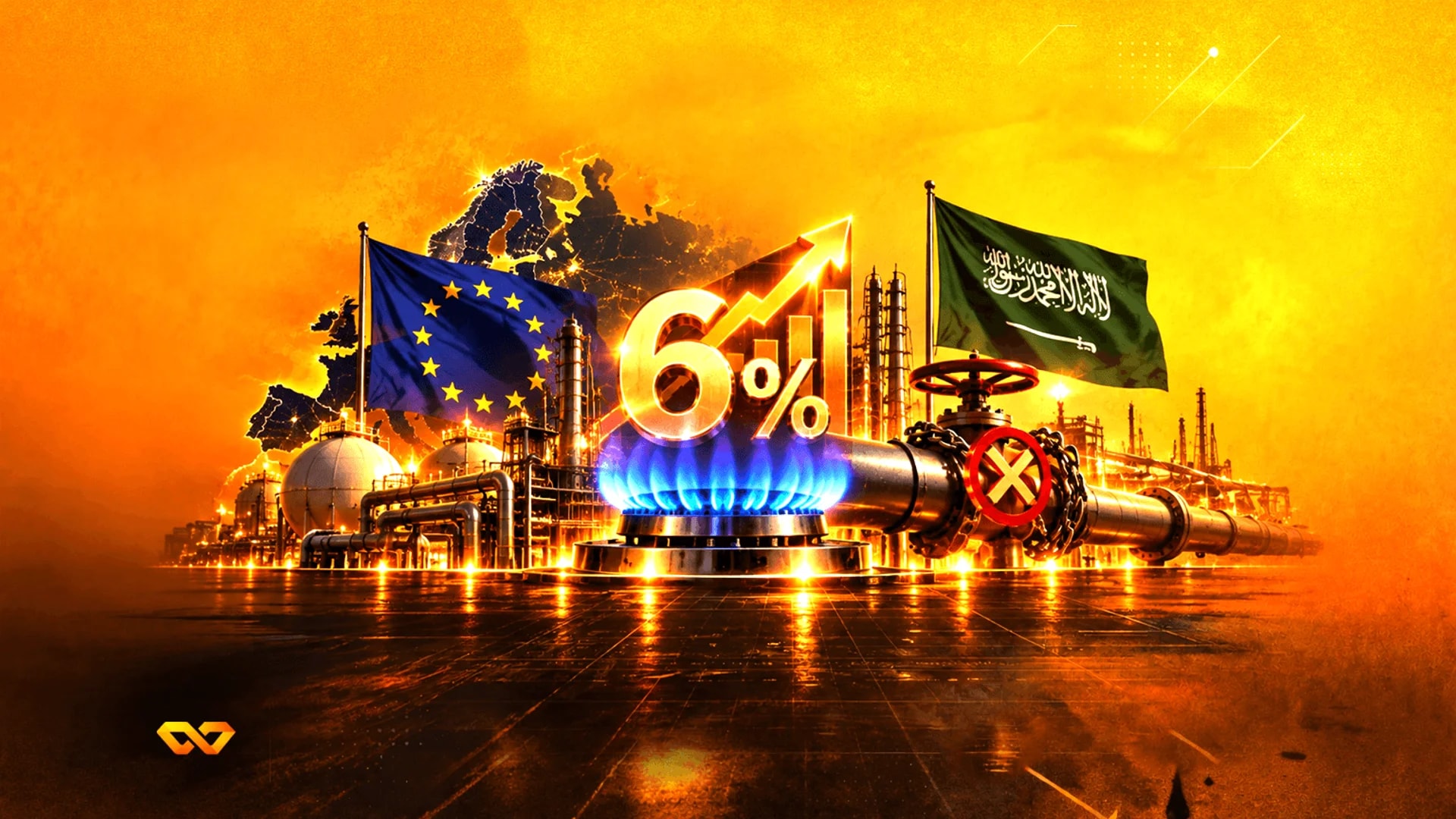
Front-month Dutch TTF gas rose between 5.3% and 6% in early Monday trading, based on readings published at different times. Reported prices ranged between 83.67 and 84.275 euros per megawatt-hour, with the upper figure equivalent to 97.31 dollars, taking the contract to its highest level since the 2022-2023 energy crisis. ICE specifications show that TTF contracts are quoted in euros per megawatt-hour, so the dollar figure is a currency conversion rather than the native quotation.
The move came as Middle East energy-supply concerns intensified after Saudi Arabia shut the East-West Pipeline. The Saudi Energy Ministry said the line was attacked on the morning of September 10, 2026 and closed as a precaution, with the attacks causing injuries.
The East-West Pipeline, however, carries crude oil to Yanbu on the Red Sea; it does not deliver gas to Europe. Its link to TTF is therefore indirect: the shutdown added to the risk premium across energy and shipping markets but did not itself remove European gas supply.
The gas market already faced more direct pressures. On September 3, 2026, the European Commission said Qatari liquefied natural gas (LNG) production remained shut and European heatwaves had increased gas demand for power generation, adding that geopolitical uncertainty was driving significant price volatility.
Gas Infrastructure Europe data showed European Union (EU) storage at 769.87 terawatt-hours, or 68.04% of capacity, at 6:00 a.m. Central European Summer Time (CEST) on September 14, 2026. Even so, the European Commission said there was no immediate security-of-supply risk, citing greater diversification, higher liquefied natural gas (LNG) import capacity and reduced demand.
Storage matters because it typically supplies between 25% and 30% of the gas consumed in the European Union (EU) during winter, according to the Commission. It reduces the need for additional imports and helps absorb supply shocks, so a smaller buffer makes prices more sensitive to delayed liquefied natural gas (LNG) cargoes or weather-driven demand.
The market will now watch for a recovery in Qatari liquefied natural gas (LNG) production, the pace of European storage injections, whether the TTF rally persists and any official update on the East-West Pipeline. Saudi Arabia said further developments would be announced, while the European Commission scheduled its next Gas Coordination Group meeting for September 24, 2026.
Latest Updates · 2
- Notable·
Update: In a related development, U.S. natural gas futures gained at the start of the week (September 14, 2026). The uptick was driven by weekend weather forecasts showing extended summer heat, which is expected to boost cooling demand and add further complexity to the current global energy supply dynamics.
- Notable·
Update: Analysts at ING Groep NV noted that the supply disruption resulted from a drone strike, dampening prospects for near-term geopolitical de-escalation. According to updated reports on September 14, 2026, Dutch benchmark futures reached 83.67 euros per megawatt-hour, reflecting sustained price pressure across European markets.