
Fed Hike Odds Near 90% as Oil-Supply Risks Escalate
Key Facts
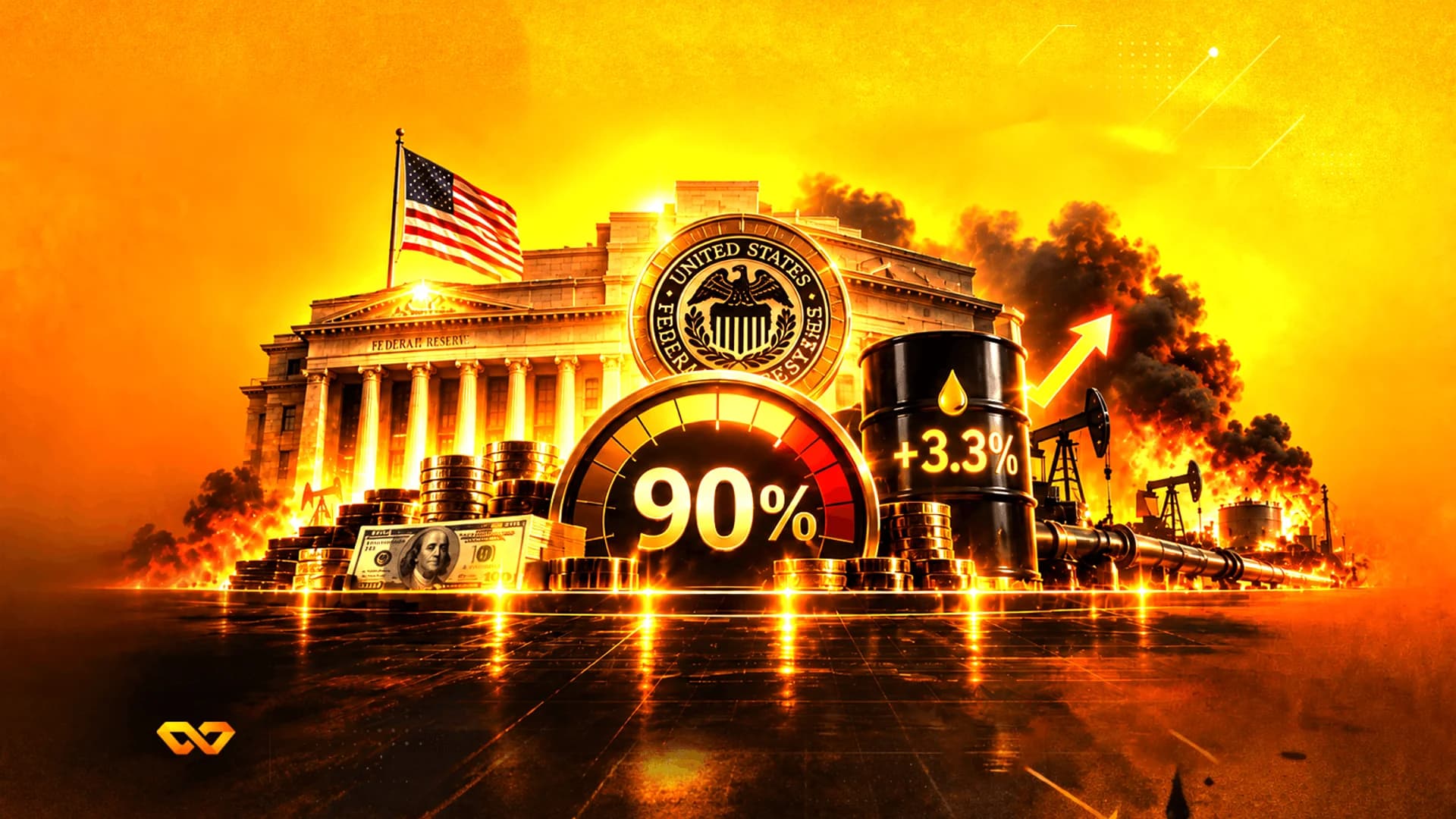
Markets priced a roughly 90% probability of a 25-basis-point Federal Reserve rate increase on September 16, 2026, according to CME FedWatch data cited by market outlets. The Federal Open Market Committee meets on September 15-16.
The repricing followed a 0.4% monthly rise in the U.S. Consumer Price Index in August and a 3.4% annual increase. Core CPI, excluding food and energy, rose 0.3% on the month and 2.4% from a year earlier, while the energy component advanced 2.1% monthly.
The tightening bets coincided with another oil rally after attacks on Saudi energy infrastructure and ships in the Middle East. In an early Monday snapshot, Brent rose 3.3% to $108.04 a barrel and West Texas Intermediate (WTI) gained 3.5% to $103.54; those intraday prices changed later in the session.
The committee held its target range at 3.50%-3.75% in July, although 3 members preferred a 25-basis-point increase. The meeting minutes said inflation remained above the 2% objective and that supply shocks in sectors including energy were contributing to price pressure.
An oil shock initially feeds into headline inflation through fuel and transportation, then can spread to production costs for goods and services. Its policy significance depends on persistence and whether it obstructs a return toward the 2% objective; one daily crude move alone does not determine the Fed's path.
Kevin Warsh, chairman of the Federal Reserve Board and the FOMC since May 22, 2026, will lead the September deliberations. Policymakers will weigh persistent underlying inflation against the effects of higher energy costs on prices and economic activity.
The decision is scheduled for 2:00 p.m. Eastern Time on September 16, followed by the press conference at 2:30 p.m. Investors will focus on the committee's assessment of the energy shock's persistence and whether any increase is presented as a one-off move or part of a longer tightening path.