
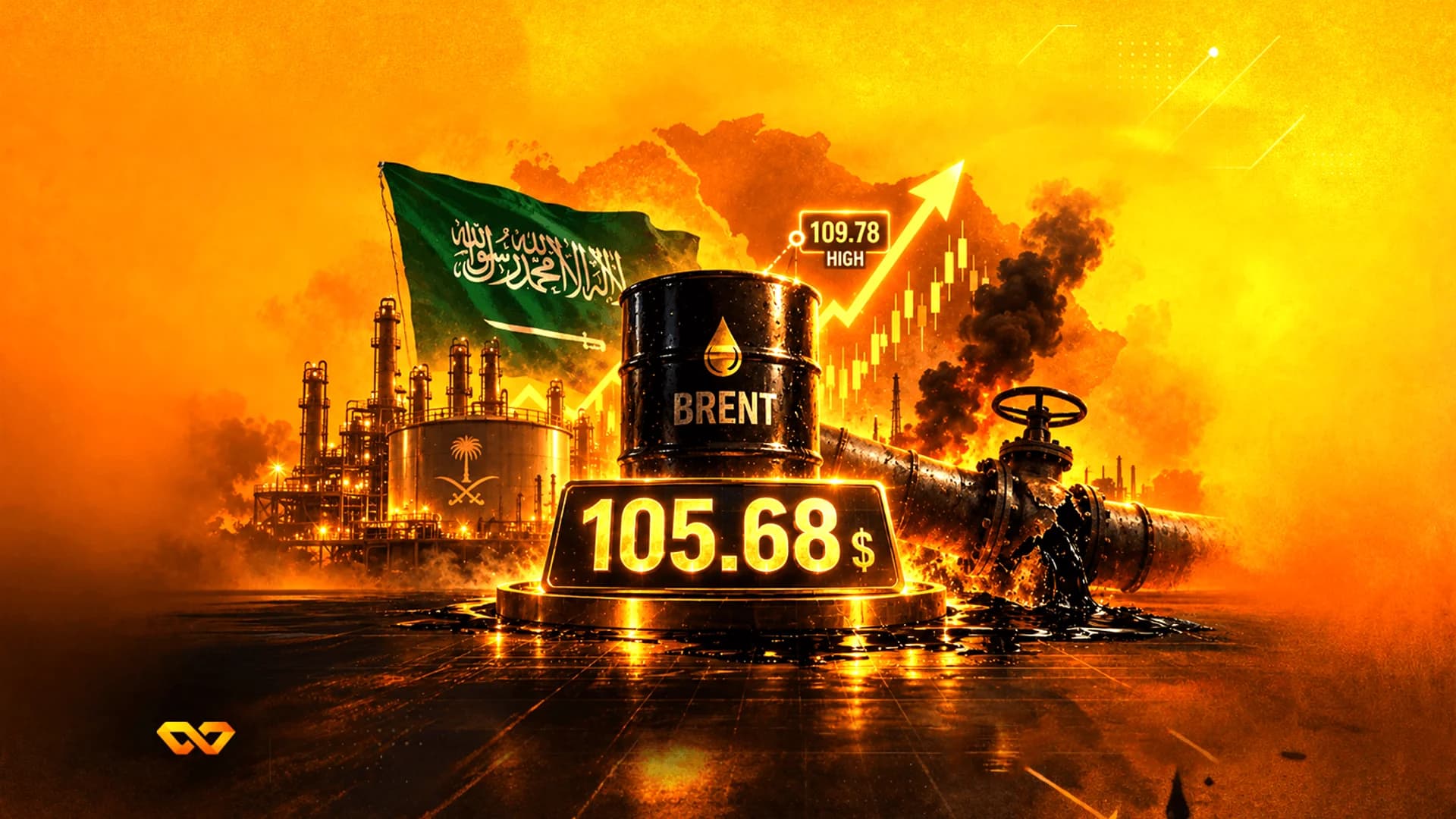
Brent Closes at $105.68 After Hitting $109.78 as Saudi Pipeline Shuts
Key Facts
Brent ended September 14, 2026, at $105.68 a barrel after trading between $104.82 and $109.78. The swings came as the market assessed the shutdown of Saudi Arabia's East-West pipeline and escalating risks to regional energy infrastructure and shipping.
Saudi Arabia's Energy Ministry announced on September 11 that the East-West pipeline had been shut as a precaution after multiple attacks in the Riyadh and Madinah regions on the morning of September 10, 2026. Emergency and specialist technical teams moved to secure the line and assess its safety.
Saudi authorities attributed the attack to several drones launched from Iraq. The 1,200-kilometer pipeline links production facilities in eastern Saudi Arabia with the Red Sea port of Yanbu, providing a crude-export route that bypasses the Strait of Hormuz.
Aramco said the pipeline reached its maximum capacity of 7.0 million barrels per day in the first quarter of 2026. Reuters reported that it had carried about 4 million to 5 million barrels per day in recent months, equal to 4% to 5% of global supply; however, the shutdown does not necessarily remove that entire volume because inventories, partial operation and alternative export routes may preserve some flows.
The outage coincided with the Houthis' capture of Mokha on September 10, 2026, and Mayun Island inside Bab el-Mandeb on September 11, 2026. The advance strengthened their ability to threaten shipping near the strait but did not establish complete control over every vessel in transit.
Shipping through Bab el-Mandeb remained about 60% below levels seen before late 2023, while about 70% of Yanbu crude exports headed north through the Suez Canal or an Egyptian pipeline. The size of the risk premium will therefore depend on the East-West pipeline's outage duration, security at Bab el-Mandeb and Hormuz, and the ability of inventories and alternative routes to sustain exports.
Latest Updates · 3
- Notable·
Update: Reports on September 15, 2026, indicated that Houthis launched new strikes on Saudi targets, further straining regional energy security. This escalation coincided with a deadlock in negotiations regarding shipping safety in the Strait of Hormuz, heightening market concerns over prolonged supply disruptions.
- Notable·
Update: Oil prices extended their gains in early Asian trade on Tuesday, September 15, 2026, with Brent crude rising 1.3% to $107.01 a barrel and WTI climbing to $102.69. The price action reflects ongoing market reaction to the Saudi pipeline outage and persistent geopolitical risks to regional energy supplies.
- Notable·
Update: Beyond regional tensions, analyst Ellen Wald noted that sanctions on Russia and ongoing Ukrainian strikes on Russian oil refineries are further exacerbating global supply constraints. These external pressures heighten market sensitivity to any additional disruptions in Middle Eastern crude flows.