
United States Inflation and European Central Bank Decision Lead Currency Calendar Before Bank of Japan Meeting
Key Facts
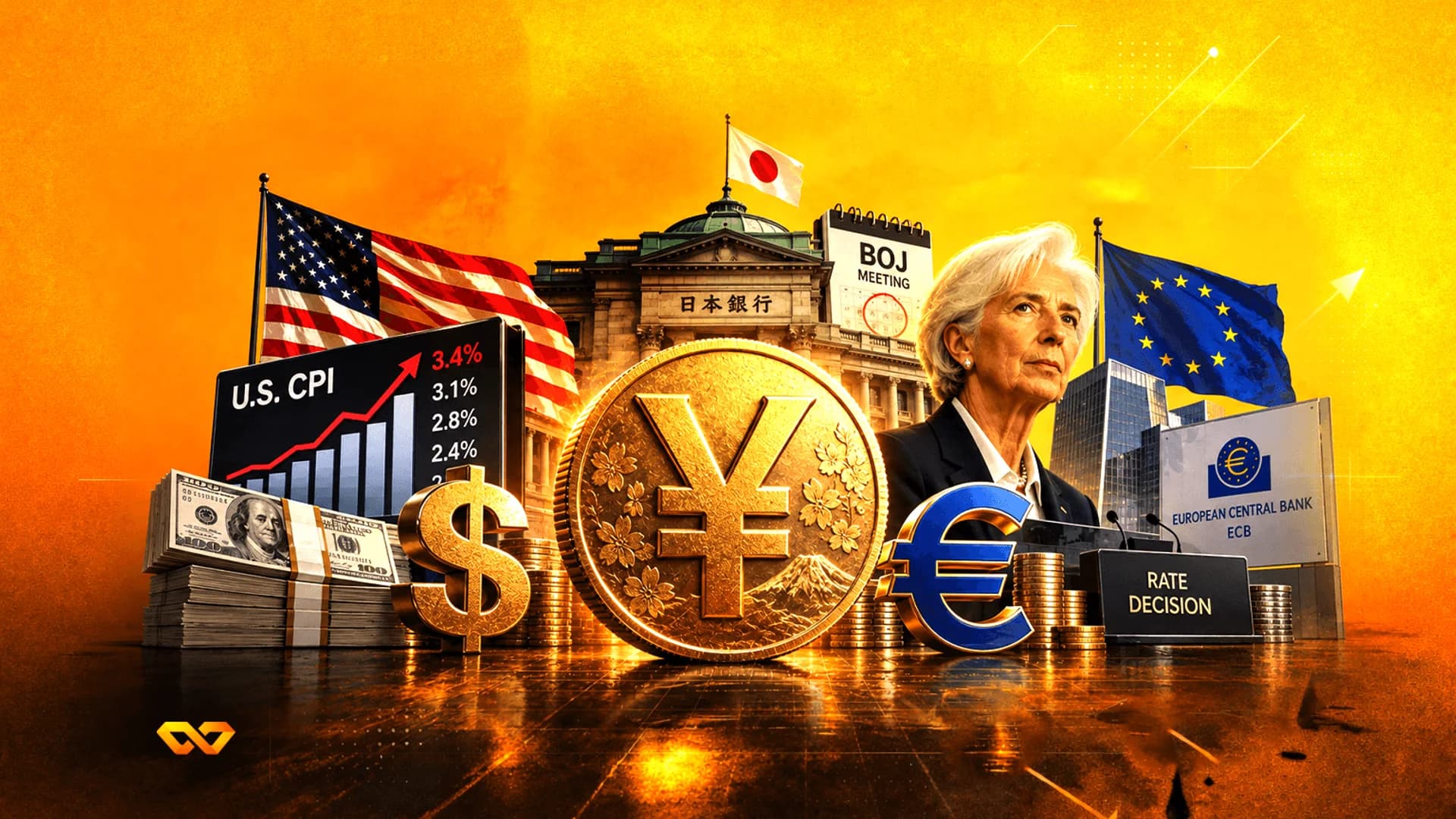
The currency calendar is centered on 3 sequential events: the European Central Bank decision on September 10, United States inflation data on September 11, and the Bank of Japan meeting on September 17-18. That sequence corrects the impression that all 3 central-bank decisions fall within a single week.
The Bureau of Labor Statistics will publish the August Consumer Price Index (CPI) on September 11 at 8:30 a.m. United States Eastern Time. Headline inflation rose 0.1% month-on-month and 3.4% year-on-year in July, while core inflation increased 0.2% monthly and 2.5% annually.
Kevin Warsh has chaired the Federal Reserve since May 22, 2026, and the inflation report arrives before its monetary-policy committee meets on September 15-16. Warsh has said inflation remains above the Fed's 2% objective as measured by the Personal Consumption Expenditures price index, making the direction of the inflation trend more important than one isolated reading.
The European Central Bank meets on September 10 after leaving its deposit rate at 2.25% on July 23.
Euro-area annual inflation was estimated at 3.3% in August, up from 2.9% in July. Energy led the acceleration, with its annual rate rising to 14.3% from 10.3%. That gives the tightening case clearer support, although the decision still depends on the bank's assessment of underlying inflation and policy transmission.
The Bank of Japan meets on September 17-18, not in the same week as the European Central Bank decision. It kept its short-term policy rate at around 1.0% on July 31 by an 8-1 vote, with the dissenter proposing 1.25%. Its summary of opinions also showed support for further increases if developments in prices, activity and financial conditions warrant them.
For USD/JPY, the response will depend on how expectations for United States and Japanese rates shift relative to each other. Stronger-than-expected United States inflation could reinforce tightening bets and the dollar, while a softer reading or more hawkish Bank of Japan signals could work in the opposite direction. These are conditional scenarios, not point forecasts.
The events should be followed in sequence: the European Central Bank outcome, the details of United States inflation, the Federal Reserve decision and then the Bank of Japan meeting. A 25-basis-point European rate increase and a possible Japanese increase should both be treated as forecasts until the official decisions are released.