
US PCE Inflation Holds at 3.7% in July, Exceeding Market Estimates
Key Facts
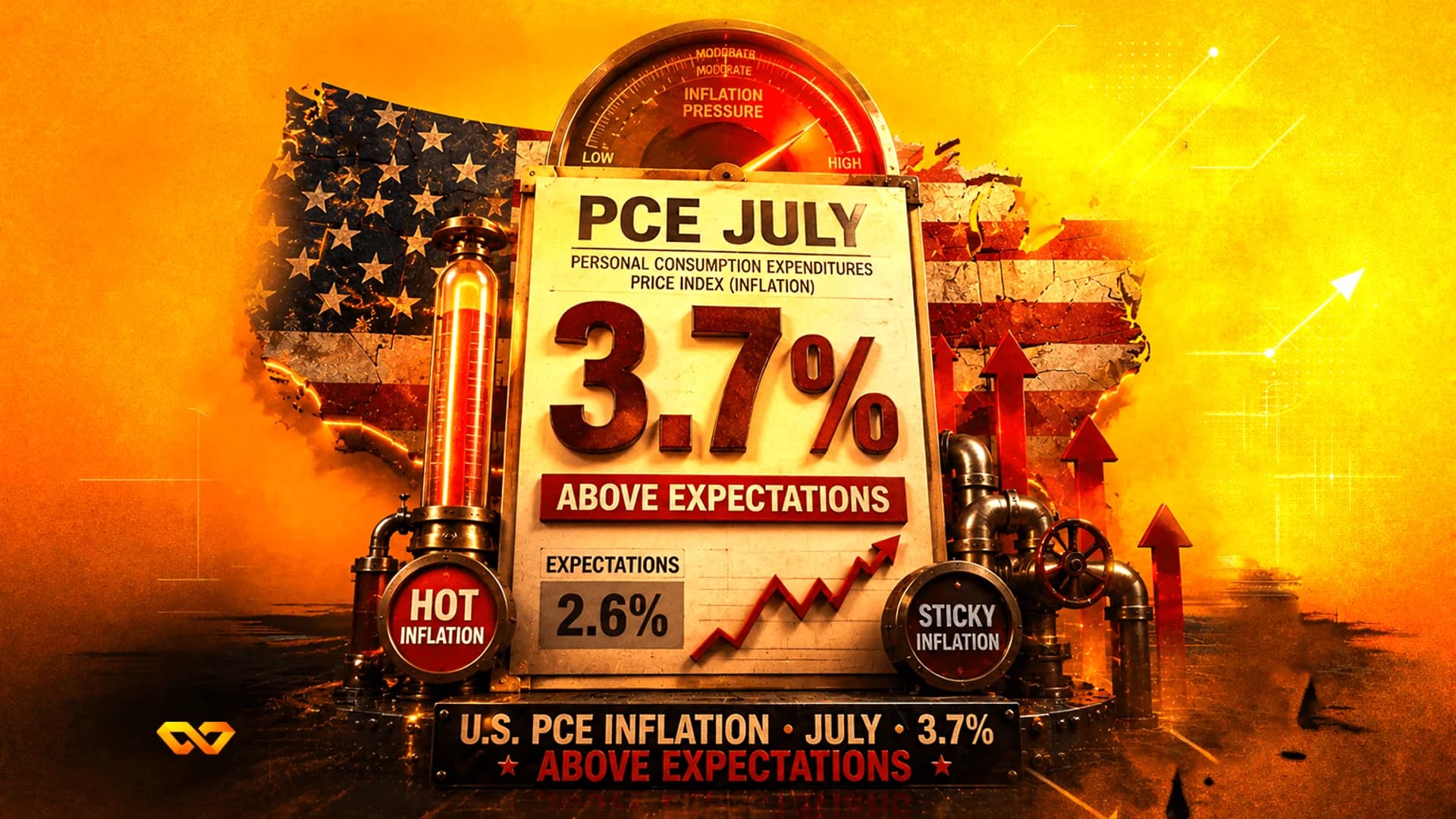
Amid heightened focus on the Federal Reserve's next move, the latest data shows US annual PCE inflation held steady at 3.7% in July, slightly exceeding the 3.6% consensus estimate. According to reports, the annual core PCE rate, which strips out volatile food and energy costs, remained unchanged at 3.3%. On a monthly basis, the PCE Price Index rose by 0.2%, a reversal from the 0.1% contraction recorded in June, signaling that price pressures remain persistent.
The inflation stickiness is supported by resilient household dynamics, as personal income growth accelerated to 0.4%, doubling the expected 0.2%. While personal spending growth moderated to 0.2%, it still outperformed the 0.1% forecast. Per market data and analyst findings, this combination suggests that consumer demand remains robust enough to keep inflation well above the Federal Reserve's 2% target, potentially complicating the path for future rate cuts.
Looking ahead, market participants are weighing these figures against recent central bank communications, including the FOMC Minutes released on August 19.
Latest Updates · 4
- Notable·
Update: Granular data reveals that portfolio management and advice service costs were a primary driver, accounting for more than half of Core PCE Services inflation. Conversely, the personal savings rate inflected higher as real wage growth slowed across public and private sectors, contributing to a year-over-year slowdown in SuperCore PCE (services ex-shelter) inflation.
- Notable·
Update: Recent reports indicate that US consumer spending has stalled as real incomes flat-line, softening consumer fundamentals despite persistent inflationary pressures. Given the slow progress toward inflation targets, the possibility of an additional rate hike later this year remains a viable option for monetary policymakers.
- Notable·
Update: The foreign exchange market saw an immediate reaction following the data release, with the British Pound weakening against the US Dollar (GBP/USD). This move reflects a shift toward the Greenback as investors price in a 'higher-for-longer' interest rate environment to combat persistent US inflation.
- Notable·
Update: In a shift toward a more hawkish stance, Federal Reserve officials have signaled that interest rate hikes remain a possibility if consumer price inflation fails to show meaningful improvement. This development underscores concerns that persistent inflation levels may compel policymakers to tighten policy further to ensure a return to the 2% target.