
China Oil Imports Jump 22% Despite Weakening Economic Indicators
Key Facts
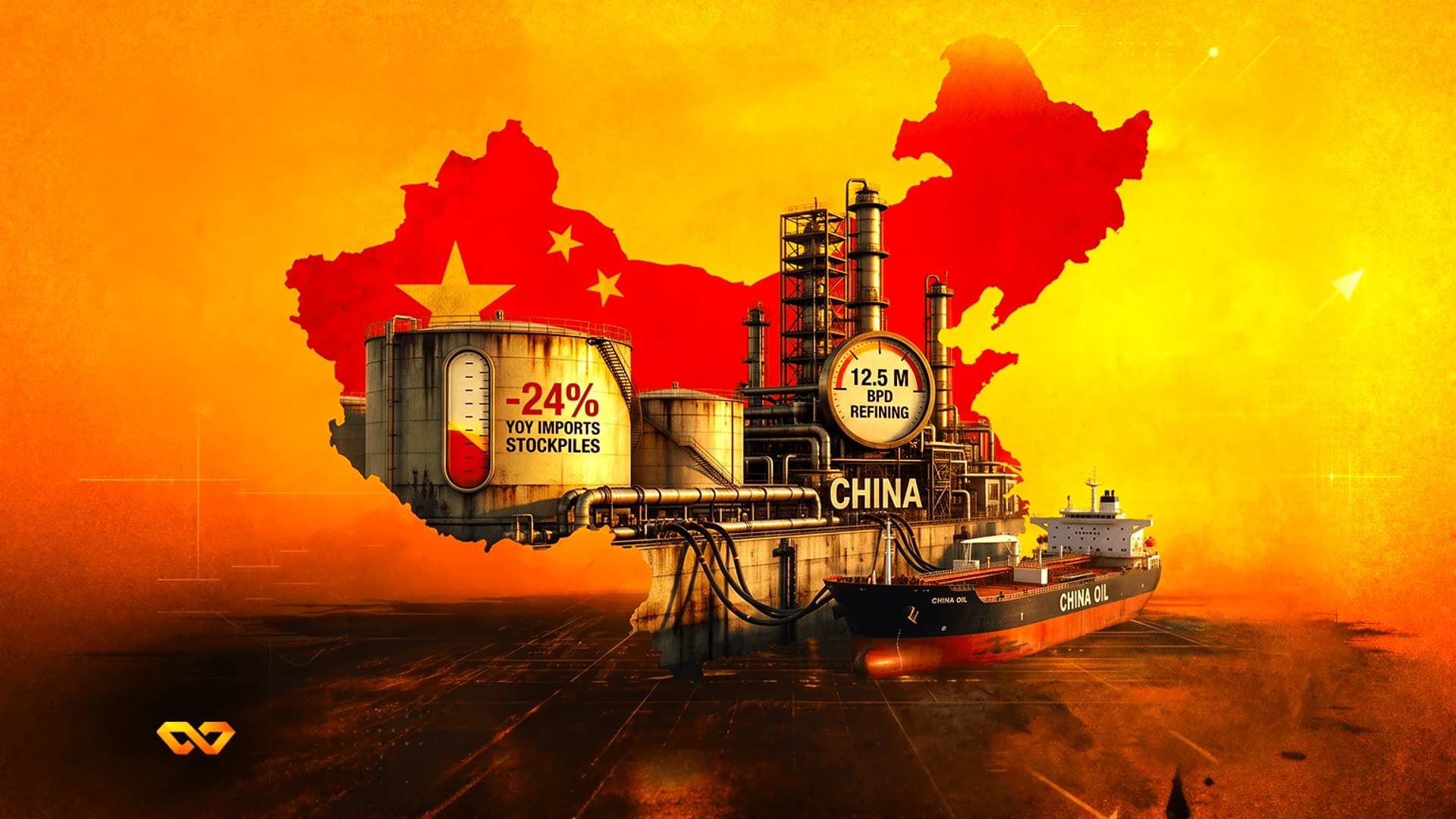
In a move that highlights the divergence between physical commodity flows and macroeconomic health, China's crude oil imports jumped 22% at the start of the third quarter. This surge occurred despite disappointing economic indicators, as retail sales in July grew by a mere 0.6%, significantly missing the 1.5% growth projected by analysts. Furthermore, industrial output rose by 4.5%, slowing from June's performance and falling short of the 4.8% forecast.
The data suggests that China continues to act as an opportunistic buyer, bolstering its energy reserves even as domestic consumption cools, with the economy expanding by only 4.3% between April and June. Per market data, the weakness in retail and industrial sectors raises concerns regarding the long-term sustainability of crude demand from the world's largest importer. This economic cooling contrasts sharply with the rebound in import volumes seen earlier this month.
Market participants are now monitoring global supply data, noting that the API Crude Oil Stock Change reported a build of 9.072 million barrels as of August 11, 2026. Upcoming catalysts include the OPEC Monthly Report and the EIA Weekly Petroleum Report scheduled for August 12, 2026, which will provide further clarity on whether global demand forecasts will be adjusted in light of the recent Chinese economic data.
Latest Updates · 2
- Notable·
Update: Alongside the expansion in oil imports, China is facing structural challenges in its clean energy sector, curtailing 360 TWh of solar and wind power in the first half of 2026—a 49% increase year-on-year. These curtailments are primarily driven by grid constraints and a rise in coal-fired power generation, highlighting a significant bottleneck in the country's energy infrastructure despite the boom in renewable capacity.
- Notable·
Update: Reports from Reuters have confirmed that China unexpectedly returned to crude oil stockpiling during July, driving the recent surge in imports. This confirmation solidifies the view that Beijing is prioritizing strategic reserve builds despite the cooling domestic consumption trends.