
Hormuz Crisis Halts 27% of Global Oil Flow, Shifting Market Regime
Key Facts
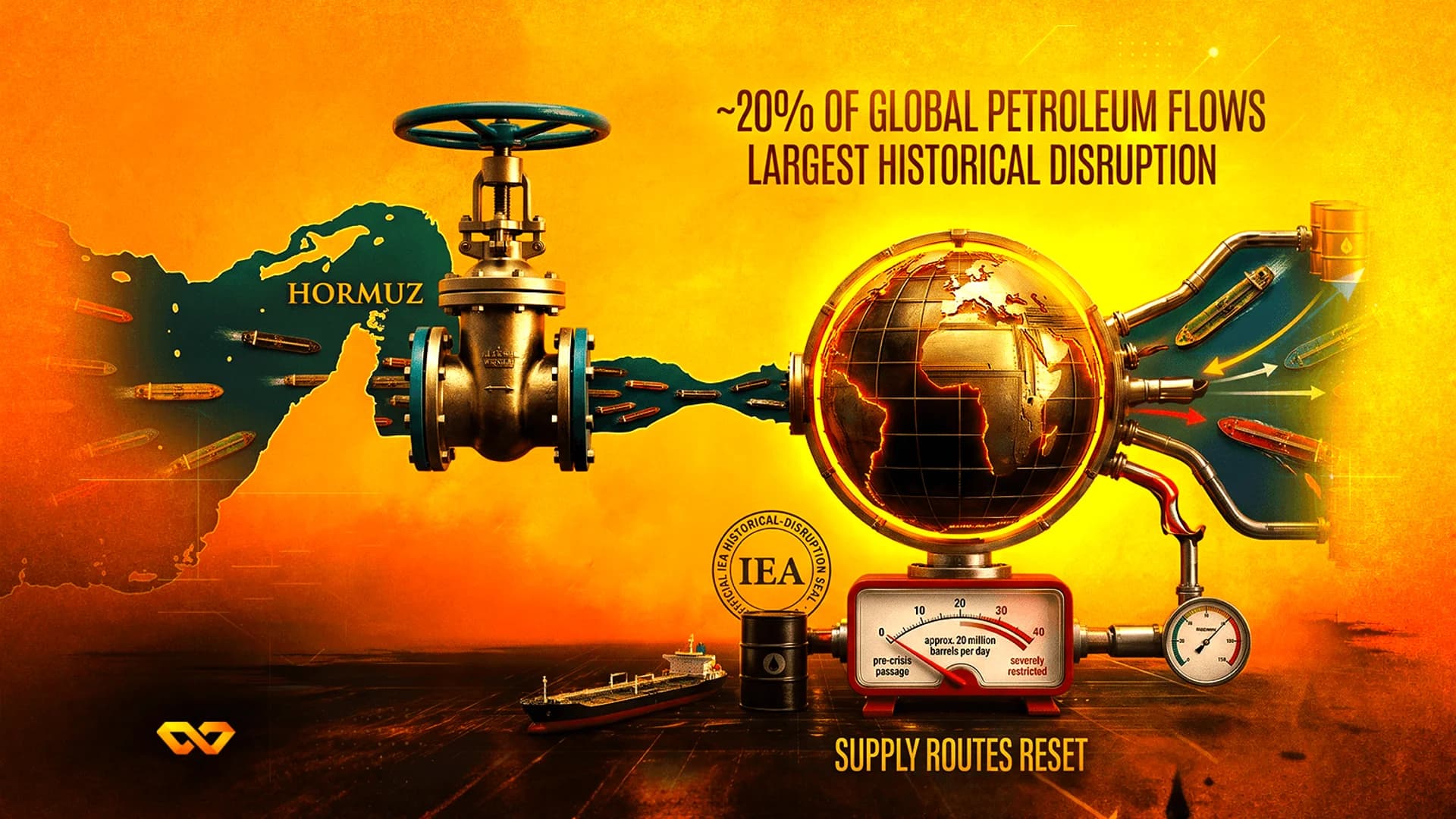
Amid escalating geopolitical tensions in the Middle East, global energy security faces an unprecedented challenge as one of the world's most vital maritime chokepoints remains disrupted. According to analyst reports, the 2026 Strait of Hormuz crisis has halted 27% of global crude oil flows. This massive disruption has led to rapid inventory depletion, prompting the IEA to closely monitor the situation as the supply shock persists.
The crisis has triggered a fundamental shift in the oil market's structure, moving from a demand-driven regime to a supply-driven one, which typically results in extreme and disruptive price spikes. Per market analysis, this structural transition is redefining global inflation and growth expectations. Reports from Seeking Alpha indicate that supply-driven regimes are historically associated with the most significant market volatility and are unlikely to be resolved quickly.
Looking ahead, traders are assessing the impact of this supply shock on global trade balances, noting that China's Balance of Trade (as of August 7, 2026) recorded a surplus of $112.5 billion despite shifting import dynamics.
Latest Updates · 1
- Notable·
Update: Concerns are mounting over whether global oil stocks can offset what could be the largest supply disruption on record as the U.S.-Iran war persists. According to reports, the potential for a prolonged six-month conflict is forcing market participants to re-evaluate the long-term adequacy of strategic reserves to sustain global demand.