
Bitcoin BIP-110 Fork Stalls as Miner Support Fails to Gain Traction
Key Facts
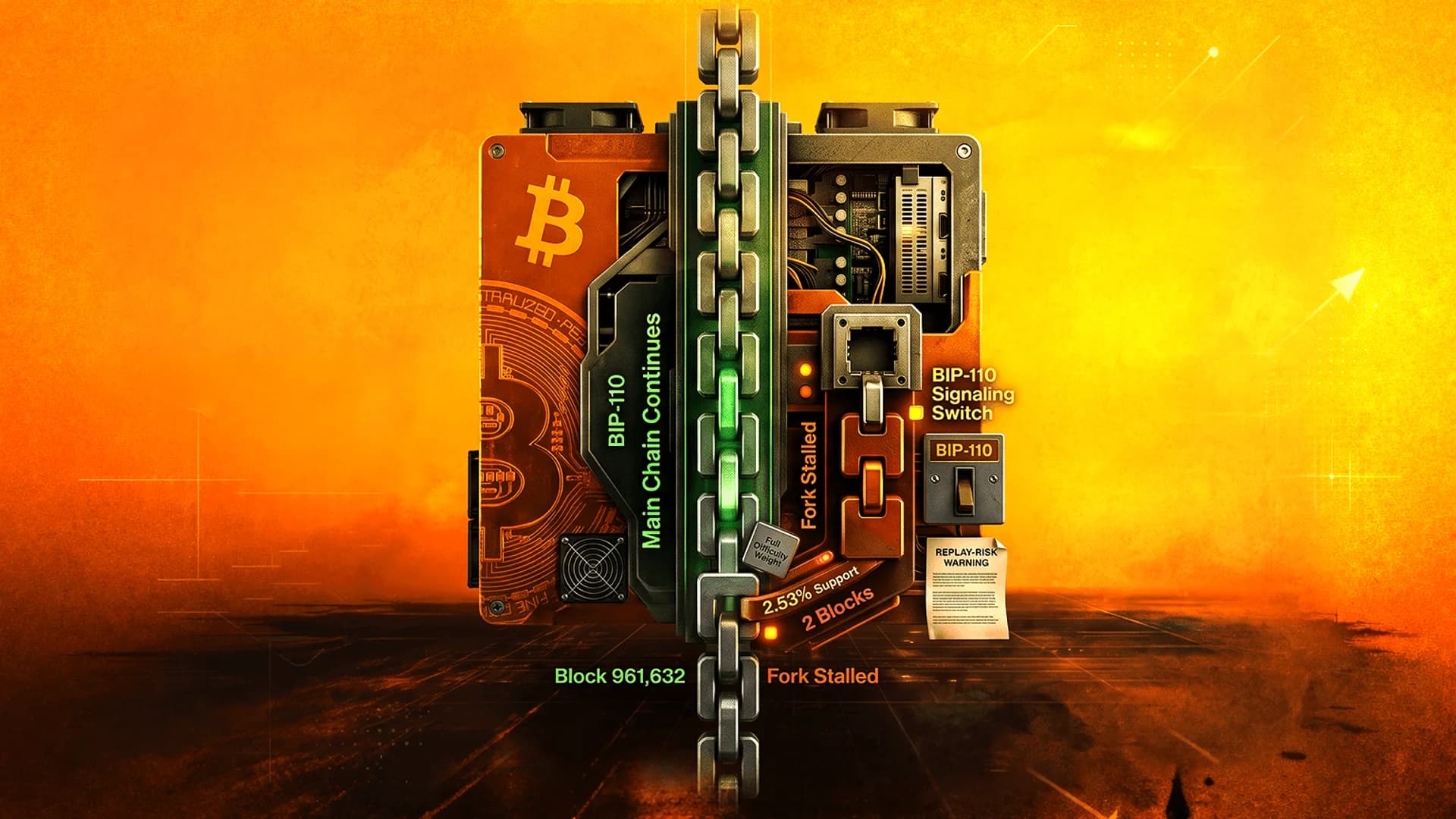
In a move highlighting the immense difficulty of achieving consensus within the crypto ecosystem, the attempted hard fork of the Bitcoin network via BIP-110 has effectively failed. According to reports, the breakaway chain produced only two blocks over an eight-hour period before virtually stalling. This failure is attributed to a lack of miner traction, with support hitting a mere 2.53%, rendering the minority chain unable to sustain regular block production.
The technical deadlock stems from the enforcing fork remaining stuck at the full mining difficulty of the main network without sufficient hashpower to process new blocks. Per market data and technical facts, the chain inherited a difficulty level it cannot overcome without a significant surge in computing power. This lack of support has prevented the minority chain from reaching the necessary threshold for a difficulty adjustment, contrasting sharply with the continued stability of the primary Bitcoin network.
Looking ahead, market participants are focusing on network stability following the mitigation of fragmentation risks. JOLTs Job Openings on August 4, 2026, and the China Services PMI on August 5, 2026. These macroeconomic indicators will likely dictate broader sentiment across digital asset markets in the coming days.
Latest Updates · 2
- Notable·
Update: Technical data confirms the split officially occurred at block 961632 on August 8, though the persistent stall has now led BIP-110 proponents to debate a change to the proof-of-work (PoW) algorithm. This proposed technical reset aims to bypass the high mining difficulty that paralyzed the minority chain, representing a final attempt to restore network activity.
- Notable·
Update: Bitcoin prices have stabilized within a range of $64,500 to $65,250 following the failed fork attempt. Concurrently, reports of security exploits and unauthorized sweeps involving Coldcard hardware wallets have emerged, introducing fresh concerns regarding self-custody security within the ecosystem.