
Mixed NZ Labor Data: Employment and Wages Beat Forecasts Despite Unemployment Rise to 5.6%
Key Facts
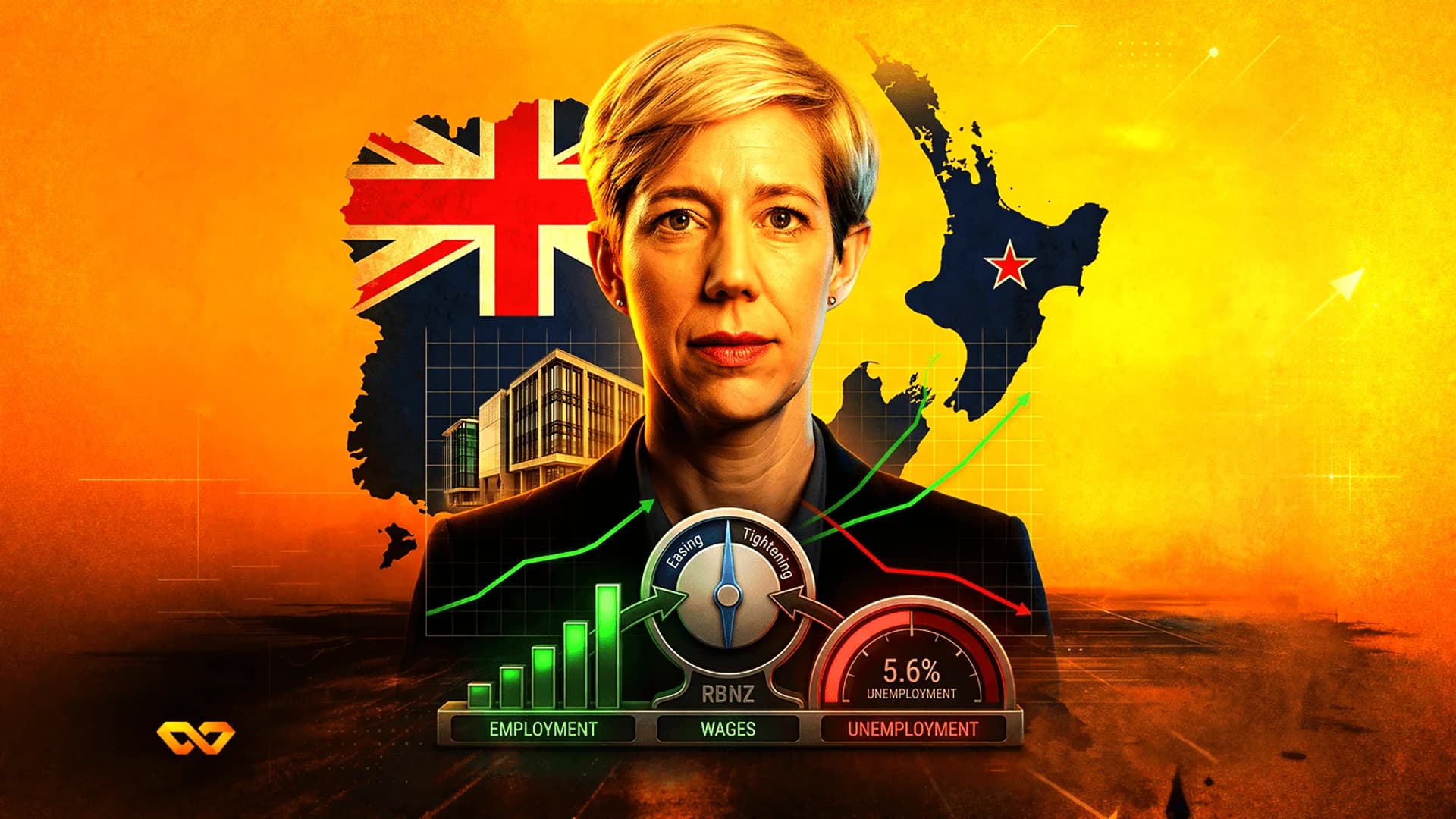
Amid a complex economic backdrop balancing slowing activity with resilient labor demand, New Zealand's official data for Q2 2026 revealed a sharp divergence in labor market indicators. While the unemployment rate climbed to 5.6%, exceeding the RBNZ's 5.4% forecast, employment growth delivered a significant upside surprise at 0.5%, far outstripping market expectations of 0.1%. According to reports, this contradiction is primarily driven by a surge in the labor force participation rate, which rose from 70.4% to 70.7%, increasing the pool of job seekers despite robust hiring activity.
On the inflationary front, data showed an unexpected acceleration in labor-related costs, with the Labor Cost Index (LCI) rising 0.7% quarter-on-quarter, up from 0.5% in the previous period. Per market data, while annual wage growth remained steady at 2.0%, the accelerating quarterly pace suggests persistent price pressures within the private sector. These figures reflect a level of labor market resilience that could complicate the central bank's efforts to cool inflation, placing additional pressure on monetary policymakers.
Looking ahead, traders are closely monitoring the Reserve Bank of New Zealand's (RBNZ) next move, as the combination of strong hiring and accelerating wages may support a more hawkish policy stance than previously anticipated.