
WTI Crude Plunges Over 6% as Trump Signals Deal to Reopen Strait of Hormuz
Key Facts
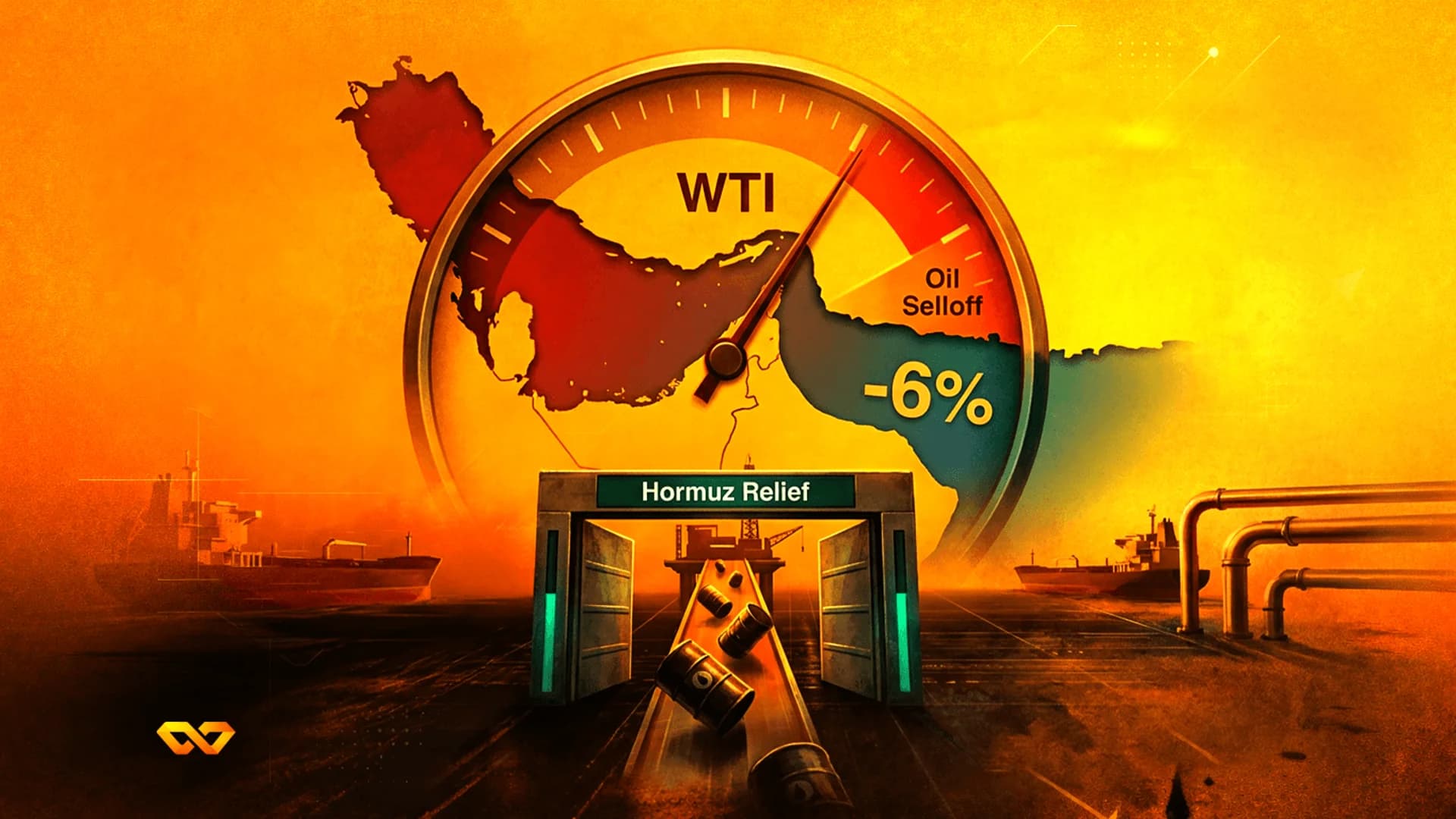
In a dramatic shift for global energy markets, oil prices accelerated their decline as prospects for a major diplomatic breakthrough regarding vital shipping lanes emerged. West Texas Intermediate (WTI) crude plunged by more than 6% on Monday following signals from President Donald Trump regarding a potential deal to fully reopen the Strait of Hormuz to global oil shipments. This development follows the President's earlier decision to call off military strikes against Iran, further cementing market expectations that the weeks-long maritime standoff is nearing a resolution.
The news triggered intense selling pressure on energy contracts, pushing U.S. crude significantly lower than its June 21 close of $79.81, per market data. While Brent crude initially dropped 4.9%, the narrative has shifted toward the rapid erosion of the geopolitical risk premium that had supported prices during the Strait of Hormuz tensions. Conversely, Dow futures maintained a 1.1% gain as investors interpret the potential securing of global oil flows as a stabilizing force for global economic growth and corporate margins.
With U.S. crude (WTI) having closed at $79.81 on June 21, 2026, the subsequent move past the 6% decline threshold puts immediate technical support levels in focus. Traders are now looking toward the OPEC meeting on July 28, 2026, for guidance on production strategy in light of these new diplomatic developments. Additionally, the EIA Weekly Petroleum Report on July 29, 2026, remains a critical catalyst for assessing how global supply balances will react to the potential normalization of shipments through the Strait.
Latest Updates · 6
- Notable·
Update: President Trump confirmed that negotiations with Iran are currently underway at their request, noting that Gulf nations requested a final opportunity for a diplomatic resolution. Additionally, the President issued a direct warning to oil companies regarding their high profit margins, demanding an immediate reduction in retail prices for consumers.
- Notable·
Update: Conflicting reports have emerged regarding the potential deal, as Iranian state media denied any agreement to fully open the Strait of Hormuz, maintaining that shipping policies remain unchanged. Contrary to Trump's social media claims, IRNA reported that negotiations are instead nearing completion with Oman to establish specific new shipping routes.
- Notable·
Update: President Trump confirmed that new talks with Iran are imminent, noting that the decision to hold off on airstrikes followed pressure from Gulf allies. This diplomatic progress has buoyed global market sentiment, with U.S. and European futures trading in positive territory ahead of the first sessions of August.
- Notable·
Update: Trader focus is shifting today toward the release of the US ISM manufacturing index for July, which will provide insights into industrial demand levels. Markets are also awaiting the final July manufacturing and services PMI readings for the Eurozone due later this week, potentially impacting global growth expectations and energy consumption outlooks.
- Notable·
Update: The decline in crude prices has spilled over into equity markets, with Asian oil stocks falling as a direct result of extended losses in the energy sector. Markets are increasingly pricing in hopes for diplomatic talks with Iran as a primary driver for further price declines in the near term.
- Notable·
Update: Oil prices tumbled by $4 a barrel during Monday's session following the President's decision. This new U.S. diplomatic pivot is specifically aimed at halting Tehran's nuclear ambitions and ensuring the stable flow of global energy supplies by reopening the Strait of Hormuz.