
Fed Abandons Forward Guidance, Shifting to Reactive Policy Stance
Key Facts
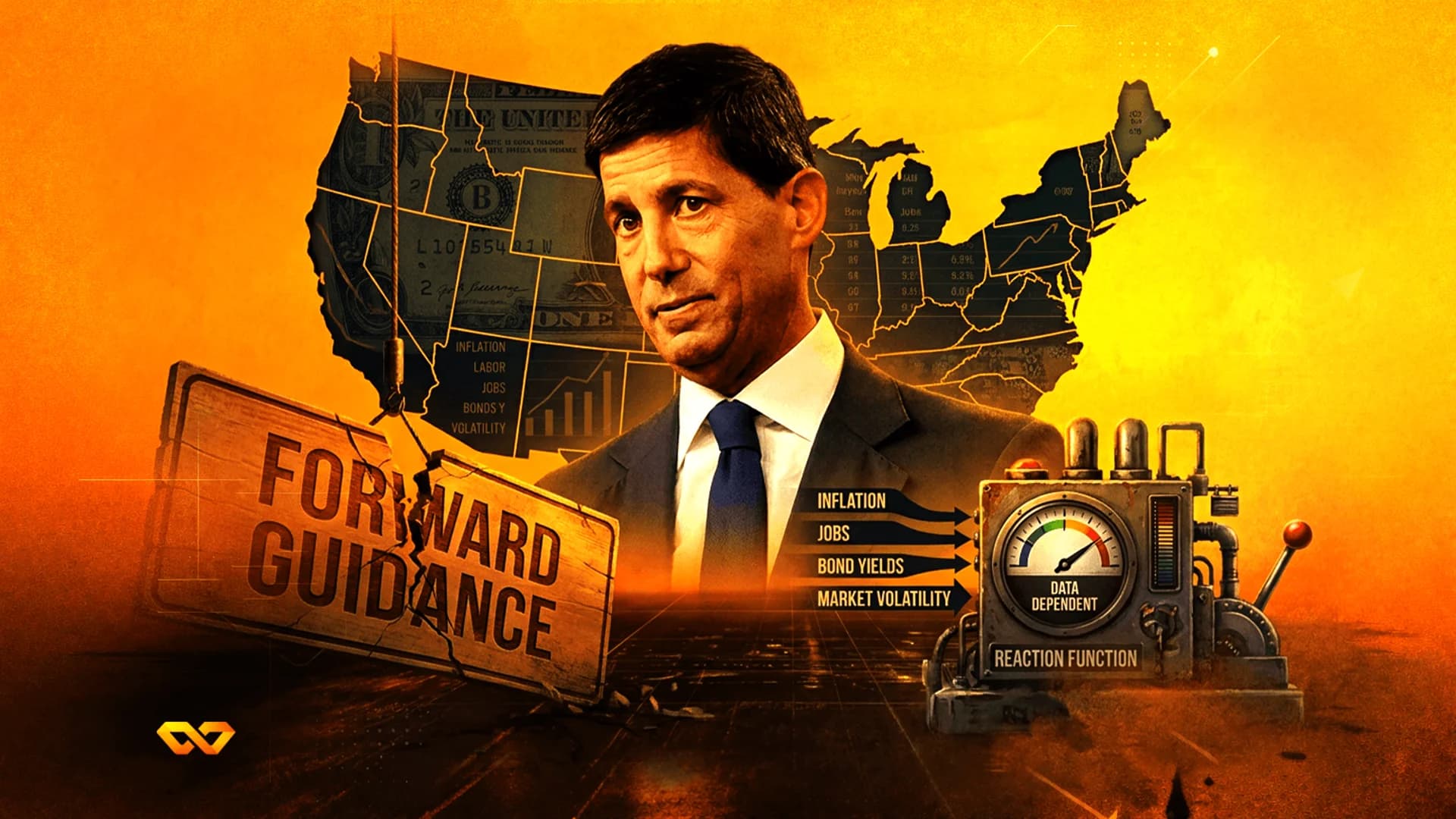
The U.S. Federal Reserve has officially abandoned its long-standing policy of forward guidance, marking a significant shift in monetary communication. Fed Chair Warsh emphasized that the central bank will now prioritize market-driven price discovery over explicit signaling. The latest policy statement was notably brief, reflecting a 9-3 vote in favor of removing future interest rate projections and guidance.
This strategic pivot aims to reduce market dependency on central bank support, forcing investors to interpret economic indicators independently. According to analyst reports, this move introduces a less predictable and more hawkish-leaning environment. Without the Fed telegraphing its next moves, market participants should expect increased volatility as the era of central bank hand-holding comes to an end.
Per market data, the Fed maintained interest rates at 3.75% during its July 29, 2026, meeting. Investors should now focus on raw economic data as the primary catalyst for market moves. Recent indicators, such as the CB Consumer Confidence index which fell to 90.8 on July 28, 2026 (below the 92.4 forecast), will likely carry more weight in a reactive policy environment where official guidance is no longer provided.
Latest Updates · 1
- Major·
Update: In a move highlighting the international scope of Fed policy, the U.S. has joined Japan in a rare foreign-exchange intervention to support the yen after it hit 40-year lows. This coordination is accompanied by proposals to expand the Fed's FIMA Repo Facility, allowing Japan to raise dollars without outright sales of U.S. Treasuries, thereby maintaining stability in the bond market while the Fed transitions its policy stance.