
Semiconductor Stocks Plunge 21% in July, Worst Monthly Performance Since 2008
Key Facts
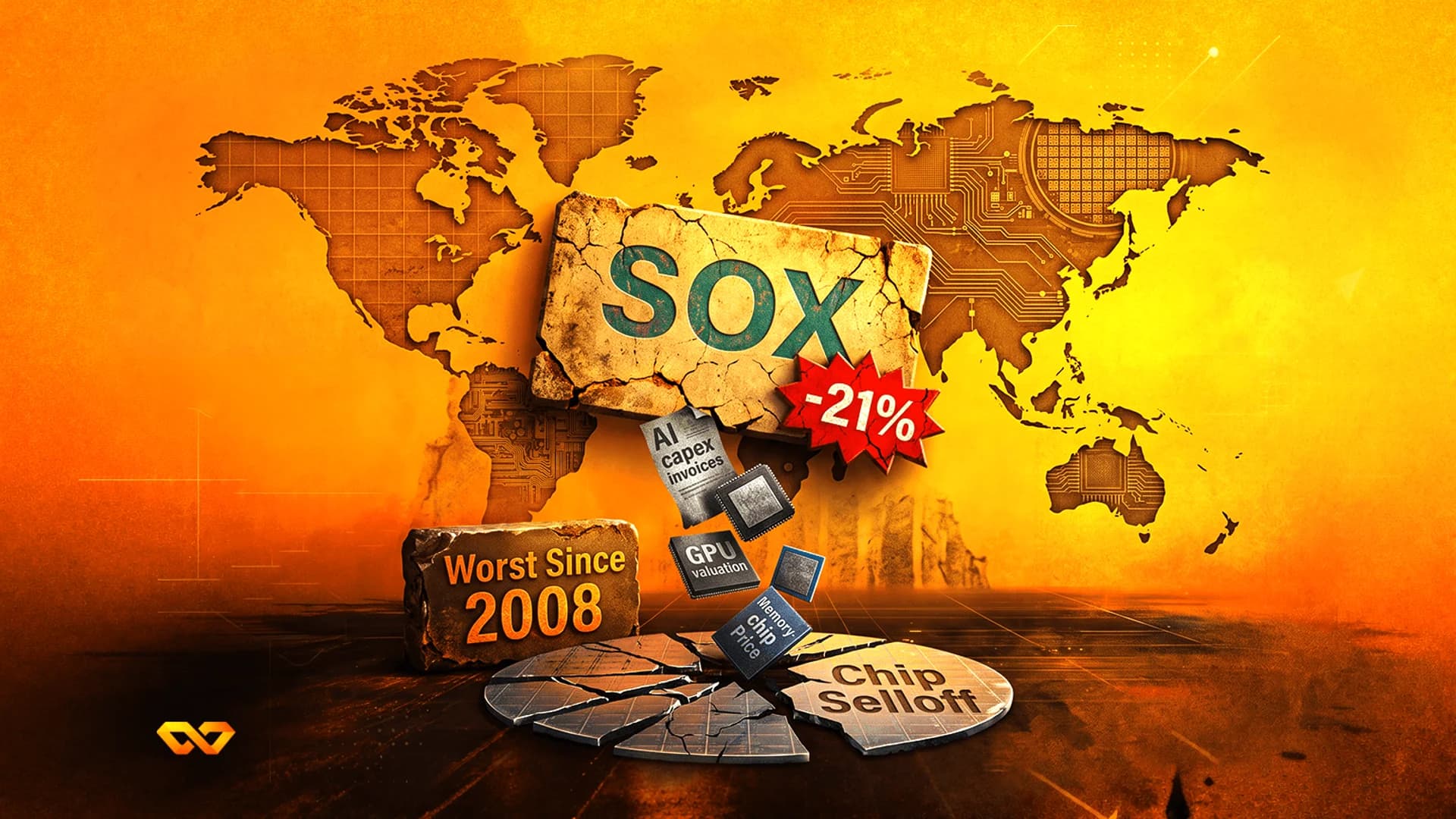
Amid mounting concerns over the sustainability of artificial intelligence spending, the semiconductor sector experienced a massive sell-off that saw the Philadelphia Stock Exchange Semiconductor Index (SOX) plunge 21% in July. According to reports, this decline marks the sector's worst monthly performance since October 2008, signaling a sharp reversal of what had been Wall Street's most crowded trade. The drop represents a significant technical breakdown, with the index losing over a fifth of its value as market volatility increased.
Per market data, the retreat followed a period of record inflows into semiconductor-related ETFs, which accounted for a disproportionate share of net market activity. Major industry players faced severe pressure, with TSMC and Micron seeing steep valuation erasures, while Intel recorded its most significant monthly drop since September 2000. The month was characterized by extreme intraday swings not seen since 2020, with every stock within the 30-member SOX index ending the period in negative territory.
As of August 2, 2026, the focus shifts to whether the sector can find a floor after erasing approximately $2.2 trillion in market capitalization. The upcoming market sessions will be critical in determining if the recent volatility leads to a sustained rotation out of high-growth tech hardware.