
Fed Division Pushes Treasury Yields to 2007 Highs as S&P 500 Rebounds
Key Facts
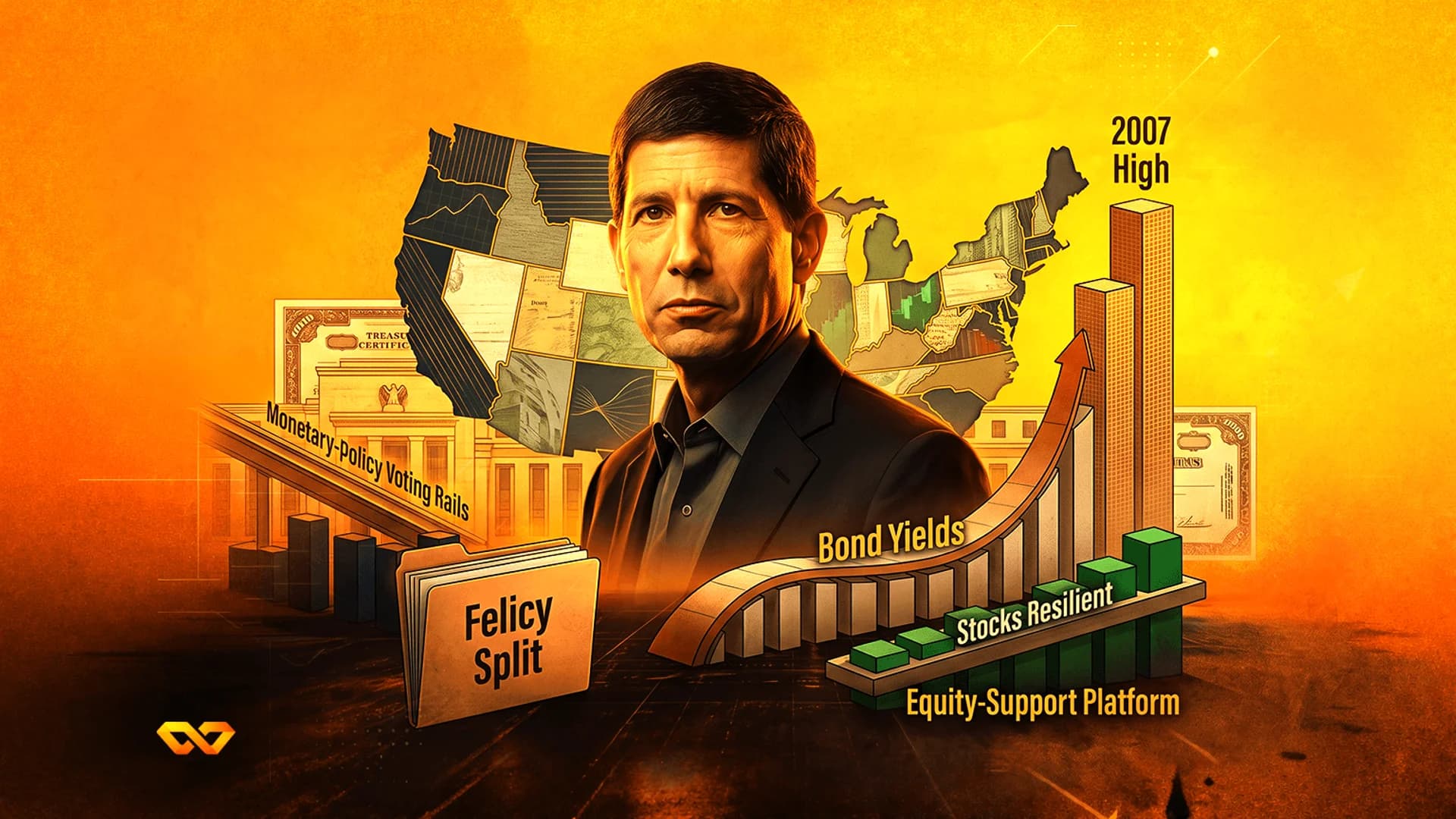
The Federal Reserve's latest policy meeting has highlighted a significant shift in internal dynamics, as the central bank opted to maintain interest rates while revealing a hawkish split among policymakers. According to reports, three members dissented in favor of a rate hike, a move that has led markets to price in higher odds for a tightening move in September and raised concerns about the Fed's position relative to the inflation curve.
This internal division triggered a sharp reaction in fixed-income markets, pushing the 30-year Treasury yield to its highest level since 2007 and causing a notable steepening of the yield curve. Despite the pressure on financial conditions, equity markets remained resilient, with the S&P 500 rebounding by 1.1% even as the debate over the future path of monetary policy intensified.
Per market data, the Fed's interest rate decision on July 29, 2026, kept the benchmark at 3.75%. Investors should now monitor how these multi-decade high yields impact broader market liquidity.