
Suspected Russian Missile Crashes in Poland Raising NATO Escalation Risks
Key Facts
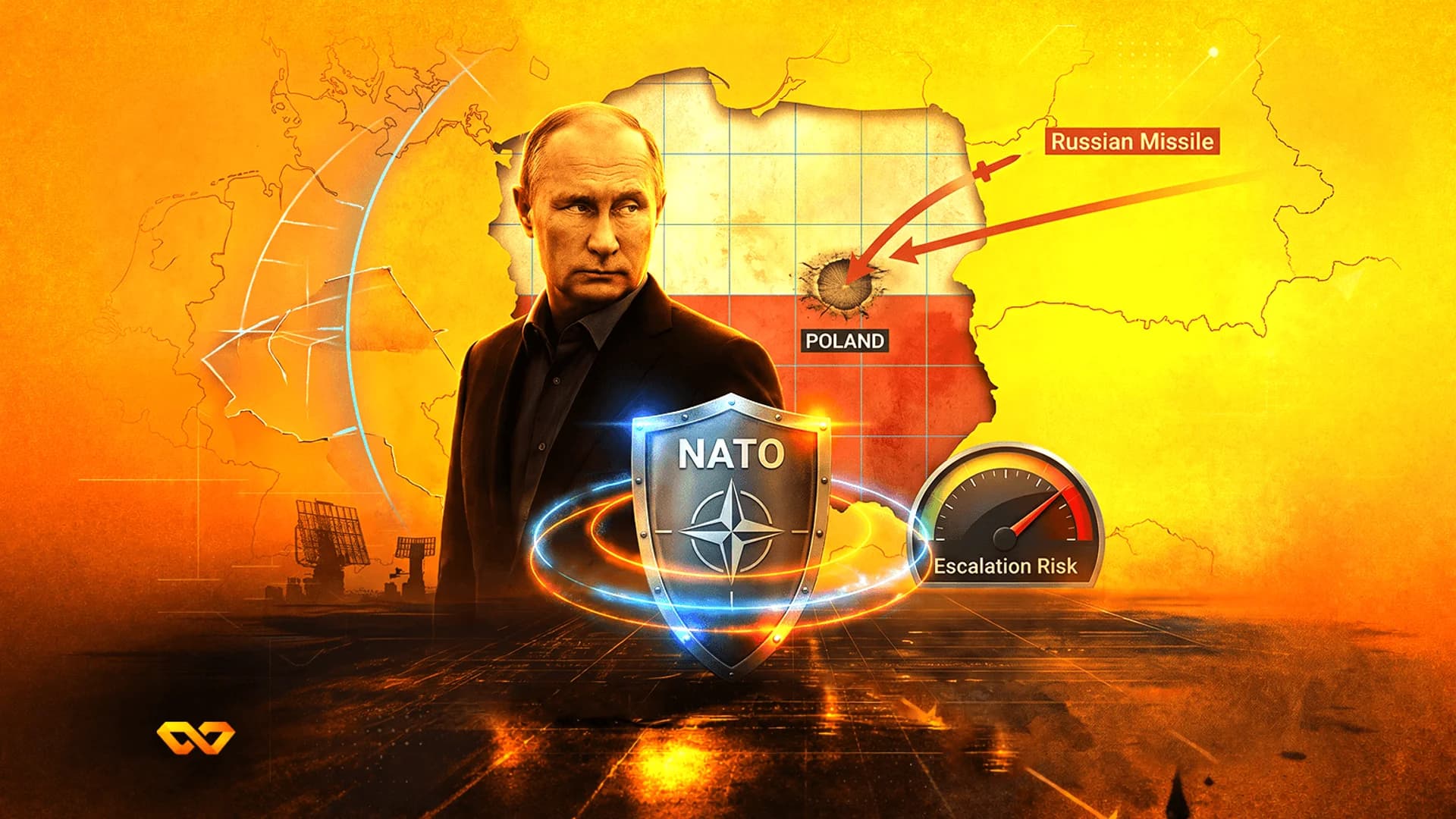
Amid escalating geopolitical tensions in Eastern Europe, a fresh breach of NATO airspace has triggered significant military and diplomatic alerts. According to reports, a suspected Russian Kh-101 ballistic missile crashed in an uninhabited field in eastern Poland, leaving a 10-meter wide crater near the village of Tarnawa-Kolonia. Polish Prime Minister Donald Tusk stated that while all indications point to a Russian missile, investigations are ongoing to achieve absolute certainty regarding the projectile's origin and type.
The incident occurred during one of Russia's largest coordinated aerial assaults on Ukraine, involving 265 drones and 55 missiles that targeted regions as far west as Lviv, near the Polish border. This escalation coincides with critical regional economic data; per market records, the Russian Central Bank maintained interest rates at 14% on July 24, 2026, reflecting the complex economic backdrop against which these military maneuvers are taking place.
Market participants are closely monitoring NATO's response to this airspace violation and whether it will lead to a shift in engagement rules or military support levels.
Latest Updates · 1
- Major·
Update: The regional escalation has expanded to energy infrastructure, with the Caspian Pipeline Consortium (CPC) shutting down following Ukrainian drone attacks on two oil tankers at the Russian port of Novorossiysk. The attacks ignited a fire on one vessel, forcing five other tankers to redirect toward Turkey and Spain, adding fresh volatility to global energy supply chains.