
US Corn Conditions Suffer Sharpest Weekly Drop in 3 Years Amid Supply Risks
Key Facts
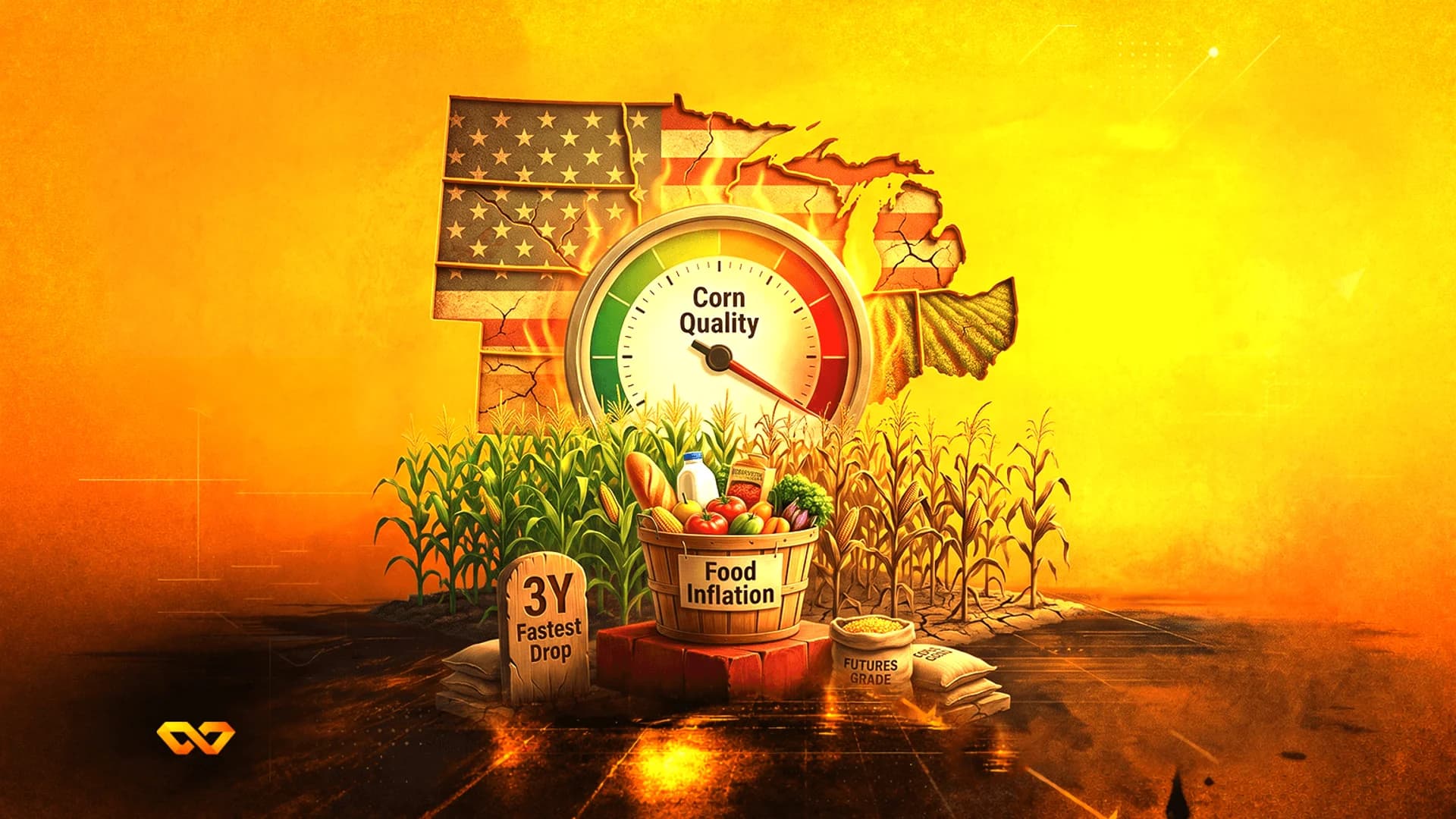
Amid escalating concerns over a new wave of global food inflation, recent data reveals a sharp deterioration in the quality of essential agricultural crops. A new USDA report rated only 63% of the U.S. corn crop as good or excellent, representing a 4 percentage point drop in a single week. This marks the sharpest weekly decline in conditions in three years, as extreme heat and dryness in key growing regions like Illinois and Missouri damaged yields beyond analyst expectations.
These production pressures have translated directly into financial markets, with the Bloomberg Agriculture Spot Index (BCOMAGSP) reaching a three-year high per market data. Reflecting institutional expectations for higher prices, an options trader placed a $20 million bet that corn futures will surge to their highest levels since 2023. These moves coincide with reports indicating that El Niño risks and maritime chokepoint disruptions are further tightening the global supply outlook.
Looking at broader economic data, traders are monitoring the impact of these commodity pressures on global inflation figures, especially following inflation data from Japan and Singapore on July 23, 2026, which showed relative stability prior to this grain price surge.