
Trump Bans Chinese Robots Amid Chip Volatility and Looming Fed Decision
Key Facts
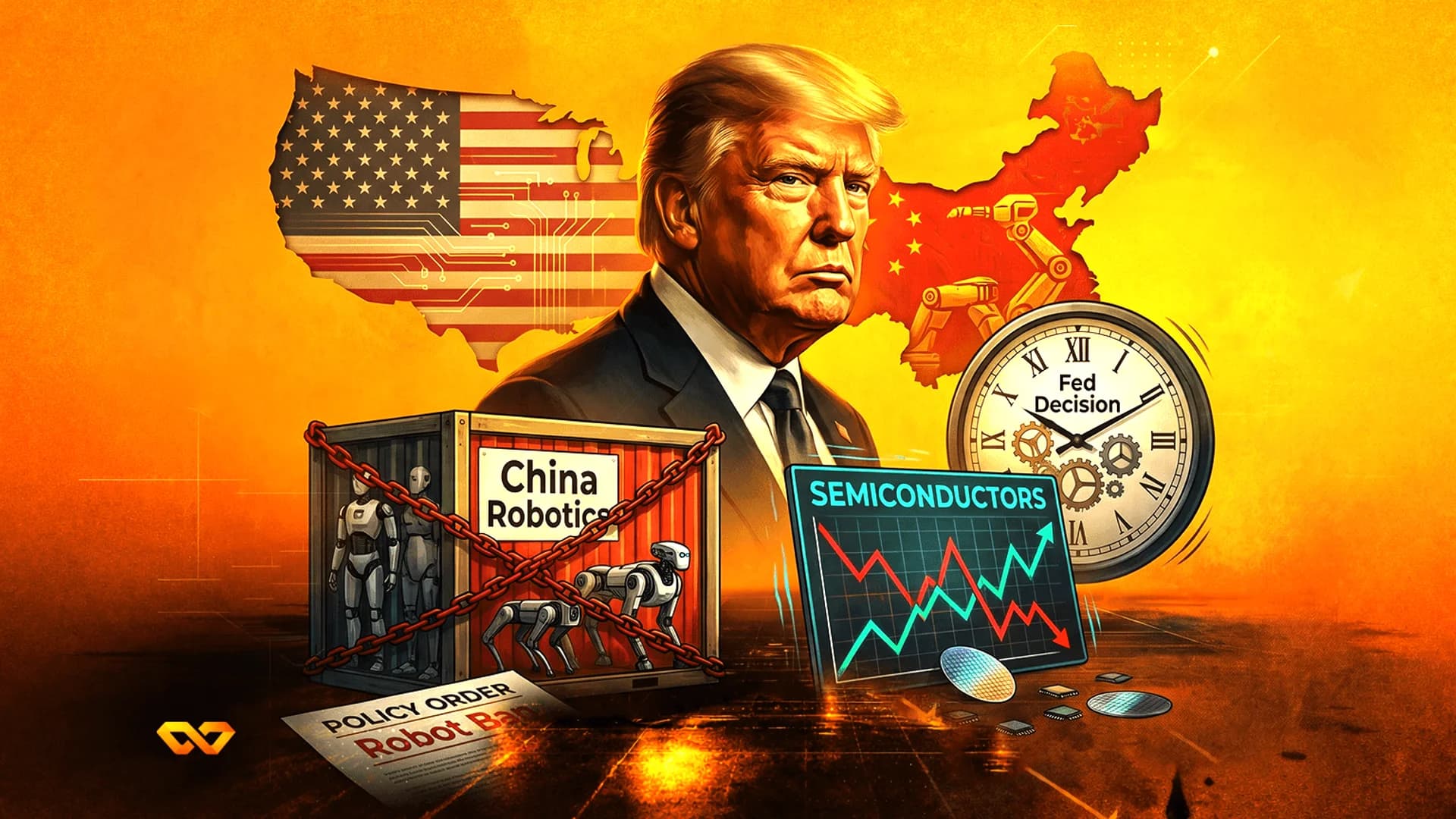
In a move reflecting escalating trade and tech tensions between Washington and Beijing, the Trump administration has banned Chinese AI-powered humanoid robots and power inverters, citing national security concerns. This decision comes at a critical juncture as global markets closely await the Federal Reserve's upcoming interest rate decision. These geopolitical developments have intensified pressure on the technology sector, particularly as scrutiny grows over imported infrastructure and advanced AI technologies.
The semiconductor markets have been directly impacted by this volatility, with SK Hynix, a key competitor to Micron, experiencing significant price swings that weighed on sector sentiment. Per market data, investors are monitoring the performance of major industry players to assess how new trade restrictions might disrupt global supply chains. These shifts occur amid broader macroeconomic uncertainty preceding major central bank policy updates.
Regarding price levels, Micron (MU) stood at $820.53 (at close July 28, 2026), after trading between a day low of $789.09 and a high of $848.36. With no immediate catalysts in the upcoming economic calendar specifically for the chip sector, focus remains on current support and resistance levels as the market awaits clarity on the U.S. monetary policy path.