
South Korea Stocks Plunge 9% as AI Spending Sustainability Concerns Mount
Key Facts
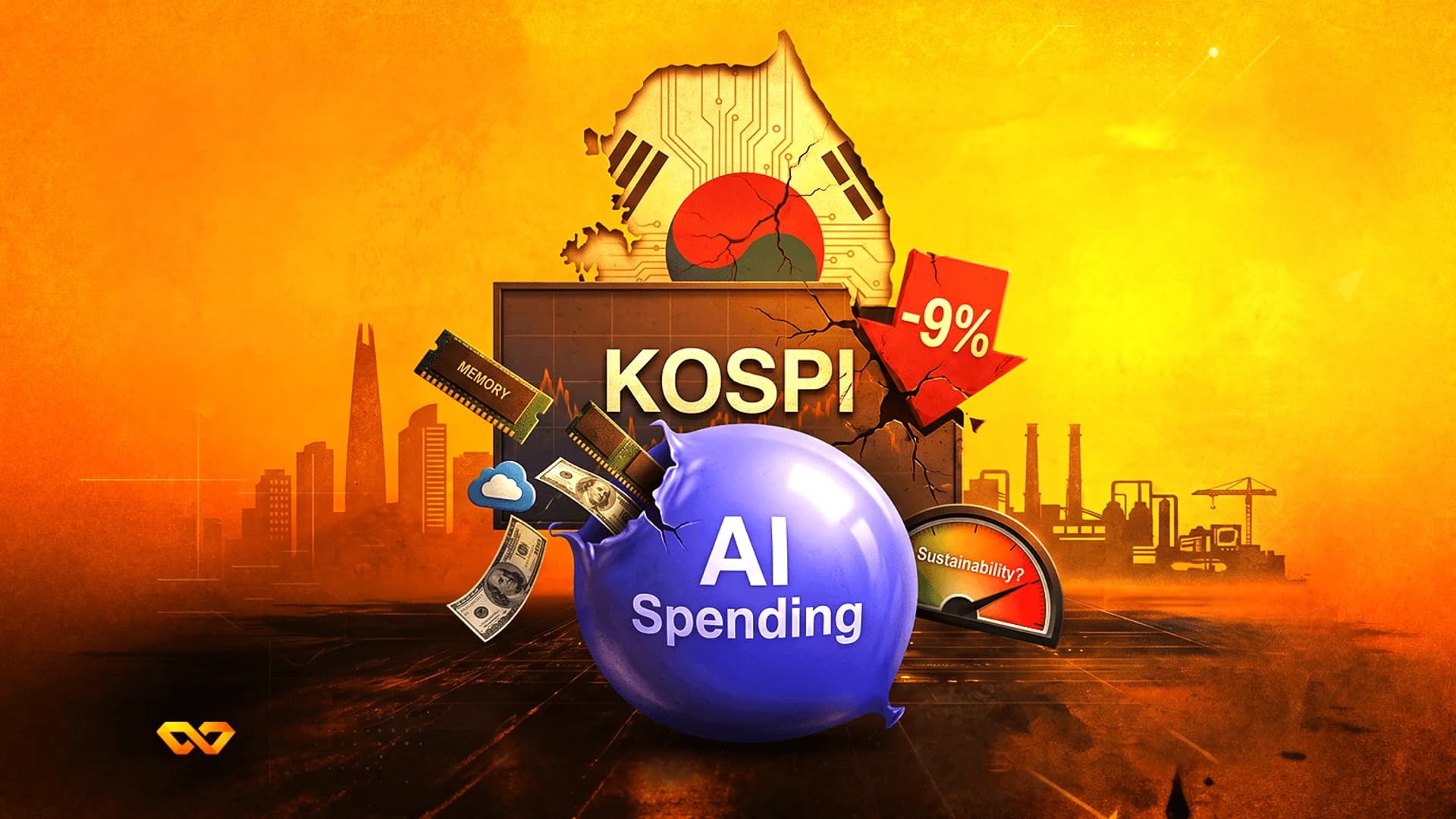
In a move reflecting growing global anxiety over a potential tech bubble, South Korea's stock market experienced a massive collapse exceeding 9%. According to reports, this sharp decline was driven by intensifying investor concerns regarding the sustainability of massive spending on artificial intelligence. This shift in sentiment triggered a broad liquidation that primarily targeted the semiconductor and advanced technology sectors.
The plunge in Seoul underscores deepening skepticism regarding the return on investment for AI infrastructure, heavily impacting the KOSPI index and its related components. Per market data, this rout represents a major escalation from prior volatility, as the scale of the sell-off indicates a significant erosion of confidence in the chip-led momentum that previously dominated the market.
Looking ahead, traders are monitoring whether Asian markets can stabilize following this shock. From a macroeconomic perspective, recent data showed South Korea's GDP growth at 3.7% year-on-year, which may serve as a reference point for investors assessing the disconnect between equity market performance and underlying economic fundamentals.