
Yen Hits 40-Year Low Despite Japan Raising Interest Rates to 31-Year High
Key Facts
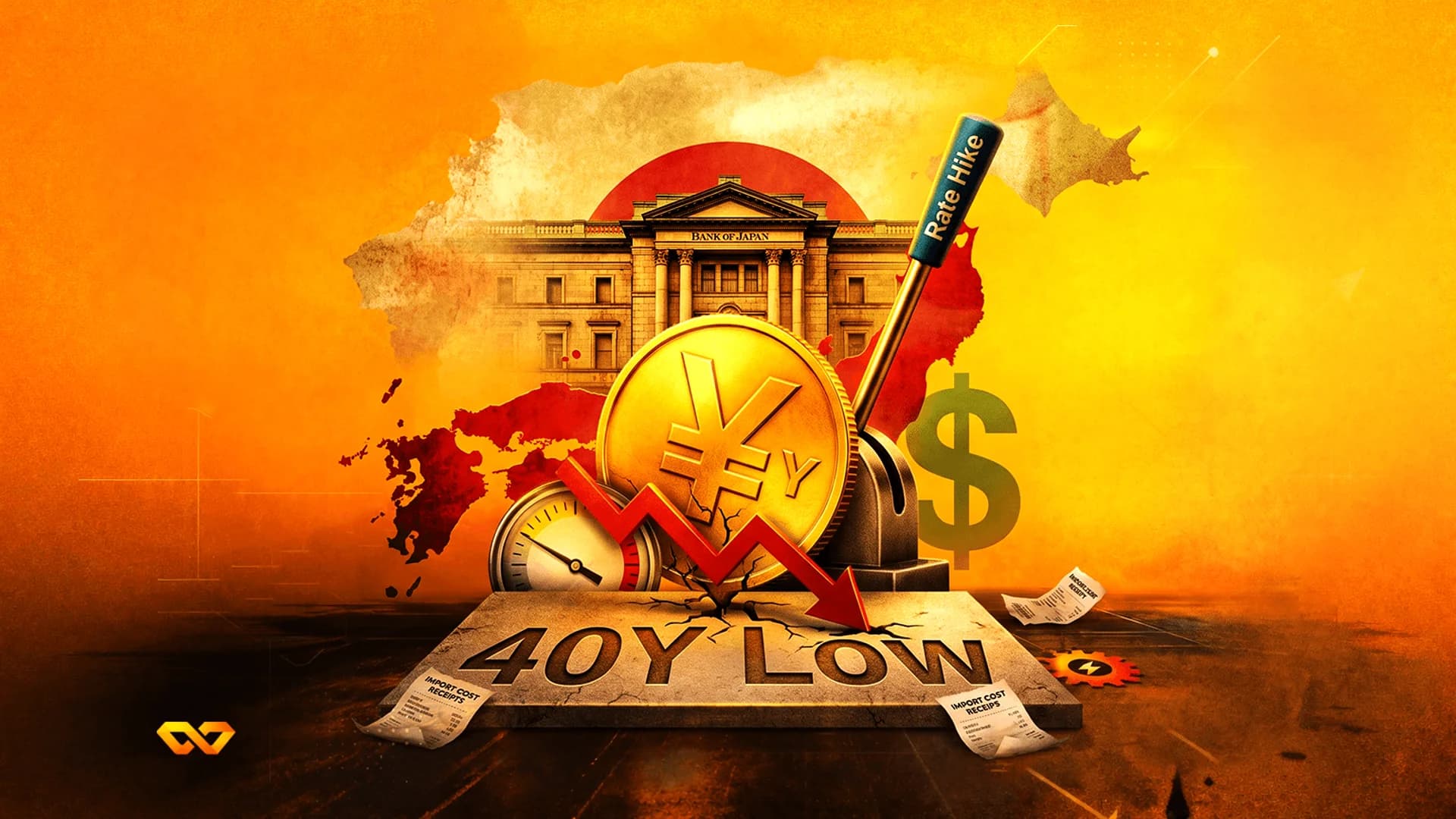
In a move reflecting the complexity of Tokyo's monetary landscape, the Japanese yen has plunged to its lowest level in 40 years. This sharp selling pressure comes despite the Bank of Japan (BoJ) taking tightening measures that pushed interest rates to their highest levels in 31 years to combat inflation. According to reports, the central bank is facing a monetary paradox where rate hikes have failed to provide the necessary support for the currency, pointing to missing monetary flows and deeper structural economic challenges.
These pressures coincide with a clear divergence in global policies, as recent U.S. inflation data (CPI) showed a slowdown to 3.5% annually per market data, keeping the yield spread between U.S. and Japanese bonds wide. Compared to other Asian currencies, the yen faces disproportionate pressure; economic experts cited in global news outlets suggest that weak domestic demand and the 12.4% monthly drop in Japanese machinery orders undermine the effectiveness of traditional monetary policy tools.
Looking ahead, traders are monitoring upcoming Japanese machinery orders data to assess industrial sector resilience against higher borrowing costs. Fed officials, including Governor Bowman, due to their direct impact on the dollar-yen dynamic. The yen's stability above historical support levels remains critical to avoiding direct government intervention in the foreign exchange market.