
Iran Closes Strait of Hormuz as Oil Surges Past $90 Amid Escalation
Key Facts
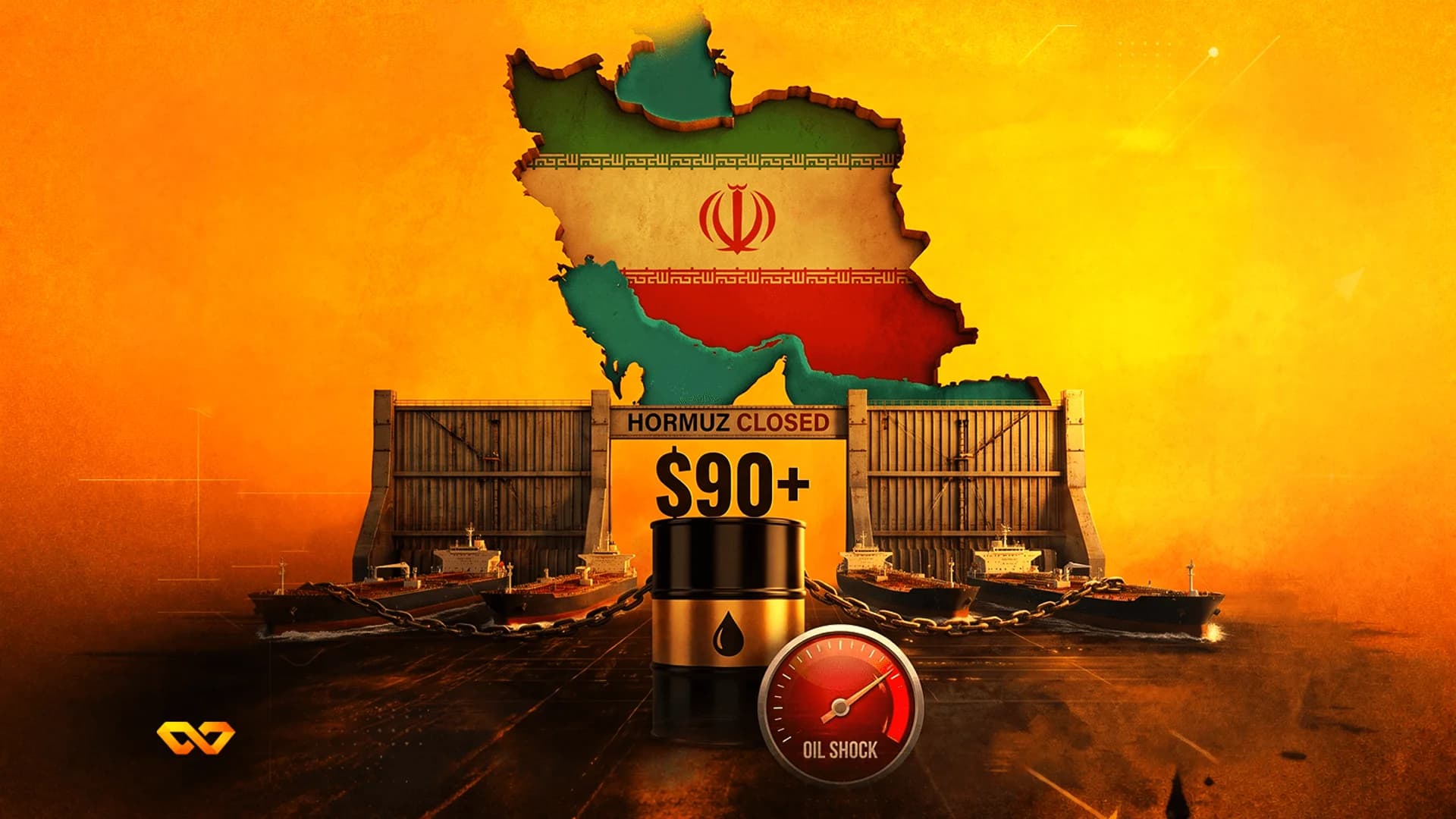
In a move marking a sharp escalation in regional conflict, Iran announced the closure of the Strait of Hormuz to unauthorized vessels, driving oil prices above the $90 per barrel threshold. This development follows eight consecutive days of U.S. military strikes, placing global energy security at immediate risk. According to reports, the closure threatens to disrupt one of the world's most vital maritime corridors, triggering a wave of concern across global financial markets.
These developments raise serious global inflation fears, as approximately 20% of daily global oil consumption passes through the Strait per U.S. Energy Information Administration data. Oil breaching the $90 mark has increased pressure on risk assets, while energy futures surged sharply per market data. Analysts are comparing this situation to major historical energy crises, warning that a prolonged closure could push prices toward new record highs.
Looking ahead, traders are awaiting OPEC's reaction at its meeting scheduled for July 13, 2026, to assess potential supply compensation. Bets on Federal Reserve monetary tightening have increased to combat energy-driven inflation, with markets eyeing speeches by Bowman and Waller on July 13, 2026, for interest rate cues. This coincides with U.S. budget data showing a $120 billion deficit as of July 13, 2026.
Latest Updates · 4
- Notable·
Update: The fallout from the Strait's closure has rapidly reached domestic markets, with US petrol prices breaching the $4 per gallon threshold. According to reports, these rising costs are fueling political frustration with the Trump administration, intensifying pressure on the White House ahead of the upcoming midterm elections.
- Notable·
Update: Military strikes have entered a ninth day amid reports of Iran targeting tankers and a Kuwaiti oil facility, further destabilizing regional security. Meanwhile, the U.S. national average for regular gasoline has breached the politically sensitive $4 per gallon threshold, intensifying domestic economic pressure as energy costs for consumers continue to climb.
- Notable·
Update: The military escalation has directly impacted U.S. consumers, with average gasoline prices jumping to $4 per gallon. This surge, driven by intensifying mutual strikes, reinforces expectations of broader inflationary pressures on the global economy.
- Notable·
Update: Oil prices have begun surging as a direct response to the intensified fighting, reflecting immediate pricing of supply risks. Meanwhile, stock futures are trading flat despite the escalation, as investors balance energy concerns against broader monetary policy expectations.