
US 30-Year Treasury Yields Hit Highest Since 2007 Amid Rising Debt
Key Facts
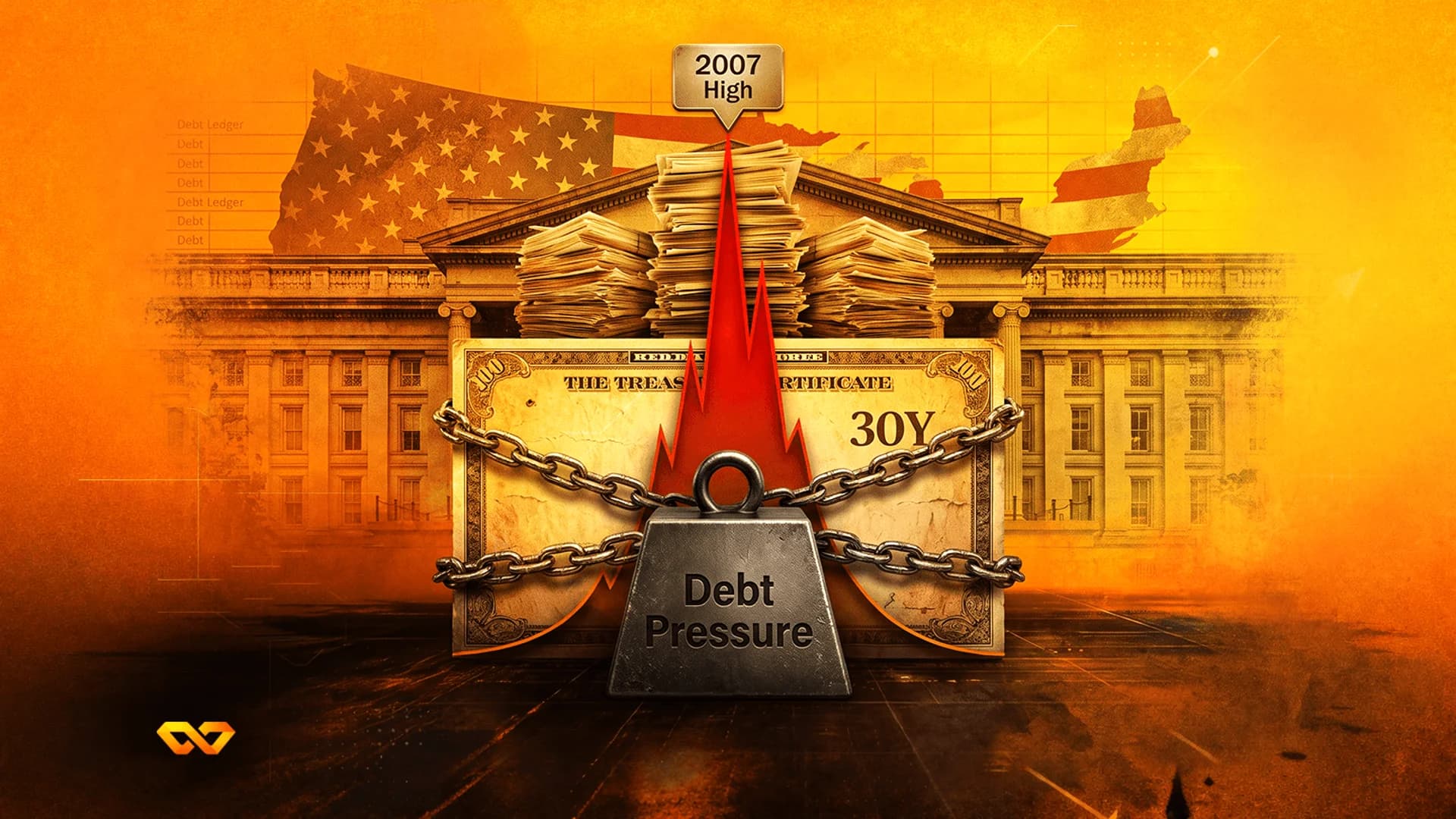
Amid intensifying pressure on U.S. public finances, the 30-year Treasury yield hit 5.06% at auction, marking its highest level since 2007. This surge occurs as the U.S. federal debt reaches a staggering $39.5 trillion, accompanied by a $1.37 trillion deficit in the current fiscal year. These figures underscore the growing fiscal burdens weighing on sovereign debt markets and driving up long-term borrowing costs.
The spike in yields raises concerns that government borrowing is crowding out private investment, potentially stifling economic growth. Since early 2022, long-term yields have more than doubled, placing additional strain on interest-rate-sensitive sectors such as real estate and consumer finance. According to market data from July 13, 2026, the U.S. budget balance showed a deficit of $120 billion, which was narrower than the forecasted $135.8 billion deficit.
Investors should closely monitor upcoming economic indicators following the July 14, 2026, inflation report, which showed the annual CPI slowing to 3.5% from a previous 4.2%. While current price levels for Treasury instruments are unavailable at this snapshot, the focus remains on Federal Reserve commentary to gauge the future path of monetary policy in the face of record debt levels and elevated yields.