
SpaceX Stock Dips Below IPO Price Amid Technical Hurdles
Key Facts
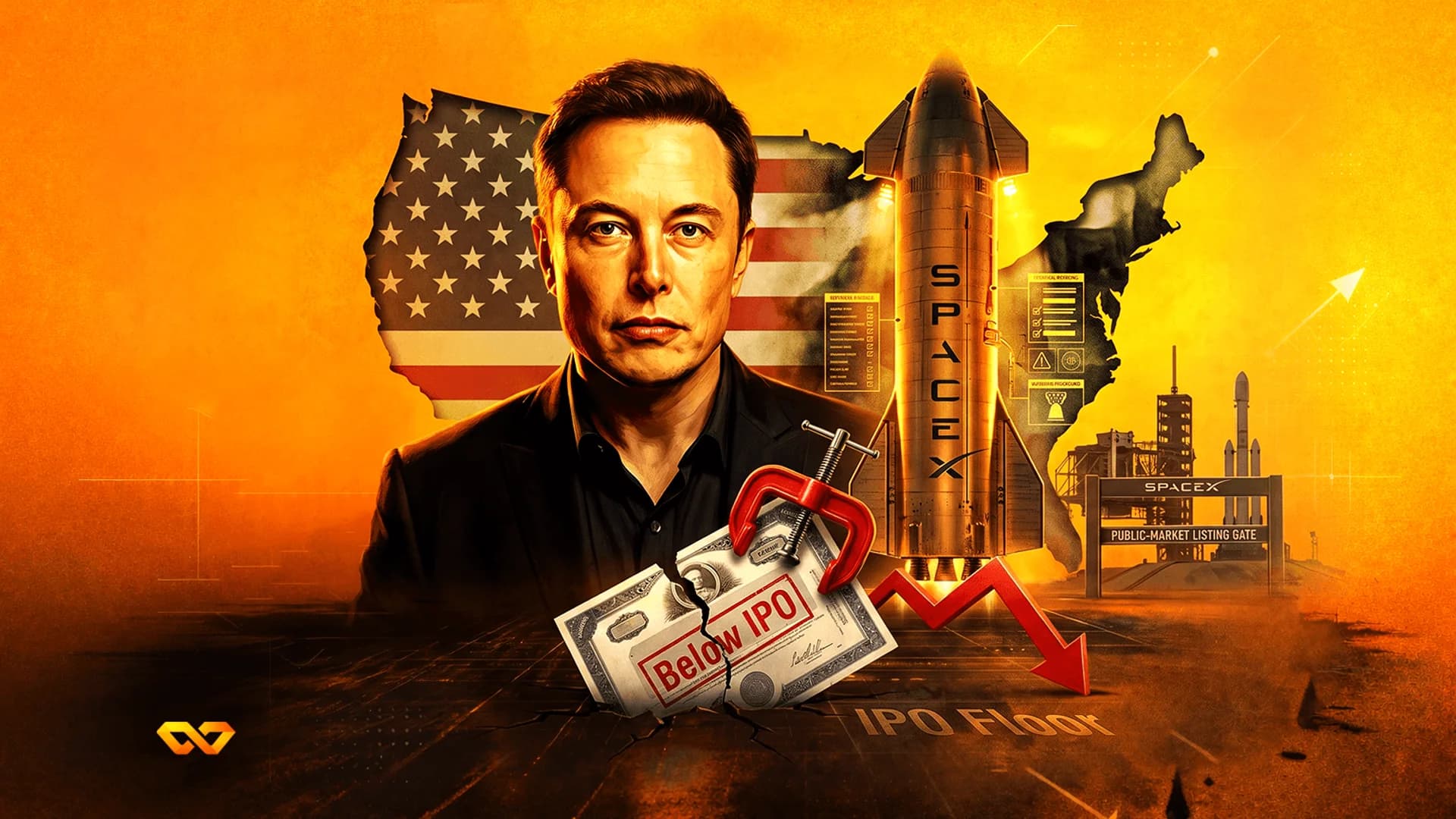
In a move reflecting mounting selling pressure on mega-cap tech stocks, SpaceX shares have fallen below their initial public offering price just weeks after completing the largest IPO in history. According to reports, the stock experienced a sharp reversal from its post-listing highs due to emerging technical hurdles, prompting a shift toward investor caution. This pullback effectively erases the initial hype-driven gains that followed the company's record-breaking debut.
This correction comes as space and deep-tech companies face increased scrutiny over high market valuations, with traders monitoring peers like Boeing and Lockheed Martin to gauge sector stability. Per market data, breaking below the IPO price serves as a significant technical bearish signal that could intensify short-term pressure, especially as concerns grow regarding the pace of technical innovation required to sustain premium valuations.
At the close of July 16, 2026, the SPCX share price stood at $131.11, hovering near its daily low of $130.74. Investors are now looking for official statements from Elon Musk or company management regarding the resolution of technical obstacles, while broader markets remain focused on upcoming US inflation data and Fed official speeches for clues on liquidity trends affecting growth stocks.
Latest Updates · 2
- Major·
Update: Recent data reveals the massive scale of the valuation decline, with SpaceX losing over $1 trillion in market capitalization since its peak. This slump caused the company's market value to briefly dip below that of Meta, marking a significant shift in the relative ranking of tech giants.
- Major·
Update: Recent data indicates that SpaceX's market capitalization has eroded by more than $1 trillion since the stock hit its post-IPO peak. This massive figure underscores the intensity of the selling pressure, marking one of the most significant losses of market value in the history of the deep-tech sector.